





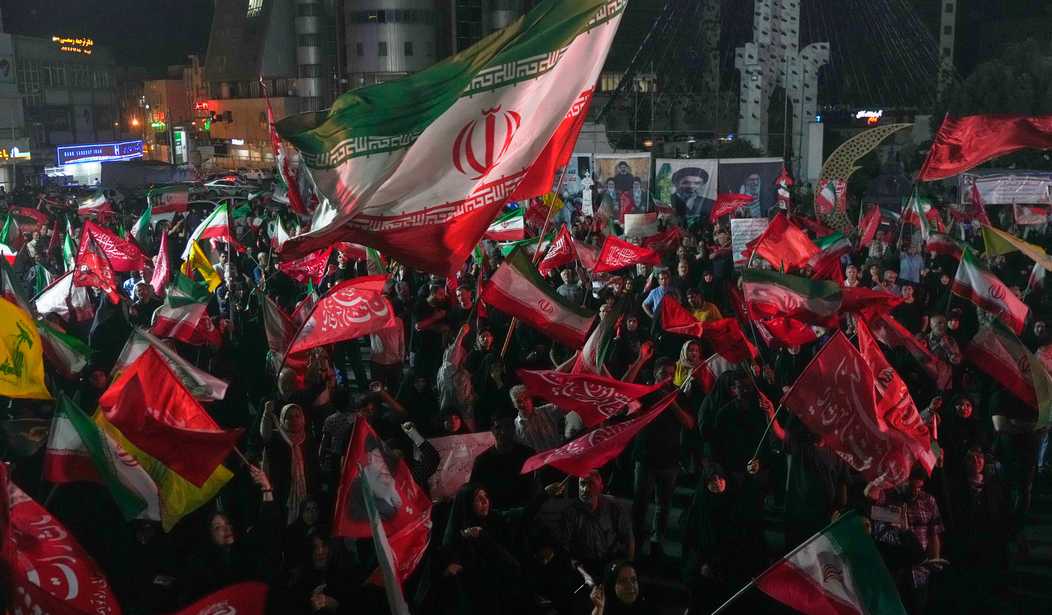
The conventional wisdom in Washington is that time is running out to stop Iran or reach a deal with the regime. There is, however, another way to view the events unfolding between the United States and Iran, specifically, seeing time and speech as freedom's greatest advantage.
The immediate headlines understandably focus on the costs of conflict. Critics argue that the United States must quickly find a way to end the fighting before the consequences become even more severe. These are legitimate concerns. No serious person should dismiss the cost of war or the sacrifices made by American service members. We shouldn’t pretend that military action is without consequence. But short-term discomfort is not a defeat.
For decades, Iran's leaders have relied on time as a strategic weapon. They negotiated when pressure became unbearable, made promises when sanctions became painful, and waited for political changes in Washington to provide an opportunity to begin the cycle again. The assumption was that America would eventually lose interest, lose patience or lose the political will to maintain pressure. That assumption is now being tested with new leadership, and the cycle of American acquiescence to Iran is over.
Iran's military capabilities and options are severely damaged. The regime is reminded literally daily that the old rules no longer apply.
Perhaps the most important factor in Iran's future is the Iranian people. For decades, the Iranian regime has feared its own citizens more than it has feared foreign governments. Brave Iranians have taken to the streets demanding freedom, dignity and a government that respects their basic rights. The response has been censorship, arrests, torture and violence. A government confident in its legitimacy has no need to imprison journalists, shut down communications and kill protesters for speaking their minds. A government that fears the voices of its own people is revealing its weakness.
In recent days, many Americans have argued that President Trump should communicate more cautiously. Presidential rhetoric can influence allies, adversaries, markets and military calculations. But the answer to controversial speech cannot be to create a political culture in which leaders are expected to remain silent until every critic has approved the message. The First Amendment exists precisely because speech can be controversial, provocative and uncomfortable. The answer to speech we dislike is more speech, more debate and, ultimately, the judgment of the American people.
Iran's leaders understand the danger of free speech. They understand that a citizen with a cellphone, an internet connection and the courage to tell the truth can threaten a regime more profoundly than many foreign governments. That is why authoritarian governments censor. They understand that information is power and that people who can communicate freely can organize freely.
Time works differently in a free society. Every day that Americans remain free to debate, criticize their government and organize politically is another day in which freedom maintains its advantage over authoritarianism. Every day that the Iranian regime must devote resources to suppressing its own population while defending its military infrastructure is another day in which the cost of maintaining its system increases.
Iran's leaders can continue to threaten, launch missiles, support proxies and attempt to intimidate the world. But they cannot permanently prevent their people from learning that other societies allow citizens to speak, assemble, worship, organize and challenge their governments without being imprisoned or killed. They cannot forever hide the fact that the system they have built depends on controlling what their own people are allowed to see and say. And they cannot negotiate forever on the assumption that America and more specifically Donald Trump will eventually lose interest.
The political demand for an immediate resolution to every crisis is understandable. Families want lower gas prices. Markets want certainty. Soldiers should come home. Americans want stability. But history rarely operates on the timetable of a cable news cycle. The conflict with Iran will not be decided solely by what happens tomorrow morning. It will be decided by which side can sustain its strategy, which side can absorb pressure, and which side ultimately has a future worth defending. The United States does. The Iranian regime does not.
Shaun McCutcheon is a Free Speech advocate, an Alabama-based electrical engineer, the founder of Multipolar, and was the successful plaintiff in the 2014 Supreme Court case McCutcheon v. FEC.
Editor’s Note: Do you enjoy Townhall’s conservative reporting that takes on the radical Left and woke media? Support our work so that we can continue to bring you the truth.
Join Townhall VIP and use promo code FIGHT to receive 60% off your membership.

Join the Conversation
VIP members get the ability to comment on articles.