





Author's Note: All previous volumes of this series are available here. The first 56 volumes are compiled in the book "Bible Study For Those Who Don't Read The Bible." "Part Two," featuring volumes 57-113, was published in December 2022.
Happy Sunday, everyone! Thanks for making this study part of your Sabbath.
Let’s begin with why this week’s topic is “The House of the Lord.” Last Sunday, while in church, I received a “ding-ding” to write about that phrase in my next study. Loyal readers know that means my “Divine Assignment Editor” was working on Sunday.
No matter how many times this happens, I always feel blessed for two reasons. First, God loves me enough to guide my desire to glorify Him through this study. Second, some reader(s) out there need to understand the meaning of “the House of the Lord.” If that is you, let me know.
This topic will be covered in two parts because there are too many significant verses for one week’s review.
Turning to Scripture, “the house of God” first appears in Genesis. Jacob was startled awake when he realized God was real and present. In his dream, Jacob saw the stairway (ladder in some translations), the gateway that led to the “house of God.” Read the entire story, or just this excerpt:
“Then Jacob awoke from his sleep and said, ‘Surely the Lord is in this place, and I did not know it.’ And he was afraid and said, ‘How awesome is this place! This is none other than the house of God, and this is the gate of heaven’” (Genesis 28:16-17).
As this is the first passage describing and recognizing “the house of God,” let’s unpack its multifaceted meaning as it applies to the rest of the Bible.
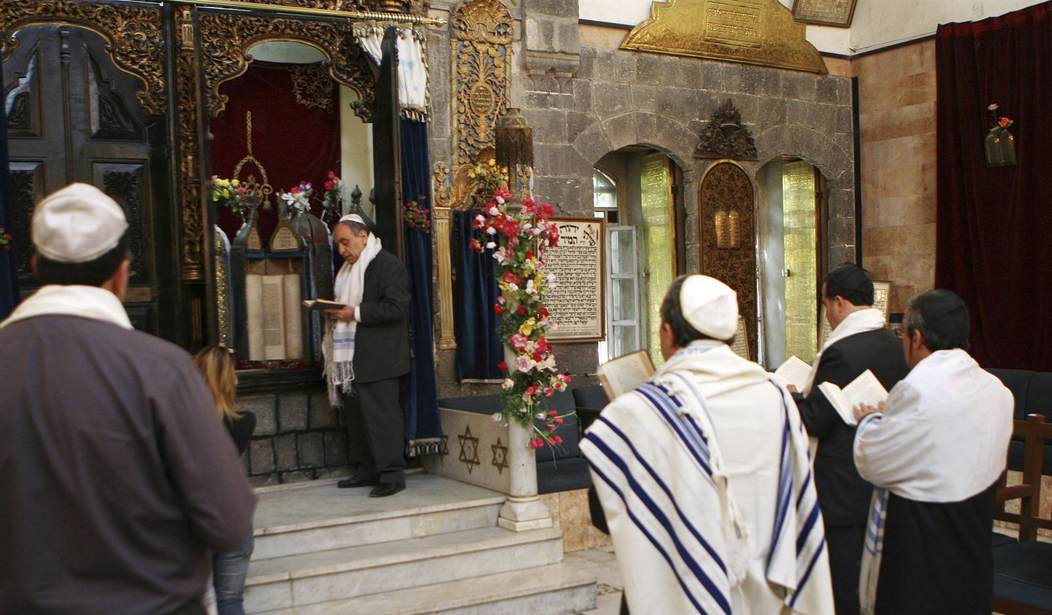
God dwells in His heavenly house as you dwell in yours. However, His presence also extends beyond heaven into a physical place. In Moses’s time, God commanded that His presence be manifested in a portable Tabernacle for the Ark of the Covenant as the Israelites traveled through the desert toward the Promised Land. In Exodus, Chapters 25-31 and 35-40, God gave Moses very specific architectural instructions.
Later, God was “present” in the Jerusalem temple first built by King Solomon. (More about that temple later.)
Believers are blessed when they feel His presence in their house of worship. Yet God’s presence is omnipresent and not confined by walls. The House of the Lord is all His creation, and His people feel it most when and where they need it, calling upon Him in prayer. Group prayer is especially powerful and pleasing to God. “For where two or three are gathered in my name, there am I among them” (Matthew 18:20).
The second biblical mention of the House of the Lord appears in Numbers, the fourth of the Torah’s five books, and fourth in the Hebrew Bible. The circumstances are unique: Moses’s siblings, Aaron and Miriam, questioned their brother's authority. God intervened and dressed them down. We read:
“And the Lord came down in a pillar of cloud and stood at the entrance of the tent [Tabernacle] and called Aaron and Miriam, and they both came forward. And he said, ‘Hear my words: If there is a prophet among you, I the Lord make myself known to him in a vision; I speak with him in a dream. Not so with my servant Moses. He is faithful in all my house’” (Numbers 12:5-7).
The phrase "my house" refers to the nation of Israel, the community of God’s chosen people, led by Moses, God’s chosen leader. God sternly declares to Aaron and Miriam that Moses is His trusted, faithful leader in His House. God will speak directly to Moses, not through visions or dreams as He does with prophets.
Those two Torah passages involving Jacob and Moses are important for establishing God’s real presence among his ancient people. That truth endures through time, and approximately 400 to 500 years after Moses, King David invokes “the House of the Lord” in his Psalms. David has a strong relationship with God, expressed in his poetry through both love and fear. In numerical order, we read:
“But I, through the abundance of your steadfast love, will enter your house. I will bow down toward your holy temple in the fear of you” (Psalm 5:7).
What follows is the final verse of the most famous Psalm 23:
“Surely goodness and mercy shall follow me all the days of my life, and I shall dwell in the house of the Lord forever” (Psalm 23:6).
Note that below, in Psalm 27:4, David asks to dwell in the house of the Lord, whereas in Psalm 23:6 above, David says, “I shall dwell in the house of the Lord”:
“One thing have I asked of the Lord, that will I seek after: that I may dwell in the house of the Lord all the days of my life, to gaze upon the beauty of the Lord and to inquire in his temple” (Psalm 27:4).
Below, Psalm 92 is not attributed to David. The verse describes how the righteous will thrive in the House of the Lord:
“The righteous flourish like the palm tree and grow like a cedar in Lebanon. They are planted in the house of the Lord; they flourish in the courts of our God” (Psalm 92:12-13).
Our final Psalm reads like a travel ad sponsored by the “Tourism Bureau of Ancient Jerusalem.” Great joy surrounds a pilgrimage to “the house of the Lord.” However, this “house” was the Tabernacle, the portable tent-shrine housing the Ark of the Covenant, built during the Exodus, described earlier and referenced in Numbers 12:5-7.
King David's son, Solomon, built the permanent temple David had wanted to build, but the Lord had other plans. David died before seeing the magnificent temple Solomon built. We read:
“I was glad when they said to me, ‘Let us go to the house of the Lord!’ Our feet have been standing within your gates, O Jerusalem! Jerusalem— built as a city that is bound firmly together, to which the tribes go up, the tribes of the Lord, as was decreed for Israel, to give thanks to the name of the Lord. There thrones for judgment were set, the thrones of the house of David.”
“Pray for the peace of Jerusalem. May they be secure who love you! Peace be within your walls and security within your towers!” For my brothers and companions’ sake I will say, ‘Peace be within you!’ For the sake of the house of the Lord our God, I will seek your good” (Psalm 122).
Next week, we continue with what God channeled through Isaiah about the House of the Lord. Then we proceed to the New Testament, where Jesus has some notable quotables. Here is a preview from Isaiah, a very famous verse spoken by God:
“For my house shall be called a house of prayer for all peoples.” Amen to that!
Let me know if you like this topic or if it inspired you.
Myra Kahn Adams is a conservative political and religious writer. Her book "Bible Study For Those Who Don't Read The Bible" reprints the first 56 volumes of this popular study. "Part 2" reprints Vols. 57-113. Order it here.
Myra is also the Executive Director of the National Shroud of Turin Exhibit. You can help support our popular exhibit at the Basilica in Orlando, Florida. Now extended until the end of 2026! Read more here. Contact: Myraadams01@gmail.com
Editor's Note: Do you enjoy Townhall's conservative reporting exposing the radical Left and woke media? Support our work so we can keep bringing you the truth.
Join Townhall VIP and use promo code FIGHT to receive 60% off your membership.


Join the Conversation
VIP members get the ability to comment on articles.