





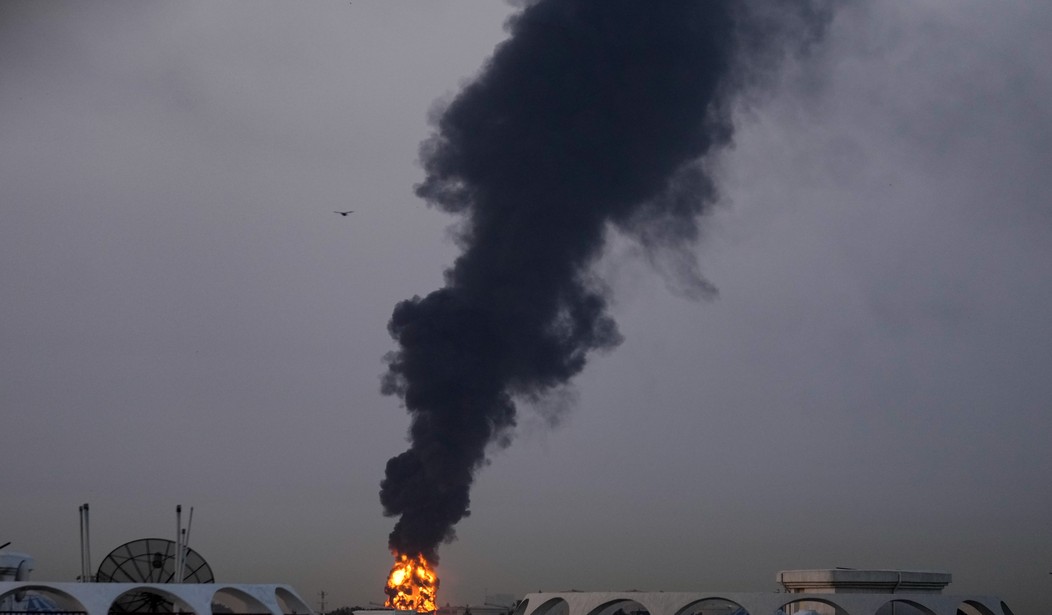
On May 1, the United Arab Emirates (UAE) slammed the door on OPEC. This is not a minor episode in the oil saga; it is a geopolitical earthquake. The Emirates understood that the age of the cartel was over. Spurred by the July 2021 dispute over OPEC+ quotas, Abu Dhabi began a silent revolution, ushering in a new geopolitics of energy in which those who produce hydrocarbons control the destiny of nations. The UAE is no longer a mere oil exporter. It is a global actor and the architect of a new regional alliance where energy, technology, and security are inseparable.
This emerging energy alliance highlights a truth that European ideologues refuse to accept. There is no energy transition; there is energy addition. Wind and solar together account for only three percent of global primary energy, while fossil fuels represent 87 percent of global demand. The Emirates is betting that demand will remain robust far longer than Brussels, Strasbourg, or Paris assumes. The UAE’s strategic exit from OPEC and its determination to maximize oil output confirm a world in which decarbonization is no longer a priority. Prosperity, security, and geopolitical influence have displaced climate governance from the international agenda. Now, the European Union’s Green Deal appears outdated and politically irrelevant.
The Emirates understood this shift long before others. By hosting COP28 in Dubai – and steering the summit toward a more pragmatic outcome – the UAE demonstrated that the era of ideological climate governance has ended. Its ability to water down activist expectations at COP28 was a coherent expression of today’s global energy order. Addition over substitution, realism over aspiration. The world has moved on, and the UAE has positioned itself accordingly.
The Emirates’ withdrawal from OPEC is the most significant rupture in the organization’s 66‑year history. The UAE represented roughly 14 percent of OPEC’s total capacity, making its departure particularly consequential.
A decline in crude prices is not necessarily detrimental to a high‑capacity producer: Oil revenues depend not only on price, but on price multiplied by volume. Thus, the UAE – by raising production to 5 million barrels a day (Mb/d), an increase of 43 percent – can absorb a significant price decrease while increasing total revenue. The maximization of total revenue, not the defense of marginal price, guides Abu Dhabi.
The Emirates is not content simply to maximize oil revenues in the short term. Abu Dhabi made a major move in acquiring a stake in the $18.4 billion Rio Grande LNG project in Brownsville, Texas, becoming the first Persian Gulf national oil company to hold a significant position in a U.S. export terminal. The Emirates now holds a prime position in the great global gas game.
Meanwhile, in the Middle Eastern theater, the Emirates has become Iran’s preferred target. Since early 2026, the UAE has endured more than 2,800 drone and missile attacks – nearly four times more than that suffered by Saudi Arabia. The Houthi attack on Abu Dhabi in January 2022 marked a turning point, when for the first time, the UAE publicly acknowledged civilian casualties on its soil.
Why this Iranian fixation on the Emirates? The Abraham Accords turned the UAE into a “frontline state” within the U.S.–Israeli security architecture. The Al Dhafra base hosts U.S. F‑35s and thousands of Western troops. The UAE is the Gulf’s financial and commercial hub, and striking Dubai or Abu Dhabi is seen as destabilizing global confidence.
The Abraham Accords are not merely a peace treaty; they are the diplomatic crystallization of the new geopolitics of energy. They sealed an alliance among the UAE, Israel, Bahrain, Morocco, Sudan – and now Kazakhstan – based on the Iranian threat, shared economic interests between the UAE and Israel, and energy cooperation through the East Mediterranean Gas Forum.
But the most important shift is an ideological one. The Arab signatories have relegated the Palestinian cause to the background, prioritizing economic development. Iran cannot tolerate this reality, which contradicts its use of the Palestinian cause as a tool of influence across the Muslim world. This is the triumph of realism over ideology.
The UAE is no longer a mere oil exporter. It is a new global actor. The Emirates asserts its national interests, while the EU dreams of an energy transition that does not exist. This is the true lesson of the new geopolitics of energy. By leaving OPEC, investing in U.S. LNG, resisting Iranian attacks, and shaping the Abraham Accords, the UAE demonstrates the reality of 21st-century energy geopolitics and has become the architect of a new regional alliance where energy, technology, and security are inseparable.
Spurning the illusions of energy “transition,” the UAE pursues addition, diversification, and diplomacy based on reality and geared toward long-term prosperity for all. It is a model the EU would do well to consider.
Dr. Samuel Furfari is a professor of energy geopolitics in Brussels and London, a former senior official with the European Commission's Directorate-General for Energy and a member of the CO2 Coalition. He is the author of the paper, “Energy Addition, Not Transition,” and 18 books, including “The Truth About the COPs: 30 years of illusions.”
Editor's Note: For decades, former presidents have been all talk and no action. Now, Donald Trump is eliminating the threat from Iran once and for all.
Help us report the truth about the Trump administration’s decisive actions to keep Americans safe and bring peace to the world. Join Townhall VIP and use promo code FIGHT to get 60% off your VIP membership.


Join the Conversation
VIP members get the ability to comment on articles.