





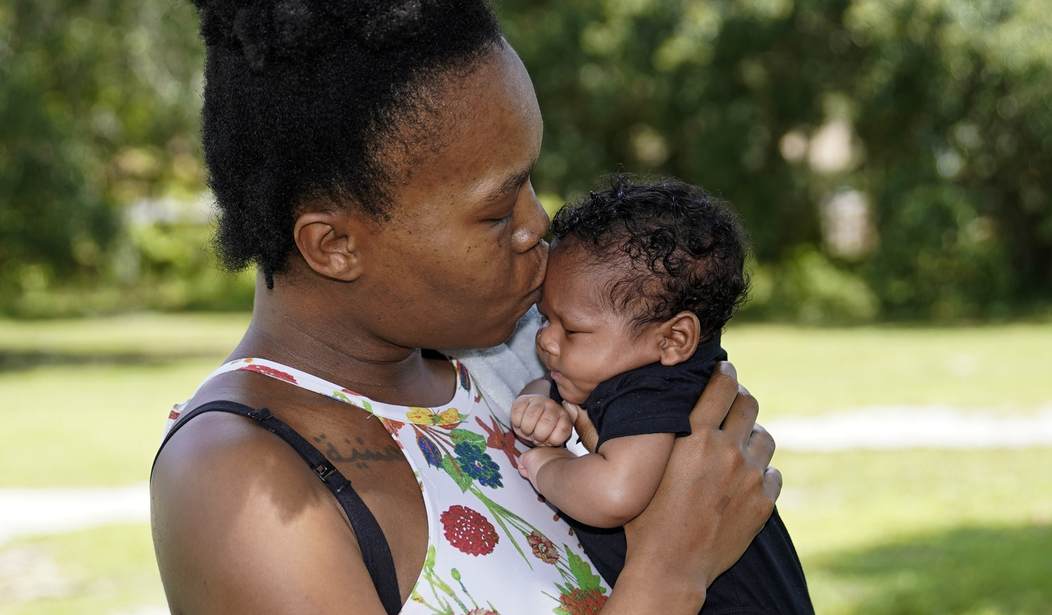
Before a child ever learns to read, before they understand rules or consequences, before they can even form a complete sentence, there is a voice.
Soft. Familiar. Repeated.
Mom.
It’s the first voice most of us ever know. And long before we have the ability to remember it, that voice is already doing something extraordinary—it’s shaping how we experience the world. Not metaphorically. Literally.
Neuroscience has been catching up to something families have always known. In those earliest months and years, a child’s brain is developing at a pace that will never be matched again. Millions of neural connections form every second. Pathways are being built that will determine how that child processes emotion, language, trust, and even stress.
And at the center of that process—consistently, predictably—is the mother.
Her voice regulates a newborn’s heartbeat. Her presence lowers stress responses. Her responsiveness teaches a child whether the world is safe or unpredictable.
This isn’t sentimental language. It’s biology.
Researchers studying attachment have found that when a mother responds consistently—picking up a crying infant, making eye contact, speaking in that instinctive, melodic tone we all recognize—the child’s brain begins to organize itself around security.
That becomes the baseline. From there, everything else builds.
Language develops faster when a child is spoken to frequently and directly—especially by the mother. Vocabulary, comprehension, even future reading ability are tied to those early verbal interactions. It’s not just what is said—it’s the rhythm, the tone, the repetition.
It’s the relationship. And if that sounds clinical, it isn’t. It’s deeply personal. Because behind every study is a reality most of us have lived.
A child falling asleep to the same voice every night. A scraped knee soothed not just by words, but by who is speaking them. A moment of fear quieted simply because Mom is there.
That presence does more than comfort. It defines.
It tells a child, without ever saying it out loud: You matter. You’re safe. You’re not alone. And those messages—delivered a thousand times in a thousand small moments—become part of who that child is.
This is where identity begins. Not in a classroom. Not on a screen. Not from a peer group. But in the earliest relationship a child knows. And it’s why the role of a mother in those years cannot be casually replaced or outsourced without consequence.
When that bond is strong, children tend to grow into stability. They handle stress better. They form healthier relationships. They navigate the world with a baseline confidence that doesn’t need to be manufactured later.
When it’s fractured—or missing entirely—the effects show up just as clearly.
Higher anxiety. Difficulty forming attachments. Struggles with trust. A constant sense that something foundational is off, even if they can’t explain why.
This isn’t about assigning blame. Life happens. Circumstances vary. No two families are identical. But patterns are patterns. And the pattern here is unmistakable.
The first voice a child hears matters. More than we’ve been willing to admit.
I think about that when I look back on my own life. I don’t remember the first words my mom ever said to me. None of us do. But I remember the feeling of her presence. I remember what it felt like to come home and know she was there. To hear her voice and immediately feel the world settle into something understandable.
When she stepped in to teach me at home—when she took responsibility for my education in a way that wasn’t common at the time—it wasn’t just about academics. It was about formation. It was about reinforcing something she had already been building from the beginning: that I was seen, that I was capable, that I wasn’t going to be left to figure things out alone.
And when I lost her at 17, I didn’t lose that foundation. Because by then, it was already part of me.
That’s what a mother’s voice does. It stays. Long after the house is quiet. Long after the routines change. Long after, in some cases, she’s no longer physically here.
We carry it. In how we speak to others. In how we handle pressure. In the internal dialogue that kicks in when things get hard.
That voice becomes a reference point. A compass. And from a Christian worldview, none of this is surprising.
Scripture has always pointed to the importance of early instruction, of guidance rooted in relationship. “Train up a child in the way he should go…” isn’t just about discipline—it’s about formation in the earliest, most impressionable years. And who is most often doing that training?
Mom.
Not alone, of course. Fathers matter deeply. Family matters collectively. But there is something uniquely powerful about the role a mother plays in those first interactions with life itself. She is, quite literally, the introduction to the world. Which makes what we do with that role—as individuals and as a culture—far more important than we tend to admit. Because if we get those early years right, a lot of what comes later becomes easier. And if we get them wrong, we spend decades trying to repair what should have been built from the beginning.
That’s not hyperbole. That’s reality.
So when we talk about mothers this week, we’re not talking about sentiment. We’re talking about influence. The kind that doesn’t make headlines, doesn’t trend, doesn’t get measured in quarterly reports—but quietly shapes everything that follows.
It starts with a voice.
Simple. Familiar. Consistent. And if that voice is steady, loving, and present… it echoes for a lifetime.
Editor's Note: Do you enjoy Townhall's conservative reporting that takes on the radical Left and woke media? Support our work so that we can continue to bring you the truth.
Join Townhall VIP and use promo code FIGHT to receive 60% off your membership.


Join the Conversation
VIP members get the ability to comment on articles.