





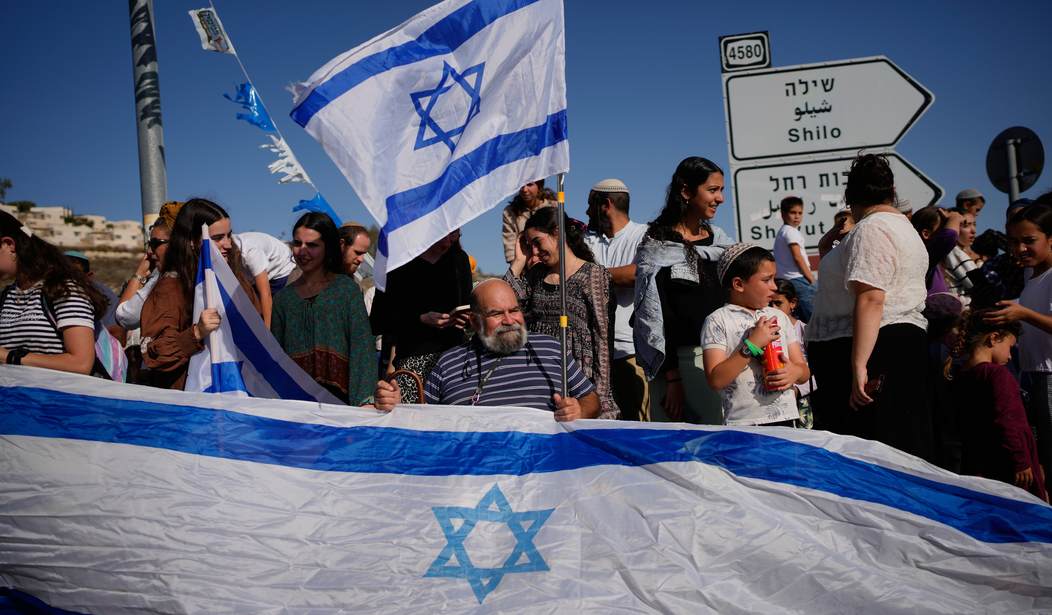
Fr. Antoine Lévy and Dr. André Villeneuve recently shared background and insights for a new initiative they have launched to engage Catholic support for Israel, “For Zion’s Sake: A Catholic Appeal in Support of Israel.” The initiative was discussed on the Inspiration from Zion podcast, along with details of the full document whose goal is to challenge growing anti-Israel sentiment within Catholic circles.
The discussion took place amid ongoing regional tensions, including another day of missile attacks on Israel from Iran and Yemen, providing a personal perspective of the physical attacks to which Israel is subject. “For Zion’s Sake: A Catholic Appeal in Support of Israel” is a coordinated Catholic response to what the authors describe as a disturbing post-October 7, 2023, trend: the delegitimization of Israel, often framed in both political and theological terms. The trend is not uniquely Catholic; however, it cannot be ignored in the Church, and among some prominent adherents.
Villeneuve, a biblical scholar and founder of Catholics for Israel, and Lévy, a Dominican theologian and author located in Jerusalem, explain that the appeal emerged from frustration with Catholic voices — including influencers, theologians, and media figures — who have portrayed opposition to Israel as a moral and even doctrinal imperative. They argue this narrative combines political accusations (apartheid, colonialism, genocide) with a revived supersessionism that denies any ongoing theological significance to the Jewish people or the Land of Israel.
The document rejects the notion that the Church has “replaced” Israel. Drawing heavily on Biblical verses from Genesis through the prophets to the New Testament, the authors affirm God’s irrevocable covenant with the Jewish people and highlight the biblical foundation of that, as well as the enduring biblical connection between the people and the Land. For instance, citing Romans 11, the document rejects “every posture of arrogance or condescension toward the Jewish people – the ‘natural branches’ whom St. Paul calls beloved and whose calling he declares irrevocable.”
In discussing the Catholic Church’s early response to modern Zionism, Lévy noted, “the conversation between Herzl and Pope Pius X…started very, very badly. But there has been a succession of popes that have been much more sensitive to the history of Jews and what they have been…trying to achieve, and until the… the recognition of the State of Israel, etc. And now we're in another phase.”
They also point to post-Vatican II developments, particularly “Nostra Aetate,” as a return to a more biblically-grounded understanding rather than a rupture with Catholic tradition.
A central section of the document addresses the pivotal question: Can a faithful Catholic be a Zionist? The authors define Zionism simply as the Jewish people’s right to self-determination in their ancestral homeland. Catholic Zionism, they explain, recognizes God’s faithfulness in the modern return of the Jewish people while acknowledging Israel as a human, fallible state subject to moral scrutiny. Just like any other state.
They explicitly reject caricatures of Christian Zionism as end-times motivated, ethnic supremacism, or an unconditional political endorsement of any Israeli government or policy. Instead, they call for a balanced approach: supporting Israel’s right to exist as the Jewish state, to defend itself against existential threats while upholding justice for all inhabitants. The document condemns violence by extremists on any side and expresses concern for Palestinian Arab suffering without equating it with delegitimizing Israel’s existence.
Both Lévy and Villeneuve emphasized that anti-Zionism often functions as a contemporary form of antisemitism, and that is also part of their motivation. Villeneuve noted the theological inconsistency in affirming God’s irrevocable gifts to Israel while denying any significance to the Jewish return to the Land. Lévy highlighted how the existence of the State of Israel forces the Church to confront its own identity and mission in light of Jewish continuity.
Villeneuve explained how the appeal is structured as a chiasm, beginning with “Catholics Against Israel: A Disturbing Trend” and concluding with “Catholic Voices for Israel: Our Appeal.” The middle sections, logically, in this framework are “Understanding Israel,” “Catholic Zionism: The Pivotal Question,” and “Standing With Israel.” It calls for repentance from supersessionist attitudes, stronger leadership from Catholic institutions against anti-Israel rhetoric disguised as moral concern, and active solidarity with the Jewish people.
The document has garnered nearly 150 Catholic signatories so far, including theologians, priests, and prominent figures such as Brigitte Gabriel. There is also a “Friends of” section for non-Catholics to lend their support for the initiative. The authors expressed encouragement at the positive response from many who felt isolated in their support for Israel. While they do not claim to speak for the Church, they view the initiative as contributing to necessary theological development and dialogue. At one point, a parallel was made to traditional Jewish Talmudic debate.
Lévy and Villeneuve acknowledged the delicacy of the topic, particularly regarding Palestinian Arab Christians, but stressed that genuine solidarity with Palestinian Arabs need not negate recognition of Israel’s covenantal significance. They hope the document will encourage open discussion rather than polarized condemnation.
At one point in the conversation, the issue of the delegitimization of Israel as being rejected by God and Him punishing them by sending them into perpetual exile came up, as noted in the document. Lévy referred to this as “the deepest theological core of this whole issue.” Because if the delegitimization of Israel is centered on the Jewish people’s exile, that alone emphasizes the truth that undermines the very delegitimization of Israel to begin with: that the Jewish people are indeed indigenous in the Land.
Lévy and Villeneuve invited Catholics and people of goodwill to read and sign the appeal, emphasizing that support for Israel flows from fidelity to Scripture and the best of Catholic tradition.
The full document and signatory information are available through Catholics for Israel and related channels. As the conversation concluded, both Lévy and Villeneuve expressed hope that this initiative represents a turning point — not just in Catholic-Jewish relations, but in the Church’s deeper engagement with the mystery of Israel as rooted in God’s faithful promises.
Follow the entire conversation on YouTube here, or the “Inspiration from Zion” podcast.
Editor’s Note: Do you enjoy Townhall’s conservative reporting that takes on the radical Left and woke media? Support our work so that we can continue to bring you the truth.
Join Townhall VIP and use promo code FIGHT to receive 60% off your membership.


Join the Conversation
VIP members get the ability to comment on articles.