





When political movements begin treating the President of the United States not as a constitutional office occupied by a political opponent, but as an existential enemy to be destroyed, the damage extends far beyond one administration or one election cycle.
Compromise becomes betrayal. Cooperation becomes weakness. Institutions lose legitimacy because citizens are conditioned to believe that any outcome produced by the other side is inherently immoral or unacceptable. Political incentives shift away from solving problems and toward sustaining outrage, paralysis, and permanent conflict.
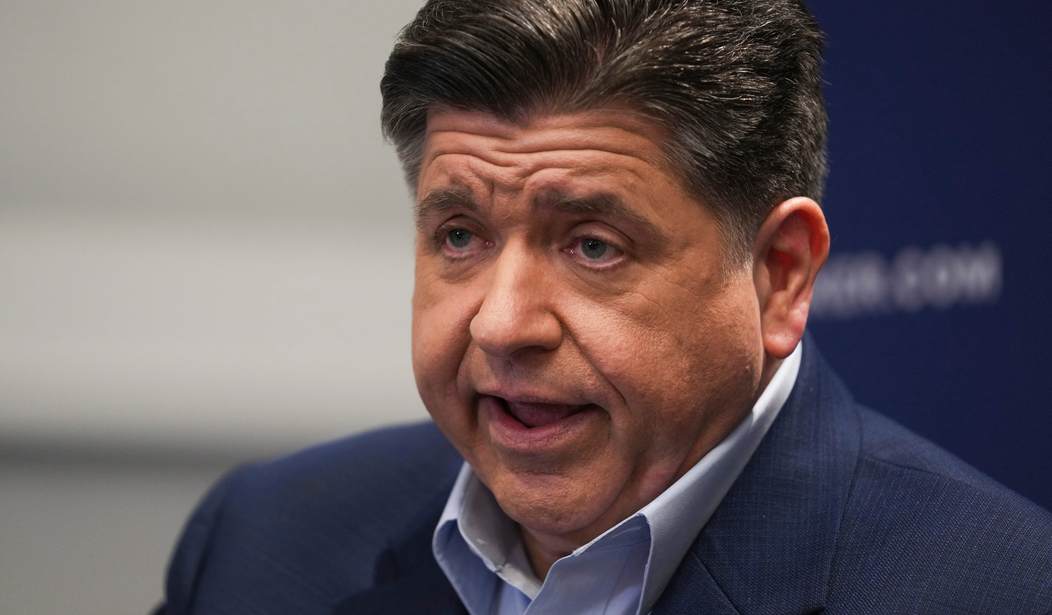
We see this mentality reflected repeatedly in the rhetoric of influential political leaders across the country. Illinois Governor J. B. Pritzker declared that “Republicans cannot know a moment of peace.” Maxine Waters urged supporters to publicly confront members of the Trump administration wherever they were found. Hillary Clinton argued that “you cannot be civil” with political opponents viewed as threats to core values. Nancy Pelosi questioned why there were not “uprisings all over the country.” Cory Booker encouraged activists to “get up in the face of some congresspeople.”
Individually, some may dismiss these statements as emotional rhetoric or political theater. Collectively, however, they reveal something deeper: a political culture increasingly organized around confrontation, moral absolutism, public intimidation, and permanent resistance rather than persuasion, restraint, coexistence, and governance.
That language may energize activists and generate headlines, but it does not govern a nation. It deepens division, hardens resentment, and rewards the most performative and destructive instincts in public life. More importantly, it creates a political culture where governing itself becomes secondary to sustaining outrage and preserving partisan power.
There is another consequence to this kind of rhetoric that is even more corrosive: it deadens our sense of shared humanity.
When political leaders repeatedly portray millions of Americans not merely as opponents with differing ideas, but as morally illegitimate, dangerous, or unworthy of peace itself, they engage in the act of othering. They divide the country into categories of acceptable and unacceptable citizens, virtuous and irredeemable Americans.
That process not only dehumanizes political opponents. It inevitably dehumanizes the people engaging in it as well. A leader who conditions himself to see entire groups of fellow citizens primarily through the lens of ideology and political conflict gradually loses the ability to see individuals clearly at all. Human beings become abstractions. Families become statistics. Suffering becomes politically inconvenient.
And that moral blindness carries consequences. When one of Governor Pritzker’s own constituents, my daughter Katie, was killed within an environment shaped by the policies he championed, there was no evident moral seriousness proportionate to the gravity of what occurred. No meaningful acknowledgment of the deeper policy failures involved. No indication that the loss of a young life demanded reflection beyond political positioning. It felt as though Katie was not seen as a human being whose life carried inherent dignity and immeasurable value, but as an inconvenient complication to a political narrative.
If politics conditions leaders to see innocent citizens primarily as obstacles, demographics, or threats to ideological projects rather than as human beings worthy of compassion and protection, then something profoundly dangerous has already happened to our political culture.
A healthy republic requires more than elections and institutions. It requires leaders capable of recognizing the humanity even of those with whom they profoundly disagree. Once politics destroys that capacity, cruelty becomes easier, indifference becomes normal, and accountability disappears behind slogans, abstractions, and partisan loyalty.
Language matters because political culture eventually shapes public behavior and public policy. A society repeatedly taught that political opponents are existential enemies eventually begins governing that way. Compromise becomes betrayal. Cooperation becomes weakness. Enforcement becomes oppression. Prudence becomes cruelty. Policies are increasingly evaluated not by whether they protect citizens or strengthen the country, but by whether they satisfy ideological demands and partisan narratives.
The danger of this mentality is not merely rhetorical. Eventually, it produces a policy built around ideology, symbolism, and political identity rather than competence, accountability, prudence, and public safety. When politics becomes centered primarily around resistance and moral posturing, serious questions are no longer approached with seriousness because outcomes matter less than sustaining ideological narratives and defeating political opponents.
Illinois did not arrive at its current immigration policies accidentally. These policies were shaped by leaders more concerned with signaling defiance against federal enforcement and political opponents than fulfilling the fundamental responsibilities of governance. Sanctuary policies were elevated not simply as administrative choices, but as moral declarations and political weapons; symbols of resistance first, functioning policy second.
In that environment, basic responsibilities that any serious government is obligated to address were ignored, weakened, or dismissed as politically inconvenient. Who is entering the state? Who is being released into communities? What meaningful background, health, criminal, or assimilation standards exist? What guardrails protect citizens? What happens when enforcement itself is treated as inherently immoral?
Illinois increasingly adopted an approach that not only discouraged enforcement but actively incentivized migration through promises of protection regardless of status, publicly funded benefits, and special accommodations often unavailable even to struggling citizens whose taxes fund the system itself. Citizens raising legitimate concerns were frequently met not with honest debate, but with moral condemnation or accusations intended to silence discussion altogether.
But governance is not activism. Leadership is not performance. Policies cannot be judged solely by intentions, slogans, or the emotional satisfaction of political tribes while ignoring real-world consequences.
My twenty-year-old daughter Katie paid the price for that failure on the streets of Urbana, in a sanctuary city within a sanctuary state.
Katie was not killed by rhetoric alone. She was killed within an environment shaped by political choices. Choices made by leaders who subordinated prudence, enforcement, accountability, and public safety to ideology, symbolism, and partisan confrontation. Choices made by people far more interested in appearing compassionate, morally enlightened, and politically resistant than in exercising the difficult discipline required to govern responsibly.
A government that loses the ability to distinguish compassion from recklessness eventually stops protecting its own citizens. Compassion without standards, enforcement, accountability, and responsibility is not wisdom. A functioning society requires laws that mean something, borders that are respected, institutions people can trust, and leaders mature enough to acknowledge that every policy carries consequences, especially when those consequences are borne by innocent families.
Great leaders persuade rather than dehumanize. They work with people they disagree with without abandoning their principles, and they understand that public office carries a responsibility not merely to win political battles, but to protect the people they serve. When politics becomes organized around resentment, ideological warfare, and the destruction of opponents, ordinary citizens inevitably pay the price.
Katie deserved better from the people entrusted to govern Illinois. So do the citizens of this state and this country.
Editor's Note: Do you enjoy Townhall's conservative reporting that takes on the radical left and woke media? Support our work so that we can continue to bring you the truth.
Join Townhall VIP and use promo code FIGHT to receive 60% off your membership.


Join the Conversation
VIP members get the ability to comment on articles.