





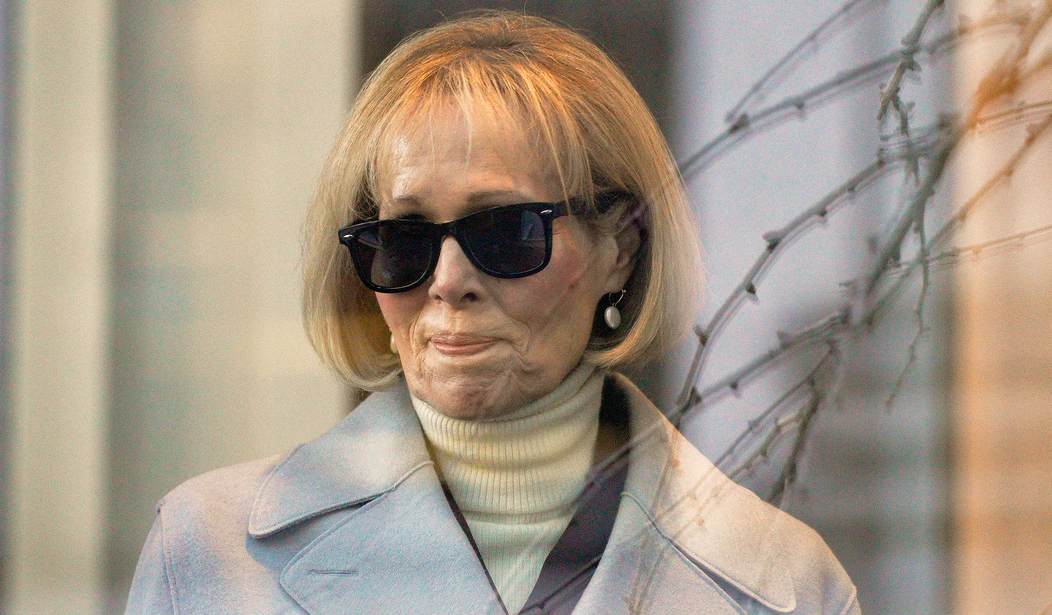
The Supreme Court just teed up something it hasn't done since 2018: a second look at a case it already declined to hear. The justices distributed Donald Trump's petition for rehearing in the E. Jean Carroll case this week. It could land on the August 17 order list. Everyone has moved on to the next headline. I haven't, and here's why.
I spent years working in private security before I ever touched a balance sheet. I know what it looks like when a room decides who's guilty before the facts show up. That's what happened here.
Start with the money. Carroll's litigation was bankrolled in part by Reid Hoffman, the LinkedIn billionaire and major Democratic donor, through a nonprofit called American Future Republic, which funneled roughly $7 million to her lawyers. Hoffman's role stayed hidden until weeks before the first trial in 2023, after Carroll testified in her 2022 deposition that no one else was paying her legal fees. The Justice Department is now investigating whether that was perjury. A federal appeals court let the funding question slide, ruling Carroll had plausibly forgotten who was cutting the checks. Maybe. I've reviewed enough litigation finance arrangements to know a $7 million check doesn't get forgotten.
Then there's the underlying claim. Carroll alleged Trump assaulted her in a Bergdorf Goodman dressing room sometime in 1995 or 1996. He has denied it flatly and consistently, calling it a hoax invented to sell a book. No police report. No contemporaneous complaint beyond two friends she says she told at the time. Bergdorf itself confirmed it had no security footage from that era, because none of that survives 25-plus years. New York's Adult Survivors Act, passed in 2022, opened a one-year window letting accusers sue over decades-old claims that would otherwise sit outside the statute of limitations. That's the law that got this case into court in the first place. A new statute, not new evidence.
His denial went further than the assault. When Carroll went public in 2019, Trump said he'd "never met this person in my life." A 2022 deposition later surfaced the one photo of the two together: a receiving line at a 1987 NBC charity event, lasting five or six minutes by Carroll's own account. Trump's explanation: he'd worked a lot of charity lines and shook a lot of hands without registering who they belonged to. I believe it. I've shaken hands and posed for photos with hundreds of people at conferences and speaking events, and I couldn't identify most of them today. A receiving line isn't a relationship, and a forgotten face in an old photo proves nothing about a dressing room years later.
A sympathetic jury still found Trump liable and awarded Carroll $5 million, and the Second Circuit upheld it. Here's Trump's actual argument to the Supreme Court. He says the jury never should have heard testimony from other women accusing him of decades-old misconduct, or the 2005 Access Hollywood tape, both admitted as pattern evidence. Carroll's own lawyers concede in their brief that the case might look different without it, arguing only that the rest of her case was strong enough to stand on its own. That's the appeal in a sentence: whether piling on unrelated allegations to prove a specific claim is how the American justice system is supposed to work.
I've sat as a designated expert witness in federal and state courts on both sides of the docket. I've watched judges wrestle with exactly this question: whether propensity evidence helps a jury find the truth or just helps it find the defendant guilty of being disliked. The rules of evidence exist because our system is built on the idea that you get convicted, or held liable, for what you did, not for who you are or who else says you did something similar. Carroll's team leaned hard on the "who you are" version, and it worked.
I'd have more patience for the line that Trump is simply exhausting every legal avenue to dodge accountability, if I hadn't watched Brett Kavanaugh nearly lose his Supreme Court seat over an allegation from Christine Blasey Ford, who couldn't fix the year, the house, or the guest list, and whose own named witness said she had no memory of the event. That got treated as disqualifying on testimony thinner than what a jury just used to hang $5 million on a former and future president. If uncorroborated recollection can end a nomination, it should draw the same scrutiny when it ends in a nine-figure judgment.
None of this means Trump walks. It means the process deserves the skepticism conservatives were mocked for demanding in 2018, the same skepticism plenty of Trump's critics once insisted on and now conveniently forget. The Supreme Court hasn't granted a rehearing petition in seven years and may not grant this one either. But the justices taking a second look at all, with a DOJ perjury probe running alongside it, should give pause to anyone who still thinks this case was only ever about the man on the other side of the caption.
Jay Rogers is a financial professional with more than 30 years of experience in private equity, private credit, hedge funds, and wealth management. He has a BS from Northeastern University and has completed postgraduate studies at UCLA, UPENN, and Harvard. He writes about issues in finance, constitutional law, national security, human nature, and public policy.

Join the Conversation
VIP members get the ability to comment on articles.