





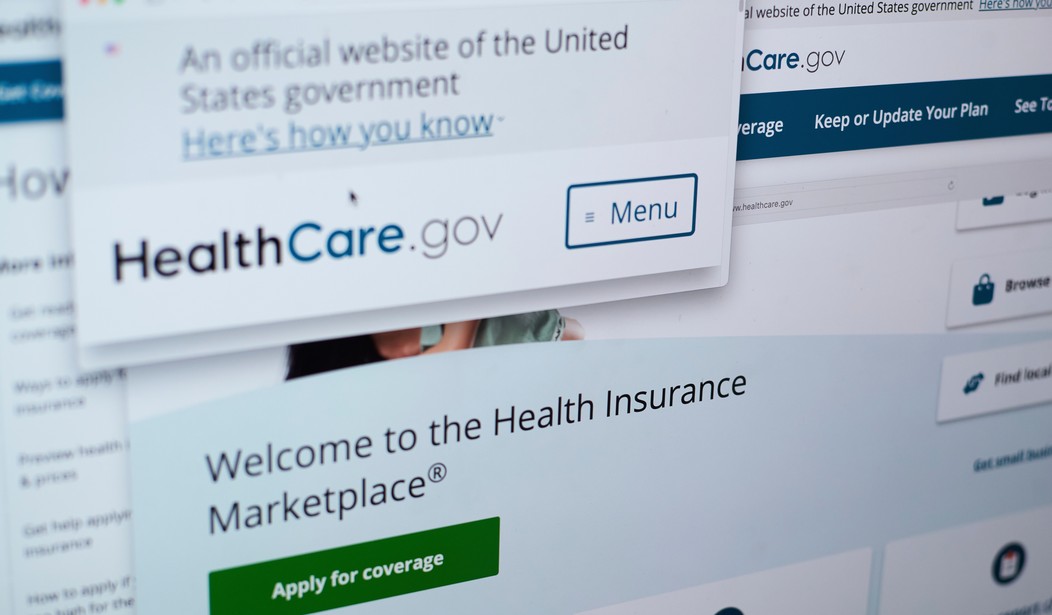
Nancy Pelosi told us in 2010 that we'd have to pass the bill to find out what was in it. Sixteen years later, we're still finding out, and the answer keeps getting worse.
Health and Human Services Secretary Robert F. Kennedy Jr. and CMS Administrator Dr. Mehmet Oz announced this month that more than 1 million people enrolled in Affordable Care Act marketplace plans have no Social Security number on file. Kennedy called it a "glaring warning sign for fraud." He's not wrong. But he's also not telling the whole story, and neither is anyone shouting past him on cable news.
I spend my working life underwriting risk: private credit, factoring, litigation finance, the kind of lending where you learn fast that an unverified identity is the first flag, not the last. In my world, a portfolio built on a million unverifiable counterparties gets shut down before lunch. In Washington, it got expanded for five years and called a policy win.
Here's the shape of it. HHS says it has already pulled 2.9 million improper enrollments off the rolls, with another 2.6 million still under review, down from a peak of 5.6 million phantom, improper, and fraudulent enrollees in 2025. That's real progress, and credit belongs where it's due. But the honest caveat matters, too: a missing Social Security number isn't proof of fraud on its own. Some enrollees are lawfully present immigrants who qualify under other documentation. HHS itself hasn't said all 1 million cases are fraudulent, a distinction the "massive fraud" headlines tend to skip.
Where the picture turns from suspicious to damning is the Government Accountability Office's own testing. GAO built twenty fictitious identities, fake people who don't exist, and submitted them for subsidized coverage. All four of its 2024 test applicants got approved, drawing roughly $2,350 a month in advance premium tax credits. Of twenty submitted for 2025, eighteen were still actively enrolled as of last September, pulling down more than $10,000 a month combined. GAO called the results "generally consistent" with the identical test it ran a decade earlier. A decade of warnings, and the marketplace still can't tell a real person from a Social Security number typed into a form.
Then there's the reconciliation gap, which is where the real money sits. Every enrollee who draws an advance premium tax credit is supposed to file a tax return reconciling the subsidy against actual income. GAO couldn't find evidence that happened for more than $21 billion in credits tied to 2023 alone, roughly a third of everything paid to identifiable Social Security numbers that year. One number was used across more than 125 policies for a combined 71 years of coverage. Another 58,000 numbers matched Social Security's own death records, with $94 million sent out on behalf of people who were already gone. CMS didn't enforce reconciliation at all from 2021 through 2024.
None of this happened by accident. The American Rescue Plan's zero-premium plans handed brokers a commission for every enrollee they could stack onto the rolls, whether that person consented or even knew about it. CMS logged 275,000 complaints in eight months from Americans who discovered they'd been signed up without asking. A brokerage president and a marketing executive were just convicted in a $233 million enrollment fraud scheme, with insurers collecting $180 million in taxpayer-funded subsidies along the way. That's not a fringe case. That's the incentive structure working exactly as designed.
I'll grant the other side its strongest point, because a fair fight requires it: undocumented immigrants are not the driver of health care's cost problem. The most credible estimates put their share of total U.S. health spending at a percent or two, nowhere near the sum Washington now spends propping up a subsidy system too porous to verify who's cashing the check. If Congress wants to extend the enhanced subsidies set to lapse at year's end, fine. That's a legitimate debate to have. But extending a program without fixing the verification holes GAO just spent a year documenting isn't compassion. It's negligence with better branding.
Tort reform, pharmacy middleman transparency, tighter eligibility enforcement: none of it is a silver bullet, and I won't pretend otherwise. Liability reforms in the states that have tried them trimmed premiums by a few points, not by half. But every one of those reforms shares a common thread with fixing the ACA's fraud problem. Washington must acknowledge that the current system fails to deliver, something neither this administration nor the previous one has been willing to do.
Fraud in a $124 billion-a-year program isn't a rounding error. It's the bill coming due for a decade of pass-it-first, ask-questions-later governance. Kennedy and Oz are finally asking the questions. The rest of Washington should stop pretending the answers don't matter.
Jay Rogers is a financial professional with more than 30 years of experience in private equity, private credit, hedge funds, and wealth management. He has a BS in criminal justice from Northeastern University and has completed postgraduate studies at UCLA, UPenn, and Harvard. He writes about issues in finance, constitutional law, national security, human nature, and public policy.
Editor's Note: It’s America’s 250th birthday! Help Townhall celebrate the greatest nation in history by honoring its past, defending its present, and preserving its future with reporting you can trust.
Join Townhall VIP and use promo code AMERICA250 to receive 74% off your membership.



Join the Conversation
VIP members get the ability to comment on articles.