





My brother spent over 20 years in the military before retiring as an 18 Bravo (Weapons Sergeant) in the Army Special Forces. My son graduated from West Point and flies Army helicopters. I graduated from Marine Corps OCS almost forty years ago. Three of us have carried weapons professionally, under oath, in service to this country. So, when constitutional law professors explain what the Second Amendment's militia clause really means — and invariably conclude it means you don't have an individual right to own a firearm — I listen carefully. Then I disagree.
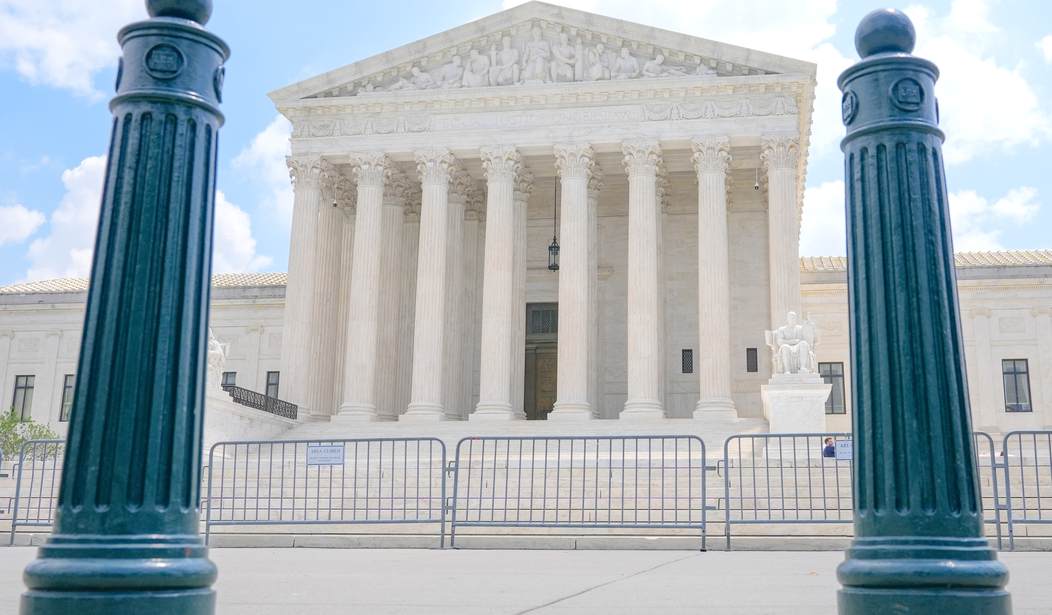
The argument runs like this: the Second Amendment's prefatory clause ('A well-regulated Militia, being necessary to the security of a free State') conditions the operative clause ('the right of the people to keep and bear Arms, shall not be infringed'). Therefore, the right belongs to the militia, not to individuals. Therefore, gun control is constitutional. It's a clean syllogism. It's also wrong, and the Supreme Court said so in District of Columbia v. Heller (2008).
In 1789, when Madison proposed the amendment, there was no standing army to speak of. The Founders were deeply suspicious of one. Permanent professional armies were how European monarchs kept domestic populations in line, and the men who had just fought a war against the Crown understood that better than anyone alive. Their solution was the militia: not a government-controlled force, but the body of the people — able-bodied male citizens who brought their own arms to muster, maintained those arms at home, and constituted the republic's defense against both foreign invasion and domestic tyranny.
The key word is 'their own.' Militiamen of the founding era didn't draw weapons from a government armory. Each man arrived with the firearm he kept in his house. The right to keep and bear arms wasn't ancillary to militia service — it was its prerequisite. An unarmed citizenry couldn't form a militia. The prefatory clause explains why the right matters; it doesn't restrict who holds it.
The Court in Heller held that the Second Amendment protects an individual right, unconnected to militia service, to keep and bear arms for traditionally lawful purposes including self-defense in the home. Justice Stevens's dissent argued that the militia clause conditions everything. The majority answered that no other provision in the Bill of Rights works that way — the prefatory clauses in the Third and Fourth Amendments don't limit their operative clauses either. Constitutional text isn't written so that subordinate clauses erase the rights that follow them.
Heller was the necessary correction. New York State Rifle and Pistol Association v. Bruen was the structural one.
Bruen replaced it with a historical-tradition test: a firearms regulation is constitutional only if it's consistent with the historical tradition of firearm regulation in this country. If you can't point to a founding-era analog — something the Founders or early republic legislators actually did — the modern regulation fails. The Court applied that test to New York's requirement that concealed carry applicants demonstrate 'proper cause,' meaning a particularized need beyond a general desire for self-defense. New York couldn't find the historical analog. The requirement fell.
But the alternative wasn't neutral. Means-end balancing systematically favored legislatures over rights-holders, because any sufficiently creative government lawyer can construct a governmental interest. The Founders didn't write 'shall not be infringed, except when the government has a sufficiently compelling reason.' They wrote 'shall not be infringed.' Bruen takes that text seriously in a way the balancing framework never did.
The objection I hear most often from the professorial class is that founding-era history can't govern modern weapons. The AR-15 didn't exist in 1791. True. Neither did the internet, and the First Amendment applies to it without much controversy. Heller's holding — that the government cannot categorically prohibit civilian ownership of weapons in common use for lawful purposes - doesn't require a perfect analog to every modern firearm. It requires that regulations be anchored in a tradition of constitutional governance, not in a judge's policy preferences.
The fight over Bruen's implementation continues. California, New Jersey, Maryland, and New York have enacted regulations designed to minimize its reach - sensitive location expansions, training requirements, storage mandates, ammunition restrictions. Wolford v. Lopez, decided 6-3 in June 2026, struck down Hawaii's requirement that concealed carry permit holders obtain express permission before entering private property open to the public. That ruling will generate follow-on litigation in every state with a comparable default rule. The court has already indicated that it has added major gun cases to the 2026-2027 docket, including challenges to state bans on semiautomatic rifles such as AR-15s.
The constitutional argument here isn't partisan. Madison's draft, the Anti-Federalist record, and the linguistic structure of the prefatory clause don't belong to either political party. They belong to the document. Bruen read the document. The states' engineering workarounds should too.
The militia clause wasn't a loophole for future legislatures to exploit. It was the reason the right mattered most — and still does.
Jay Rogers is a financial professional with more than 30 years of experience in private equity, private credit, hedge funds, and wealth management. He has a BS from Northeastern University and has completed postgraduate studies at UCLA, UPENN, and Harvard. He writes about issues in finance, constitutional law, national security, human nature, and public policy.
Editor's Note: It’s America’s 250th birthday! Help Townhall celebrate the greatest nation in history by honoring its past, defending its present, and preserving its future with reporting you can trust.
Join Townhall VIP and use promo code AMERICA250 to receive 74% off your membership.


Join the Conversation
VIP members get the ability to comment on articles.