





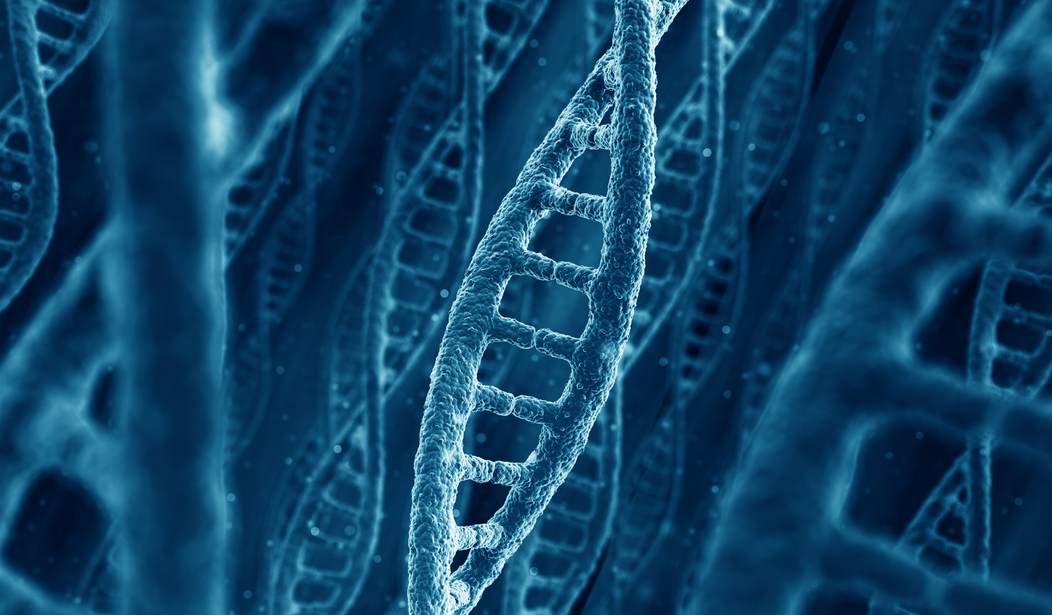
There is a common misconception of microbial life as relatively crude and simple compared to cutting-edge human technology. But take the most advanced human factory you can think of, and now imagine that it also can self-replicate, self-repair, and run without human factory workers; then you will begin to get an idea of the sort of “machines” we are talking about in microbiology.
Who or what designed and built these wonders? Was it a purely blind, material process, as modern evolutionary theory holds? Or is there evidence that this sophisticated architecture sprang from some designing intelligence—from an Architect?
We approach with special care this issue of how cellular complexity arose, aware that modern evolutionary theory is closely associated in many people’s minds with cherished values such as scientific enlightenment, critical reasoning, and educational progress. As a result, when one points out empirical problems with its story of how life’s interconnected complexities arose, one reaction may be scandalized astonishment mixed with incredulity.
This sense of shock is all the more likely if one has not followed the twists and turns in this scientific discussion in recent years. Those who have not will be unaware, for instance, that in November 2016, the Royal Society, the oldest and among the most distinguished scientific societies in the world, met in London to discuss questions in biology that remain unanswered by the neo-Darwinian synthesis. At the gathering, several leading life scientists revealed their deep dissatisfaction with textbook orthodoxy regarding how new life forms arose.
Another notable moment occurred in 2022 with the publication of an article entitled, “Do We Need a New Theory of Evolution?” Appearing in a June issue of the U.K.’s left-leaning The Guardian, this controversial survey by science writer Stephen Buranyi featured the heretical ideas of various biologists from what is known as the Third Way of Evolution, or the Extended Evolutionary Synthesis (EES). This group relegates the neo-Darwinian mechanism to a secondary role in explaining the emergence of novel biological form, focusing instead on new mechanisms they hope will shore up the weakened center-post of evolutionary theory.
Meanwhile, various recent studies have expanded the empirical resources of those championing the design hypothesis.
As more questions arise about modern evolutionary theory, more scientists than ever, all around the world, are asking if textbook explanations still hold water. Is it plausible that mindless, undirected natural processes crafted all the cell’s high-tech hardware and software? Such a claim would seem, at the very least, to be under considerable stress from the weight of new data.
Charles Darwin himself had no way to glimpse the intricacies of the cell. He and his contemporaries viewed the cell as a fairly simple substance. But when one advances from Darwin’s Victorian England to the 21st century, one finds a significant change in perspective. In recent years, as biologists and geneticists have continued to unravel the cell’s mysteries, phrases such as “staggering complexity” and “infinitely complex” have appeared in the literature. The sheer sophistication of the nano-world opening up before us has repeatedly shocked the research community. DNA is more information-rich than we imagined, and we now know that it is tethered to a mysterious control system, the epigenome, that directs the molecular orchestra.
Our hope is that the vista upon vista of fantastic microscopic architecture we tour in these pages will inspire not only a deeper understanding of molecular biology but also a renewed sense of wonder and a measure of humble curiosity about what we have yet to learn. In a speech at Rice University in 1962, President John F. Kennedy said, “The greater our knowledge increases, the more our ignorance unfolds.” This truth manifestly applies to the life sciences. Biologists are probing ever deeper into the unknown. In doing so, we not only find out new truths, but also discover new vistas of ignorance. In the case of biological information, that dance of genetics and epigenetics, each new discovery raises fresh questions and opportunities to realize just how much we do not know, and how much more there is yet to discover.
James P. Gills, MD, is a world-renowned pioneering ophthalmologist and author of many books, including "Epigenetics and the Architect," co-authored with Tom Woodward, PhD, in the Rhetoric of Science and Research Professor at Trinity College.
Editor's Note: Do you enjoy Townhall's conservative reporting that takes on the radical Left and woke media? Support our work so that we can continue to bring you the truth.
Join Townhall VIP and use promo code FIGHT to receive 60% off your membership.



Join the Conversation
VIP members get the ability to comment on articles.