







Lorie Smith is a conservative Christian and a website designer who thinks she should be able to engage in her chosen occupation without compromising her moral beliefs. But that is illegal in Colorado, where Smith is forbidden to create websites for heterosexual weddings unless she is also willing to create websites for gay weddings.
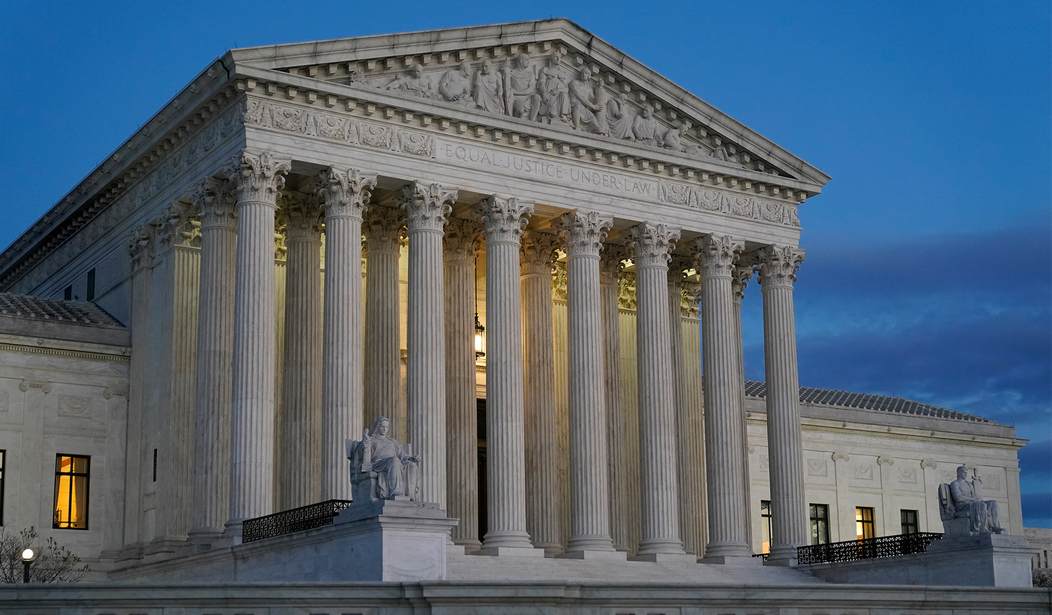
The Colorado Anti-Discrimination Act simultaneously censors Smith by stopping her from announcing the principles that guide her work and requires her to express a message that contradicts those principles. The question for the Supreme Court, which heard Smith's case on Monday, is whether those commands are consistent with her First Amendment right to freedom of speech.
Colorado and Smith agree that she is happy to serve any customer, regardless of sexual orientation, provided the work is consistent with biblical values as she understands them. In practice, both parties say, that means Smith "will decline any request to design, create, or promote content" that "contradicts biblical truth," "demeans or disparages others," "promotes sexual immorality," "supports the destruction of unborn children," "incites violence," or "promotes any conception of marriage other than marriage between one man and one woman."
Last year, the U.S. Court of Appeals for the 10th Circuit agreed with Smith that her custom website designs "are pure speech." It said Colorado's rules therefore amount to compelled speech as well as viewpoint-based speech restrictions, making them subject to "strict scrutiny."
That standard is very hard to satisfy. It requires that a challenged law be "narrowly tailored" to advance a "compelling" government interest, meaning that goal cannot be served through less restrictive means.
The 10th Circuit nevertheless concluded that CADA's application to Smith and her business, 303 Creative, passes constitutional muster because it is necessary to protect the "material interests" of "marginalized groups" in "accessing the commercial marketplace." That conclusion is puzzling.
As Smith's lawyers at the Alliance Defending Freedom note in their Supreme Court brief, "hundreds of other website-design companies operate in Denver alone." So even if Colorado allowed Smith to specialize in opposite-sex weddings, gay couples would have plenty of alternatives.
According to the 10th Circuit, that's not good enough. "For the same reason" that Smith's bespoke website designs qualify as speech, it said, they are "inherently not fungible."
While same-sex couples would have lots of other options if Smith were permitted to run her business the way she wants, the appeals court reasoned, they would not have access to (SET ITAL) her (END ITAL) unique work. In that respect, it said, Creative 303 is "similar to a monopoly."
That "monopoly of one" theory, which dissenting Judge Timothy Tymkovich called "unprecedented," "threatens every artist's control over her own speech, replacing speaker autonomy with the government's message," Smith's lawyers argue. By "declaring that a unique and customized product is irreplaceable and that therefore a requirement to provide it in the commercial marketplace is narrowly tailored," First Amendment specialists Eugene Volokh and Dale Carpenter likewise warn in a Supreme Court brief filed by the Cato Institute, the 10th Circuit's analysis effectively eliminates "free-speech protection for providers of expressive products."
The implications are potentially sweeping. Under CADA, Tymkovich suggested, Colorado could force "an unwilling Muslim movie director to make a film with a Zionist message" or require "an atheist muralist to accept a commission celebrating Evangelical zeal." The state could "force Muslim filmmakers to promote Scientology or force lesbian artists to design church websites criticizing same-sex marriage," Smith's brief says.
Since some state and local laws prohibit commercial discrimination based on political activities or ideology, such legally mandated speech could go even further. "Under Colorado's theory," Smith's lawyer observed during oral argument on Monday, "jurisdictions could force a Democrat publicist to write a Republican's press release."
While such hypotheticals might seem fanciful, the underlying principle is the same. If the courts allow compelled speech in the name of protecting equal access to "places of public accommodation," supporters of those laws won't necessarily like the results.



Join the Conversation
VIP members get the ability to comment on articles.