







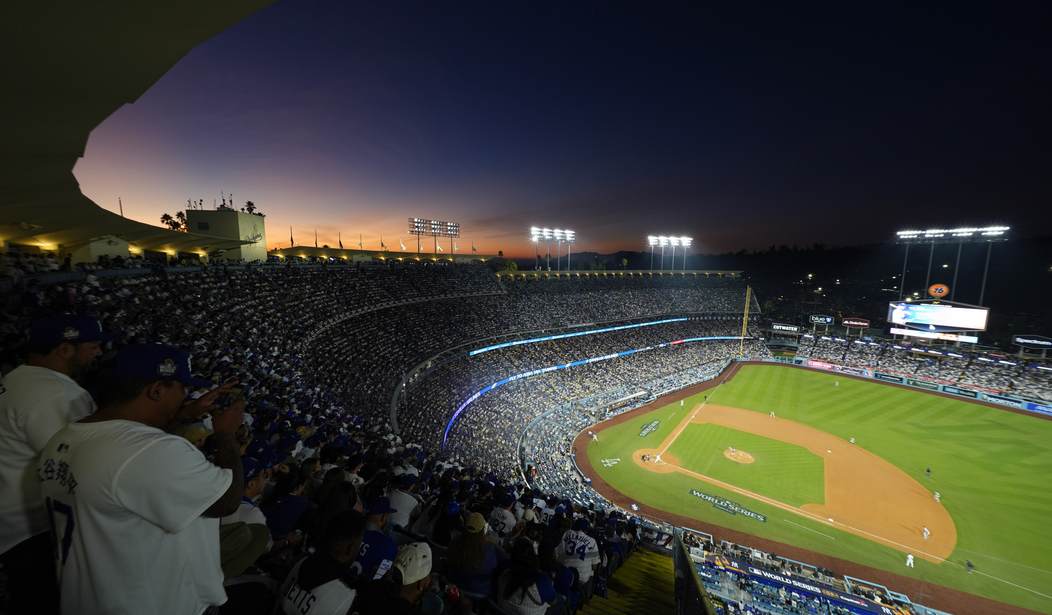
The end of the baseball season draws near as the last two teams – the Rays and the Brewers – compete for the World Series crown.
Meanwhile, the midterm elections are less than two weeks away, and the 2028 elections are two years and two weeks away. If the so-called “blue wave” prevails in the upcoming midterms, our nation will be in peril for all future presidential elections. Why? Democrats have long been advocating the abolition of the Electoral College. Worse, DSA candidates drool at the prospect and are not shy about their intentions if elected.
Even among those who have beef against the Electoral College, the process is widely misunderstood. Volumes have been written, but an easy way to understand the justification for the Electoral College is by reviewing the results of baseball's 1960 World Series – yes, you read that correctly.
Power Unlimited
In the 1960 World Series, the New York Yankees boasted sluggers like Mickey Mantle, Roger Maris, Yogi Berra, Héctor López, Elston Howard, Tony Kubek, and Bill Skowron. That year, they set an American League home run record at the time with 193. The Yankees also had a phenomenal pitching staff, led by future Hall-of-Famer Whitey Ford.
Their opponent was the Pittsburgh Pirates, a worthy National League challenger but nowhere near the reputation and raw power of the Yankees. The Pirates were heavy underdogs against the legendary Yankees, who had captured 16 World Series titles up to that point.
In Game 1, the Pirates won a close match, 6-4. The next day, the Yankees trounced them 16-3. In Game 3, the Yankees continued their offensive onslaught, pounding the Pirates 10-0. Fortunately for the Pirates, Game 4 was not a slugfest and they won 3-2. They also won Game 5 by a score of 5-2. However, the Yankees weren't to be held down, and in Game 6, they pulverized the Pirates 12-0.
Tied 3-3, the World Series championship came down to a final Game 7. At that point, the Yankees had outscored the Pirates 46-17, an incredible gap. If total runs, rather than wins, determined the World Series champion, the Pirates would have to outscore the Yankees by 29 runs in the Game 7, which had never been done.
Shock and Awe
In the last game, Bill Mazeroski, a second baseman not known for power at the plate, led off in the bottom of the ninth inning and hit a home run to give the Pirates a 10-9 victory over the Yankees.
Sports writers consider this World Series one of the wildest in baseball history. Counting all seven games, the Yankees outscored the Pirates 55-27, more than double the runs.
Why bother reviewing the scores of these games? What does this have to do with presidential elections? Good questions. Should the Yankees have been crowned 1960 World Series champions because they massively outscored the Pirates? Or were the Pirates the rightful victors because they won four of the seven games? You know the answer: it was the Pirates.
It would be a travesty in baseball if the team which scored the most runs was declared the winner, regardless of how many games they actually won. So it is with the Electoral College.
Individual Contests
Each state represents an individual contest. Whoever wins the popular vote in 48 states wins all the electoral votes in that state. Nebraska and Maine are exceptions, allowing for proportional Electoral College voting.
Critics of the Electoral College ask, "Why not switch to a nationwide popular vote election?" The answer is that California, Illinois, New York, and other large population states would dominate elections indefinitely. People in small population states such as Alaska, Montana, Nebraska, New Mexico, Alabama, Delaware, Maine, West Virginia, and others would be disenfranchised. Their votes simply wouldn't matter.
Abandoning the Electoral College would be analogous to telling people in small states, "You might as well not vote. Your vote won’t have any consequences." This outcome wouldn't be true for just one election. It would likely be so for future election after election.
Each Legal Vote Should Matter
By maintaining the Electoral College, as the Founding Fathers intended, everyone's vote (ideally) counts. People across the U.S. have a vested interest in casting their ballots.
So, the Electoral College yesterday, the Electoral College today, and the Electoral College forevermore.
Editor’s Note: Do you enjoy Townhall’s conservative reporting that takes on the radical Left and woke media? Support our work so that we can continue to bring you the truth.
Join Townhall VIP and use promo code FIGHT to receive 60% off your membership.
Join the Conversation
VIP members get the ability to comment on articles.