





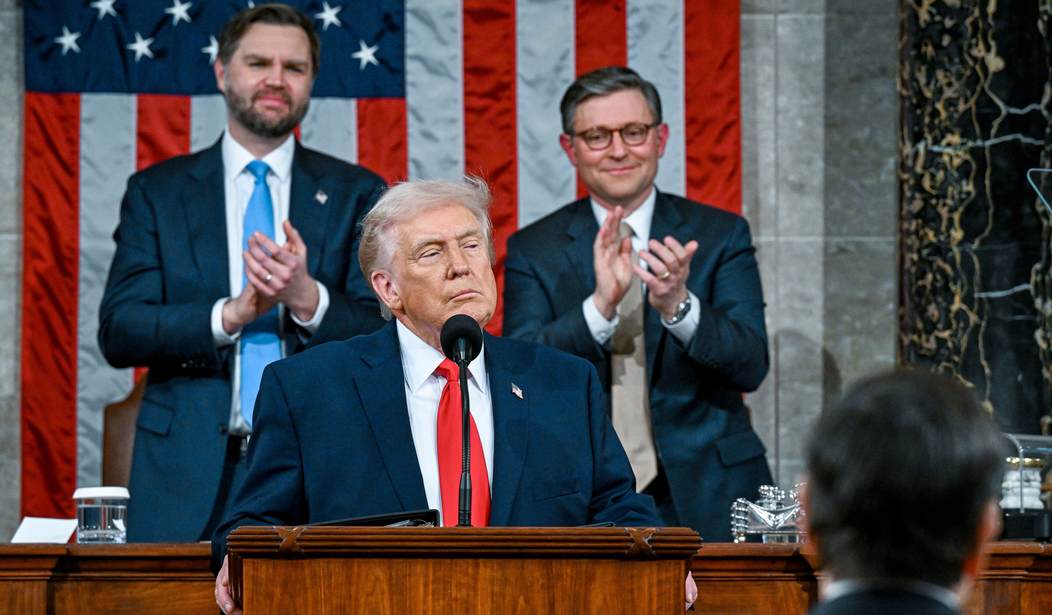
State of the Union addresses typically follow a predictable structure. Presidents outline legislative priorities, highlight selected accomplishments, and contrast their agenda with the opposition. Long-term structural challenges that extend beyond a single administration often receive limited attention. Even less common is a sustained focus on younger Americans who will bear the cumulative consequences of current fiscal, economic, and social policy decisions.
President Donald Trump’s State of the Union address departed from that pattern. Rather than referencing generational stability in passing, the speech treated it as a central policy objective.
As someone preparing to enter adulthood in an economy defined by elevated housing costs, rising debt burdens, and declining institutional trust, I have often viewed these addresses as designed to reassure existing voters. This speech instead focused on the structural barriers confronting younger Americans and argued that long-term national prosperity depends on restoring the capacity to build stable, independent lives.
The United States is operating below replacement-level fertility, with a total fertility rate of approximately 1.6 births per woman, well below the 2.1 rate required to maintain population stability. The median age of first marriage has increased, and family formation occurs later and less frequently.
When housing prices outpace wage growth, when student debt obligations extend for decades, and when early adulthood is defined by financial volatility, marriage and childbirth decline in predictable ways. President Trump’s address demonstrated a structural understanding of that relationship. Rather than framing demographic decline as a moral failing, he connected it directly to institutional design and policy incentives.
The clearest legislative embodiment of this framework is the One Big Beautiful Bill Act. Media coverage largely concentrated on tax provisions and border enforcement funding. The more consequential component is the bill’s generational architecture: how it restructures incentives, taxation, and long-term economic planning to directly influence family formation, workforce participation, and intergenerational stability.
One example is the creation of Trump Accounts. These accounts allow children to begin accumulating assets at birth, establishing a financial base before adulthood. By age 18, a young American would not begin from zero. Asset ownership correlates strongly with long-term stability, entrepreneurship, and higher rates of family formation. Early capital formation reduces volatility, which often delays major life decisions, including homeownership and parenthood.
Education reform within the legislation reflects a similar philosophy. Education represents one of the largest long-term financial variables facing young families. When school quality is tied strictly to residential ZIP codes, housing costs rise in high-performing districts, effectively pricing families out of certain areas. That distortion shapes where individuals live, whether they feel prepared to raise children, and how much economic risk they can absorb.
By expanding scholarship pathways and modernizing funding flexibility, the bill reduces the likelihood that parenthood becomes a high-risk financial calculation. These provisions did not dominate headlines, yet they reveal a consistent governing principle: families should be empowered to make decisions based on opportunity rather than constrained by bureaucratic rigidity.
Perhaps the most personally meaningful moment of the address was the President’s reference to Charlie Kirk. Kirk represents a generational civic infrastructure that is often dismissed or misunderstood by political elites. He built a movement centered on civic participation, institutional engagement, and cultural continuity. His work demonstrates that younger Americans are not disengaged; many are searching for structure and meaning within institutions that appear increasingly unstable.
By acknowledging Kirk’s impact, the President recognized that national continuity requires youth leadership, mentorship, and cultural investment. A country does not maintain prosperity through fiscal metrics alone. It sustains prosperity when the next generation is capable of assuming responsibility within stable institutions.
Trump’s speech integrated economic reform, educational flexibility, and family stability into a single framework of national renewal. The central argument was direct: generational renewal is foundational to national prosperity.
For years, younger Americans have been instructed to adapt to instability. This address argued that public policy should instead reduce structural barriers that prevent the formation of stable lives. When young adults can accumulate assets, access flexible education pathways, afford housing, and form families without disproportionate financial risk, long-term national strength follows.
A country approaching 250 years of constitutional governance must evaluate whether its institutions equip the next generation to sustain that legacy. I am grateful that President Trump is among the few presidents in American history to acknowledge that prosperity cannot be reserved for citizens who already enjoy stability.
National strength depends equally on young Americans who are still building careers, forming families, and establishing economic independence.
Editor's Note: With President Trump back in the White House, the state of our Union is strong once again.
Support Townhall’s coverage of the president's State of the Union Address and help us report the truth the radical Left doesn't want you to hear. Join Townhall VIP and use promo code POTUS47 to get 74% off your VIP membership.


Join the Conversation
VIP members get the ability to comment on articles.