





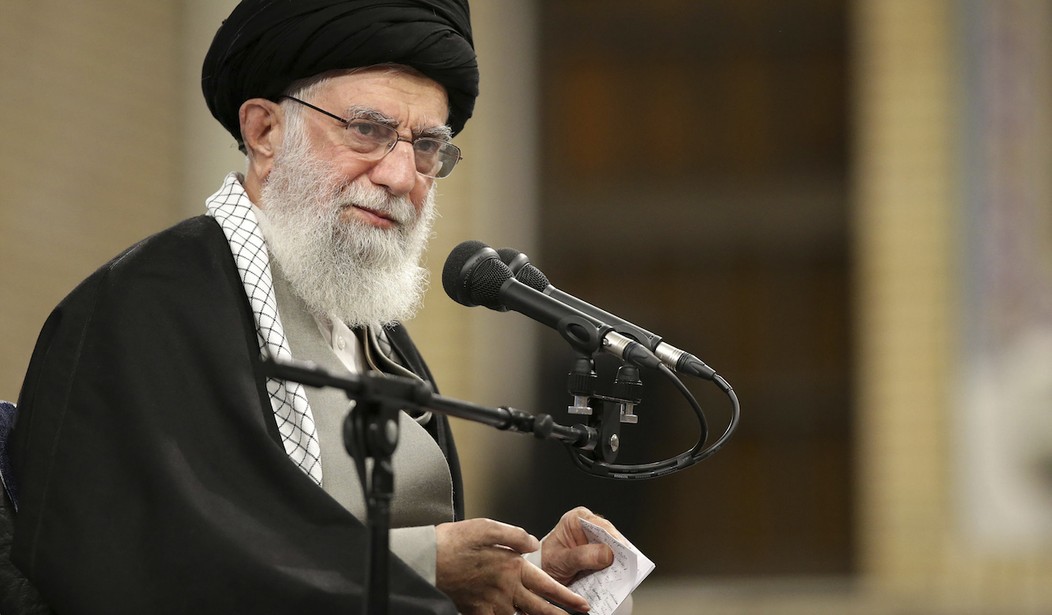
While there are daily conflicting reports about the Vienna talks on re-establishing the Joint Comprehensive Plan of Action (JCPOA), such as approaching a new agreement between the United States and Iran, the main question here is: If these negotiations reach a positive result and the two sides reach a new agreement to re-establish JCPOA, even with the addition of any new clauses, can we be sure of the Iranian regime's adherence to this agreement? And will Iran really give up its goal of acquiring an atomic bomb?
This is a question that even the most optimistic diplomats who want the United States to return to the JCPOA agreement cannot answer.
A brief glance at the actions of this regime clearly show that the mullahs will never give up on this goal. And if they have now agreed to return to the JCPOA negotiations, it is absolutely out of desperation because Iran's economy has collapsed due to US sanctions.
Fifty-percent inflation, unemployment of more than a quarter of the workforce (regardless of the fact that even those who seem to be working, their monthly income does not even cover their minimum living expenses for 10 days, so much so that now about 80 percent of Iran's population lives below the poverty line) has turned Iranian society into a time bomb that is rapidly counting down to its time of explosion. The mullahs were forced to return to negotiations to lift sanctions. They ostensibly retreated to prevent the explosion. Otherwise, they would never have complied with the terms of the agreement, and would have in fact used the opportunity of Trump’s withdrawal to totally invalidate the agreement and move quickly to build the bomb.
In 2018, the theft of 50,000 digital files of information related to Iran's military nuclear program in the form of 163 CDs was reported. Although the details of this information have not been released due to confidentiality, there were sufficient reasons to prove that the Iranian regime, contrary to its claims of a peaceful nuclear program, has seriously sought to build an atomic bomb and has made progress in this regard. According to The Washington Post, "Iran was on the verge of mastering key bomb-making technologies."
In fact, if it were not for the revelation of the Mojahedin-e Khalq (MEK) Organization in 1991, there should be no doubt that Iran would now have become one of the countries with the atomic bomb. It is even terrifying to imagine some fundamentalist clerics having access to the atomic bomb and using it to blackmail the world.
Having an atomic bomb for this regime is one of the main levers not only to demand ransom from the world, especially Iran's southern neighbors, but also one of the foundations of the regime's stability. The leaders of this regime have repeatedly stated that if Gaddafi had not stopped his nuclear program, he would not have met that fate. And now their role model is North Korea.
As for Iran's lies, we do not even need to go into the past to the secrecy of its nuclear program before it was exposed by the Iranian Resistance. The remarks of the head of the Atomic Energy Organization of the regime, Ali Akbar Salehi, after the withdrawal of the United States from JCPOA, clearly show that Iran is unreliable. In his speech on January 22, 2019, he said, "During the negotiations, we had already bought pipes similar to the ones used in the Arak reactor, but the other side did not know about them. That is, while we were destroying the bridges behind us, we were also building bridges at the same time so that we could return faster if we were to return."
With these facts, while Khamenei on the one hand is in international isolation and on the other hand inside Iran, he is facing overwhelming opposition from the people. Most, in fact, have already decided to boycott the presidential elections next month as a denial of this regime, any concessions to Khamenei in the Vienna talks would show that the State Department has turned a blind eye to these facts and does not want to align itself with the will of the majority of Iranians who want regime change. Some compare this policy to the naivety of Chamberlain in his negotiations with Hitler. He thought that by appeasing Hitler, he would prevent war. Perhaps this comparison is not too erroneous. Because if the mullahs acquire a nuclear weapon, they can no longer be simply stopped from seeking ransom, and this path may lead to another devastating war, in which case the world will face a situation that is hard to imagine.

Join the Conversation
VIP members get the ability to comment on articles.