





Oh, what a tangled and fiscally risky web is woven when tax dollars meant to be spent on one thing are diverted to other things, scholars at the Allegheny Institute for Public Policy say.
The current protracted budget debate is instructive in these destructive practices, note Jake Haulk, president of the Pittsburgh think tank, and Eric Montarti, a senior policy analyst there.
As but one example, consider the commonwealth’s “convoluted and inappropriate funding mechanisms for its transportation sector,” they say (in Policy Brief Vol. 17, No. 38).
State House legislation adopted last week would, in part, transfer $50 million from the Public Transportation Trust Fund into the General Fund to help close a $2 billion-plus hole in the fiscal 2017-18 budget. An earlier version of the House plan would have transferred more than seven times that amount ($357 million).
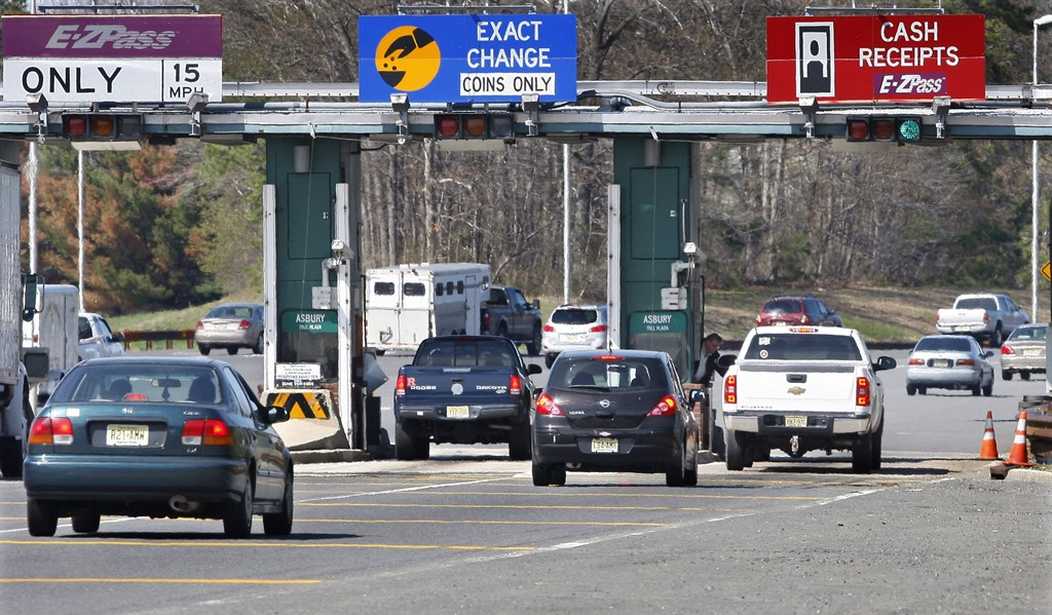
But Haulk and Montarti remind that such fiscal machinations are par for the course in Penn’s Wood. To wit, Pennsylvania uses a tax on wholesale gasoline to fund state Turnpike roads. But at the same time, it requires the Turnpike to provide funding for mass transit.
“This requirement forces it to borrow huge amounts of money compelling the Turnpike Commission to raise its toll charges to meet its statutory obligation to make the payments of over $450 million a year through 2022,” they say.
Calling that “clearly a distortion-creating mechanism,” Haulk and Montarti remind that public transit provides a service to the general public and should be funded by broad-based taxes that fall on the general public, whether they drive or not.
“Indeed, requiring the Turnpike to provide funds for mass transit that can only be done through higher tolls is a form of indirect taxation that commissions and authorities should not have the power to levy,” the think tank scholars say.
(That said, new Turnpike projects should be self-funded, based on sound revenue forecasts that cover construction and maintenance costs, Haulk and Montarti add.)
The problem and irony with such convolution, the researchers say, is that sales taxes intended for mass transit are diverted back to the General Fund, and Turnpike money sent to Public Transportation Trust Fund – borrowed dollars resulting in higher tolls – would be withdrawn and used to fund the state’s current operating expenses.
“In effect, the state would be using money borrowed by a state-created commission to fund current general operations,” Haulk and Montarti say. “This would be a very bad precedent that could open the door to even worse actions in the future.”
Indeed, Haulk and Montarti say the House budget proposal to divert money from special set-aside funds was well intentioned to avoid tax hikes. But the result will be lower spending from those funds on statutorily designated items.
Which raises yet another question: Why are there more than 100 of these special funds with a large number receiving dedicated sources of funding?
“If the items being supported by these funds are worthwhile, why are they not in the General Fund budget and getting annual appropriations based on their value to the commonwealth?” Haulk and Montarti ask.
The sheer number of such off-budget funds “cries out for a critical examination” of both their need to exist and the quality of their management, they add.
The Allegheny Institute scholars say the bottom line remains that such fund transfers do not address the systemic problem of spending exceeding General Fund revenue.
“At some point, spending will have to be cut,” Haulk and Montarti stress. “Tax hikes and new taxes will not solve this problem. Economic growth that enlarges the tax base is the answer.”

Join the Conversation
VIP members get the ability to comment on articles.