





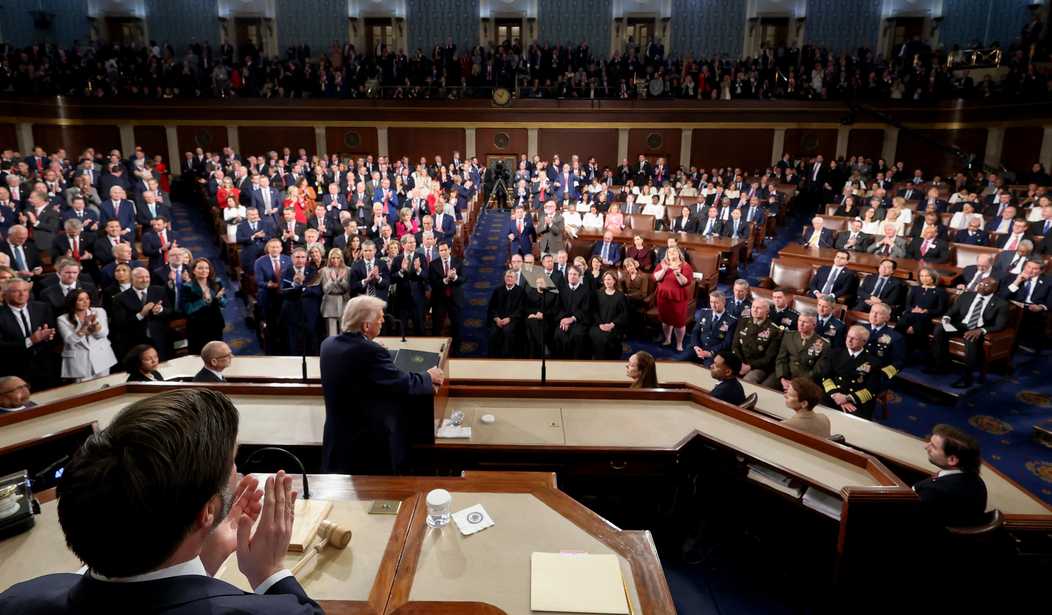
Outside of POTUS absolutely commanding the room during the State of the Union, there was an undercurrent throughout the entire speech that some people may have missed.
It wasn't loud. It wasn't branded. It wasn't hashtagged. But it was there.
While the words "Make America Healthy Again" weren't explicitly spoken Tuesday night, the framework was. And that matters. MAHA isn't just a rally cry anymore. It's moving into policy. In Washington, that's no small feat (we all know how long it can take this town to get anything meaningful done). When ideas jump from talking point to implementation, it's a signal. And that's exactly what we're seeing.
If you zoom out past the applause (and Trump calling out the Dems — 10/10, by the way), the speech wasn't just about economics, border security, or American manufacturing. It was about strength. And here's the thing no one says enough: a sick country cannot be a strong country.
When Trump discusses restoring productivity, reestablishing American dominance, and safeguarding the future, health must be part of that conversation. Chronic disease is not only a healthcare concern; it also represents an economic burden, a workforce challenge, and a military readiness threat. The State of the Union consistently emphasized protecting American children and ensuring future opportunities.
Good.
Because the numbers are sobering. Childhood obesity has skyrocketed. Early-onset Type 2 diabetes is no longer rare. Anxiety, depression, and autoimmune disorders are all rising. That's not random. That's environmental. That's dietary. That's incentive-driven.
For decades, we were told that refined grains were healthy. Low-fat was the answer. Sugar was fine "in moderation." Meanwhile, ultra-processed foods took over grocery shelves, school lunches, and federal programs.
So when this administration shifts federal dietary guidance away from the 1990s carb pyramid and toward whole foods, protein, and nutrient density, it's not a cosmetic change. It's a generational one.
Supporting young Americans isn't just about giving them better schools. It's about making sure their bodies and brains are healthy enough to take advantage of the opportunities we say we're creating.
One of the strongest through-lines in President Trump's State of the Union was lowering healthcare costs. And here's the uncomfortable truth: you don't reduce healthcare spending long term by negotiating drug prices alone. You reduce it by reducing the number of people who need those drugs for life.
And THAT'S the MAHA warcry.
Chronic diseases account for most of our healthcare spending. Conditions like diabetes, heart disease, obesity complications, and dementia aren't niche concerns; they also impact budgets. Therefore, when Trump advocates for drug affordability and Kennedy promotes upstream prevention, they are pursuing the same overarching strategy from different perspectives.
Downstream cost control. Upstream disease reduction. That's not ideological. That's math. And it benefits us all. Another quiet but important shift: a willingness to question long-standing regulatory assumptions.
Food dyes. Additives. Ultra-processed dominance in federal meal programs.
For years, the standard line was, "If the FDA approved it, it must be safe." Now the question is different: If other developed countries have moved away from certain additives, why haven't we?
That shift in governing approach matters. Even when courts push back at the state level, the conversation has changed. And in Washington, a change in conversation precedes policy change.
MAHA also represents something culturally important: a move away from pretending that chronic illness is purely a matter of willpower.
When incentives are broken, outcomes are broken.
If ultra-processed foods are cheaper than whole foods…
If school programs prioritize shelf life over nutrition…
If regulatory standards haven't meaningfully evolved in decades…
That's not just a personal failure. That's systemic. And as we've discussed, personal responsibility plays a role in all this. We aren't trying to downplay that here. But if the system is broken and you don't know any better, well…. Reforming systems is a governing issue, not (solely) a lifestyle debate.
MAHA wasn't shouted from the podium. But if you connect the dots — the nutrition reset, the chronic disease framing, the emphasis on children, the push for affordability, the institutional review — the direction is clear. President Trump and Secretary Kennedy are repositioning American health from reactive to preventive. From symptom management to incentive reform. From treating decline to reversing the trajectory.
That's not culture war politics. That's structural.
And if it sticks, if it moves beyond rhetoric into durable reform, it could end up being one of the most consequential shifts of this administration. And in this country.
President Trump didn't say "Make America Healthy Again." But if you were paying attention, he didn't need to.
America is definitely back, baby.
Editor’s Note: Do you enjoy Townhall’s conservative reporting that takes on the radical left and woke media? Support our work so that we can continue to bring you the truth.
Join Townhall VIP and use promo code FIGHT to receive 60% off your membership.


Join the Conversation
VIP members get the ability to comment on articles.