





Things become kosher because there is money to be made.
Rule Number One in Israel is that not all things Israeli are Jewish and not all things Jewish are Israeli. One can go to Tel Aviv and find high-end restaurants that are open on the Sabbath and serve shrimp and other non-kosher food. One could then drive to nearby Bnei Brak, an ultra-orthodox city, and find plenty of Torah-observant Jews who do not want to join up with the IDF. This has been the case since before Israel’s founding, as many leading Zionists themselves were not religiously observant. Most of the time, it’s a live and let live atmosphere, though at times, the schism between a secular state of Israel and a large religious Jewish population can lead to protests, clashes, and food fights in the Knesset. As they say, “Only in Israel.”
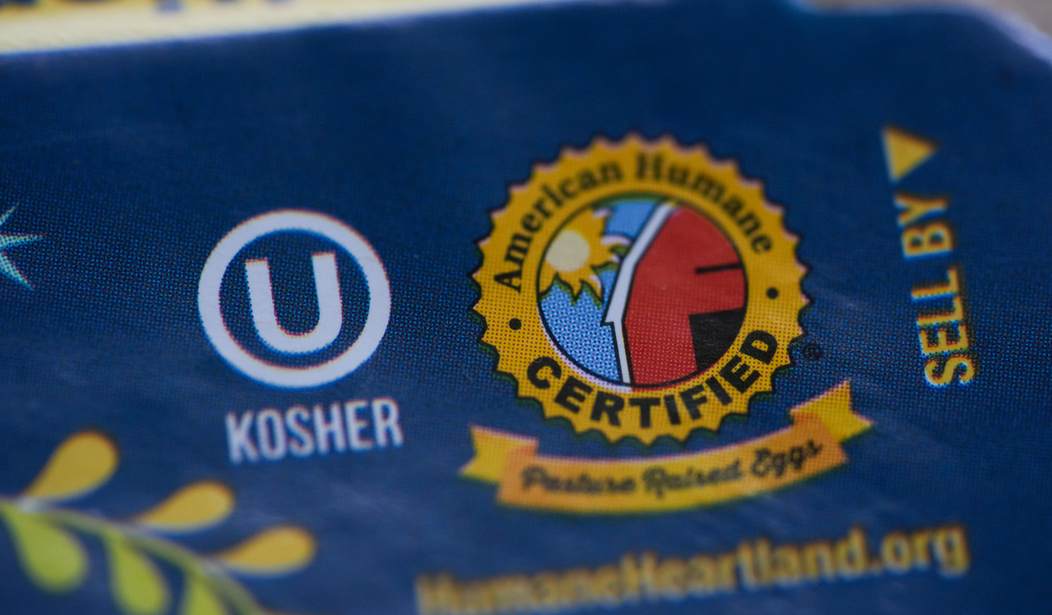
The other day, we went as a family to a local steakhouse. It’s the kind of place where the waiter spends more time telling you about the various cuts of beef than you actually spend eating them. The food was excellent, and the place entered the rare list of restaurants that we would want to go back to in the future. The place has been there for years but we never thought to go there until now. Why? It all has to do with a big sticker on the entrance that has a U inside an O. You have plenty of products in your house with this symbol: ketchup, mayo, Coca-Cola, milk, and dozens of others. O-U stands for the Orthodox Union of Rabbis, and it is the largest provider of kosher supervision in the U.S. and possibly the world. There are dozens of such organizations, so you might see a K in a circle or inside a star. But the O-U’s reach is big, with its people watching over factories throughout the world. When there was the horrendous terror attack in Mumbai, one of those killed in the Chabad House was there to supervise a factory for kosher certification. So why did this Texas steakhouse become O-U kosher? Because it makes good dollars and sense.
For 25 years, we have received a weekly magazine written and directed toward the religious community. Their delivery guy always throws it someplace that makes its recovery something for SEAL Team 6. Our magazine is in Hebrew, though the same outfit sells it in English in the U.S. and U.K. Around 15 years ago, we noticed something very strange. Several kibbutzim that were at the forefront of anti-religious activities when Israel came into existence were advertising that they offered a fully kosher dining room for summer visitors. There are different levels of kosher supervision, with the most basic level being absolutely none. These places did not just get the lowest level of kosher approval, as they understood that many Orthodox Israelis don’t rely on such things. No, they went the whole nine yards and got the crème de la crème of kosher supervision. And it wasn’t because they had sudden pangs of religious fervor. No, it was because of money. And I am all for it. The ultra-orthodox community in Israel is estimated to be around 800,000 to 1 million strong. Recent scientific studies have concluded that they eat and drink. As such, anyone who can provide them with food might stand to make a lot of money. Many products that did not meet kosher standards suddenly went for the touchdown and brought in the top organizations that provide kosher supervision. When Pepsi finally overcame its fear of an Arab boycott and came to Israel in the 1990s, it went right for the No. 1 kosher certification, so as to try to do an end-run around on Coke, which has been in Israel since the country’s founding.
On a personal level, I enjoy having more options at the store and with restaurants. One of Israel’s top chefs, who has a Michelin star in France, opened a kosher place not far from chez Bauer. Products that for years had no kosher symbol suddenly have them and it makes our options bigger and better. And all of this was done so as to grow markets. I have never heard of any company, hotel, or restaurant giving some speech about how they want to make people’s lives better by making their products available to the orthodox community. No, they want money, and religious people want more options for food and vacation. And the two interests overlap beautifully, with more products and more options becoming available year after year.
And this is ultimately the beauty of capitalism. The desires of the masses and the products of the factories come closest into alignment so as to maximize enjoyment and profit. People vote with their feet, and if one can provide a good or service that people find attractive, then he will have customers. Nobody forced any of these companies or hotels to either become kosher or lift their level of kosher supervision. One of the most moving events from the period immediately after the October 7 massacre was related to food. The IDF has a mandatory kosher requirement. Several top chefs wanted to cook for the troops, and in order to do so, they had to — for the first time in their lives — make a kosher kitchen. They really wanted to contribute, and they understood that in order to do so, they would have to change the way they did business. And they stepped up and got the job done, which was a boon for the soldiers going into Gaza and a feeling of shared responsibility for the chefs and their staffs.
In a non-capitalistic society, the leadership would either order companies to make kosher and possibly lose money in the process or forbid products from being kosher and make the lives of Jewish citizens less pleasant. My mother related that her father had to go to Belgium to get kosher meat after the Nazis banned ritual slaughter in Germany. When the Abraham Accords were signed, the Emir of the UAE ordered all hotels to offer a kosher option for breakfast. Several kosher restaurants opened up in Dubai. I was somewhat shocked to get a kosher meal on an Emirates flight to South Africa. Years earlier, someone with an Israeli stamp in his passport would not have even been allowed on the plane.
When going to a large supermarket in the U.S., there is a feeling of euphoria in the fruits and veggies section. In Israel, there are lots of Jewish laws regarding tithing of produce as well as Sabbatical year land practices. One has to look at the supervision of the stuff he buys and at times ask questions as to sourcing. Not so in the U.S. There are no such requirements, and one can buy pretty much anything that grew on the land or on a tree. Many food products require no kosher supervision, while many others products do. Our late rabbi gave us a good rule of thumb for restaurants: find the kosher supervisor. If he looks normal and says that the place is okay, then eat there. If he is not on the premises or if he looks like a picture you saw at the post office, then go someplace else. Kosher laws are spelled out very generally in the Torah and in great detail in Jewish law over the centuries. In the U.S., kosher foods are a multibillion dollar sector in the larger food market. I heard many stories of people driving hours to buy kosher meat or find appropriate products. Today, many stores have large kosher selections, including Israeli products (try the wines). It’s a win for the companies and the Jewish consumers. That is capitalism at its very best.
Editor's Note: Do you enjoy Townhall's conservative reporting that takes on the radical Left and woke media? Support our work so that we can continue to bring you the truth.
Join Townhall VIP and use promo code FIGHT to receive 60% off your membership.



Join the Conversation
VIP members get the ability to comment on articles.