
So-called artificial intelligence isn't all that intelligent. I've seen it get way too much stuff wrong, including some basic things, for it to be trusted for a lot of things. However, I've also found it helpful in a handful of circumstances.
But can AI take the National Instant Check System that's been around since the 1990s and make it work better in this day and age?
That's the question that one writer at the Washington Examiner tried to answer when he floated the idea of using it.
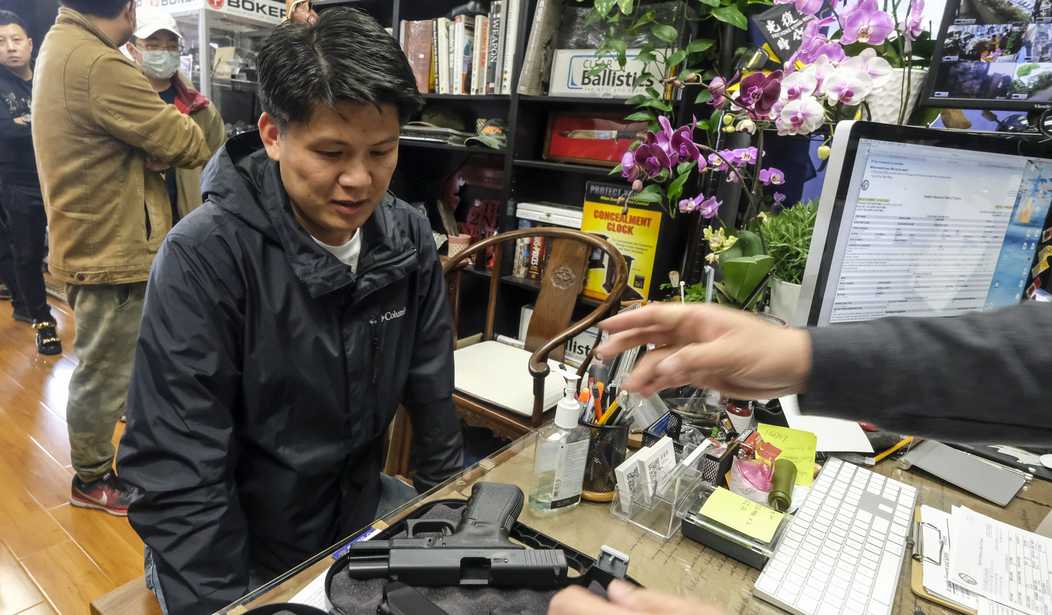
NICS, operational since 1998, is a remarkable tool, but it’s a 1990s solution operating in a 2026 environment. It screens purchases from federal firearms dealers against criminal, mental health, and other prohibited records. The problem is its architecture: fragmented databases that rely on inconsistent state reporting, manual processes that cause delays, and a statutory “default proceed” provision that allows sales to complete after three business days even if a check remains unresolved.
These aren’t theoretical vulnerabilities. The FBI’s 2024 NICS Operations Report documented more than 110,000 denials of prohibited buyers last year alone, out of more than 500 million checks processed since launch. The gaps are well-documented. Criminals exploit the delays. Straw purchasers exploit fragmented records. What’s missing isn’t the evidence; it’s the investment in technology to close the holes.
I'm going to jump in here to point out that straw purchasers aren't exploiting "fragmented records." They're people who aren't prohibited in the first place, so their background checks will always come back clean, regardless of how holistic the data is.
It's an important point to remember.
Moving on...
That investment is now available and well within reach. Machine learning models could integrate the Interstate Identification Index, the National Crime Information Center, NICS Indices, and state mental health records through natural language processing, flagging prohibited people in milliseconds rather than days. Advanced biometrics would eliminate false delays caused by common name matches, a persistent frustration for law-abiding buyers. Predictive risk scoring, built with appropriate oversight, could auto-clear low-risk applicants and route genuinely uncertain cases to expedited review.
The result: faster service for the roughly 107 million law-abiding gun owners in the United States and a system that’s considerably harder to circumvent for the much smaller population of prohibited persons who try.
This is an area where Congress can actually act, and where there’s a genuine constituency across party lines. Red-state Republicans who defend gun rights have every reason to support a faster, more accurate NICS. Blue-state Democrats who prioritize reducing gun violence have every reason to fund upgrades that would catch more prohibited buyers. The politics, in other words, are more tractable here than anywhere else in the gun debate.
In theory, this sounds amazing. New tools to update the system that speeds up lawful gun sales and makes it harder for criminals to get guns from gun stores seems like the perfect solution.
The problem is that AI is only as good as the information available to it.
As it stands, the NICS database is created from multiple states inputting the data into the system. Regardless of how they do so, that's not going to change because you're using some version of AI in the system itself. Especially when AI has a history of failing to recognize that the Founding Fathers looked like their portraits and weren't a DEI initiative.
Throw biometrics into the mix and while that might determine I'm not some other jackwagon who just happens to have a history of molesting gophers, it also means that turns the whole background check process, with paperwork, into an even more viable gun registration scheme, something that's illegal under federal law.
I'm not saying that AI couldn't be useful, to some degree, but let's not get worked up about it solving all of the world's ills when it comes to firearms. It's not going to do any of that, especially when so many guns are stolen from lawful gun owners in the first place.