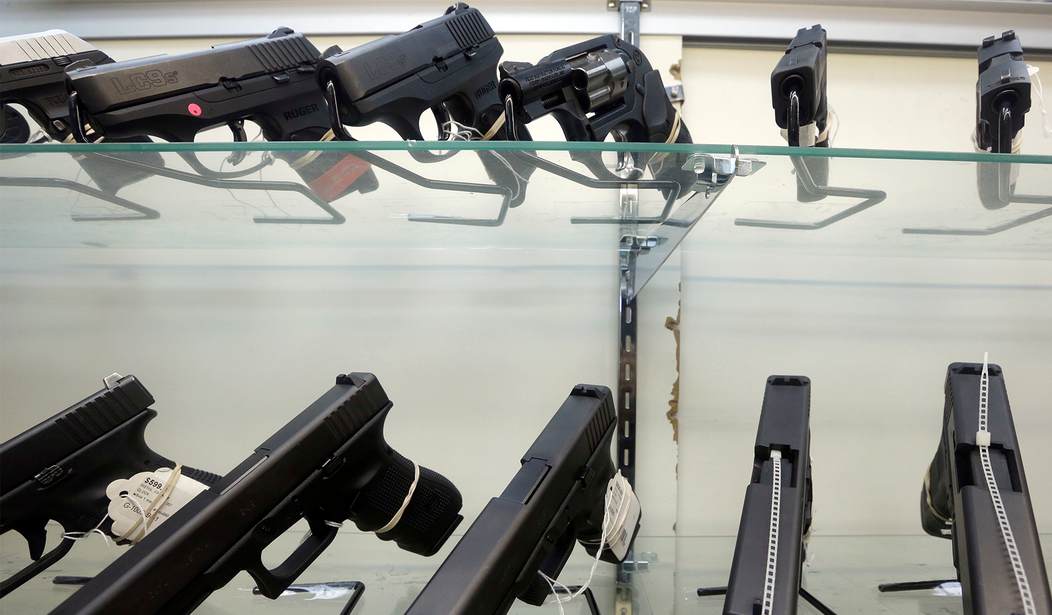

There are times when people are lawfully barred from owning a firearm. Being convicted of a felony or domestic violence, for example, is a big one, but the same is true when someone is "adjudicated as mentally defective."
It's an archaic way to phrase it, but basically, those with profound mental illnesses can be barred from owning a gun, for what should be obvious reasons.
However, in Minnesota, the state Supreme Court is grappling with a question about when that term actually applies.
In some cases, it's easy. Someone ruled incompetent due to profound mental illness, like schizophrenia, for example, is an easy case. But the case before the court is a little different than that.
The Minnesota Supreme Court grappled Thursday with whether a decades-old federal firearm prohibition for those found mentally incompetent can be applied to a man whose civil commitment was never carried out.
The case deals with a single, disputed phrase Congress adopted in passing the Gun Control Act of 1968. “Adjudicated as a mental defective,” in the statute, defines a person prohibited from possessing a firearm due to court-determined danger to self or others — a phrase Randy Dale Sixta claims he does not fall under.
Seven years after Lincoln County sheriff’s deputies found Sixta with a self-inflicted gunshot wound to the chest and a suicide note, he is now fighting to restore his Second Amendment rights.
While Sixta followed a court-ordered treatment plan that resulted in his civil commitment being stayed and eventually dismissed, the county maintains the mere finding of mental illness in 2019 — regardless of Sixta’s successful rehabilitation — triggers a federal regulation permanently barring him from owning a firearm.
Sixta told the Minnesota Supreme Court he should not lose his firearm rights because his commitment was put on hold and he took the necessary steps to seek help and improve his mental illness — claiming the phrase was intended to prohibit those with permanent mental deficiencies.
Chief Justice Natalie Hudson appeared sympathetic to the concern that people who experience acute but treatable crises could face lifelong consequences.
“Mr. Sixta, according to his own position at the time of the hearing, had dealt with his significant depression, had dealt with his mental illness issues, had dealt with the marital issues, had dealt with all of the things that led him to attempt suicide,” she said. “What more do we want people to do?”
The thing is, an involuntary commitment isn't necessarily a statement of anything about one's mental health beyond where they're at right then. Someone who, say, lost their family in a car accident or some other tragedy might well find themselves committed temporarily because of their depression, but once they recover, they might never have an issue again.
Plus, as noted, Sixta followed his treatment plan and is doing well, by all accounts. There's no reason for him to be denied his gun rights simply because he was in a bad place more than six years ago.
Basically, he did everything he was asked to do. He did everything right, and now the state is trying to say that he shouldn't be permitted to own a firearm because of one particularly bad day.
The strange thing is that, statistically, Sixta is less of a danger now than he was before. As anti-gunners love to point out, those who try to kill themselves and fail rarely attempt suicide again. It's why they say they want to make it hard for people to get guns quickly, because guns are pretty effective as a means of taking one's own life.
But now, Sixta survived his attempt to take his, even with a firearm, and now wants to move on with his life.
It shouldn't even be a thing, since it was always going to be a temporary commitment, even if he'd been committed. Minnesota is picking the wrong fight here, but considering how the state's politics have been lately, nothing about this should be surprising.