
Imagine you and I had a disagreement. Now, let's say that because of that disagreement, I notify the police that you made a threat. You may or may not have; all the police have is my word that you did.
That's not enough to do much of anything beyond a reasonable doubt, the standard juries need to convict you of threatening me. But I could get your guns taken away for it, and that's a massive problem.
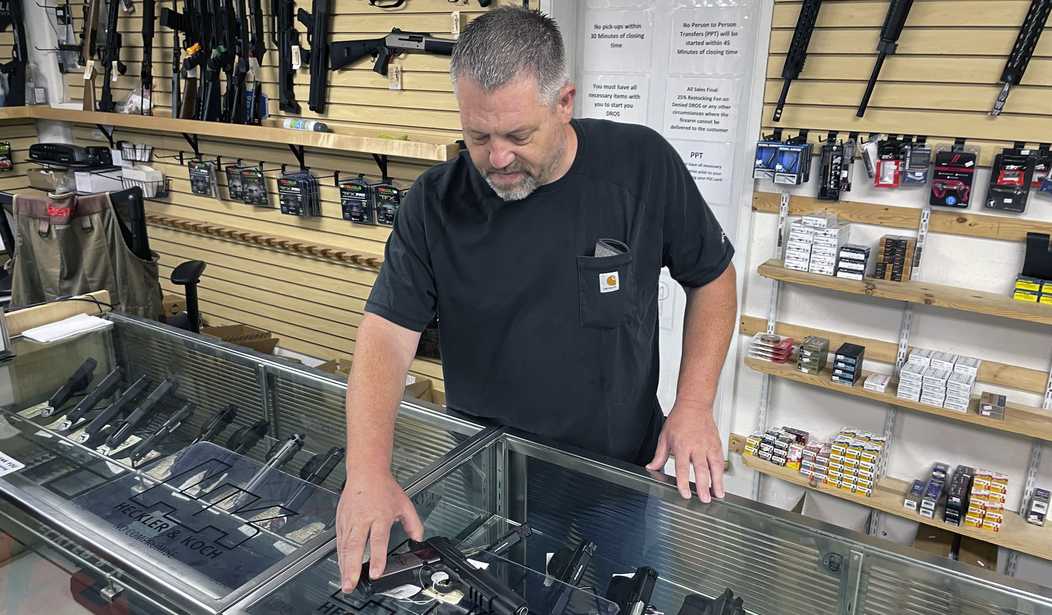
If you haven't heard of it by now – and I'm not sure how you missed it – these are called Extreme Risk Protection Orders (ERPOs), but most of us refer to them as "red flag orders."
These orders allow the courts to restrict your ability to exercise your Second Amendment rights for however long it takes to get them back, and there's no guarantee you will.
A case in Maryland seeks to overturn the state's red flag order and is exposing the problems with the law:
Attorneys for the Second Amendment Foundation (SAF) and Maryland resident Donald S. Willey have filed an appellants’ brief with the Maryland Supreme Court, challenging the state’s “red flag” law. The case, Willey v. Brown, originated in U.S. District Court for the District of Maryland in August 2023.
Willey, a 64-year-old Marine Corps veteran, has been in conflict with officials in Dorchester County over nuisance and zoning violations. He became the subject of an Extreme Risk Protective Order (ERPO) after allegedly making threats, which Willey denies. The order led to the confiscation of his firearms and ammunition and forced him into an involuntary mental health evaluation. The lawsuit claims Willey’s constitutional rights were violated for nearly two weeks before his firearms were returned.
Part of the issue is that Maryland law says there must be "reasonable grounds" to take the gun, but it doesn't seem to define that.
Further, it sure looks like this is a he said/she said kind of thing, but with the county government instead of someone like a neighbor, family member, or someone like that. It doesn't really matter, though, because the heart of the issue is that someone said Willey made a threat. In fact, having covered this story for a bit, I also know it wasn't the person who sought the red flag order.
That's right, Willey was stripped of his guns because someone else allegedly told a code enforcement officer that he threatened her.
In what world are those "reasonable grounds" for stripping someone of their rights?
Yes, Willey got his guns back, but that's irrelevant. It never should have happened.
Yet, this is what we see happening in Maryland and the nation. People lose their guns because someone gets alarmed. They lose their guns because someone else got angry.
In 2020, a woman in Colorado tried to use an ERPO to strip the gun rights from a police officer who shot and killed her son in the line of duty. An inquiry found the officer did nothing wrong, but she still tried to take his gun rights away in a fit of petulance.
We simply don't know how many other cases like this there are floating around.
The idea behind ERPOs is that we can disarm dangerous people before they hurt someone. Yet even there, even if they're just used to disarm the dangerous people, red flag orders still fall down. After all, it's the person who is dangerous, not the guns, and guess who is walking around on the streets?
Unfortunately, that's not part of this particular case, and my hope is that sooner or later, these laws die a horrible, fiery death. They need to because there's nothing redeeming about them.