





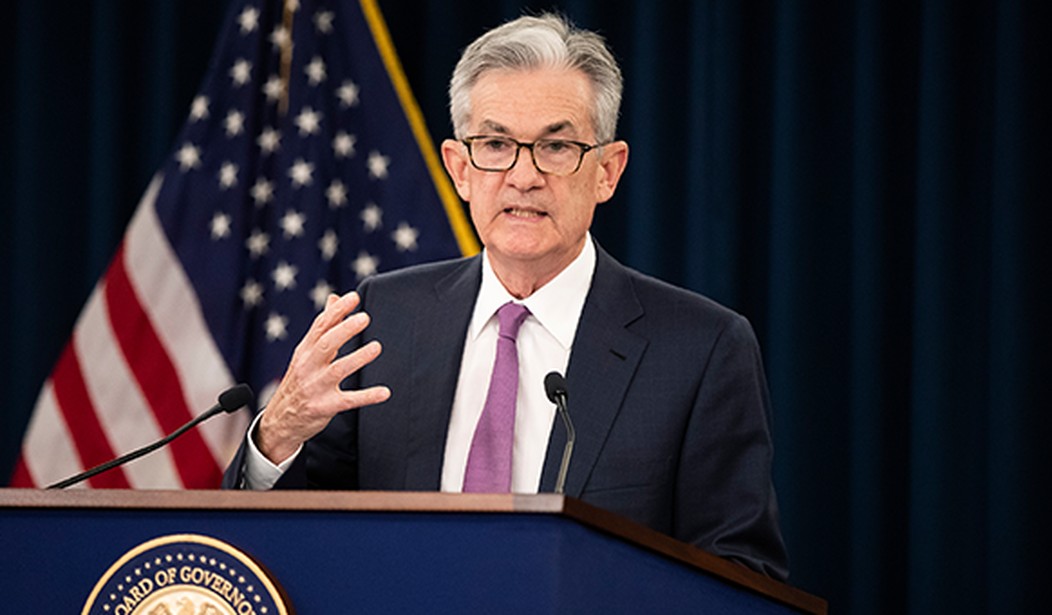
The Federal Reserve announced Wednesday afternoon that it would again be raising interest rates 75 basis points — its fourth consecutive rate hike this year — as it tries to tame inflation that's continued accelerating on President Joe Biden's watch.
June's Consumer Price Index, the most recent read on rising prices, showed inflation hitting 9.1 percent over the previous 12 months, delivering a four percent cut to Americans' real wages in the same period.
The decision from the Fed to hike its key rate to 2.25 to 2.5 percent — the highest since 2018 — will impact many consumer and business loans in a bid to make borrowing costlier and therefore less appealing for Americans. The Fed hopes that such a cost will cause Americans to borrow and spend less money and thereby slow down the economy and rein in price increases.
Chairman Jerome Powell noted on Wednesday that the U.S. labor market "is extremely tight" while "inflation is much too high" and added that Americans should expect "below trend economic growth."
“Inflation is much too high,” Fed Chair Powell says. “Today, the FOMC raised its policy interest rate by three-quarters of a percentage point and anticipates that ongoing increases in the target range for the federal funds rate will be appropriate.” pic.twitter.com/1YRUpi2abQ
— Yahoo Finance (@YahooFinance) July 27, 2022
The Fed's announcement added it "anticipates that ongoing increases in the target range will be appropriate" as it works on "returning inflation to its 2 percent objective."
But, as The AP noted, "The Fed is tightening credit even while the economy has begun to slow, thereby heightening the risk that its rate hikes will cause a recession later this year or next" before explaining the toll interest rate hikes and inflation have already taken on Americans:
The Fed’s moves to sharply tighten credit have torpedoed the housing market, which is especially sensitive to interest rate changes. The average rate on a 30-year fixed mortgage has roughly doubled in the past year, to 5.5%, and home sales have tumbled.
At the same time, consumers are showing signs of cutting spending in the face of high prices. And business surveys suggest that sales are slowing.
The central bank is betting that it can slow growth just enough to tame inflation yet not so much as to trigger a recession — a risk that many analysts fear may end badly.
Forecasts for second quarter GDP show that the U.S. is in a recession, but the first official release of Q2 GDP will come Thursday morning. The White House clearly already believes Thursday's number will show continuing contraction of the American economy as they've been scrambling to redefine the term "recession" while Biden denies the country will even see a recession under his leadership.


Join the Conversation
VIP members get the ability to comment on articles.