
Major automakers are eating billion-dollar losses after betting on electric vehicles.
Ford Motor Company lost about $30 billion over a handful of years betting that consumers would want electric vehicles.
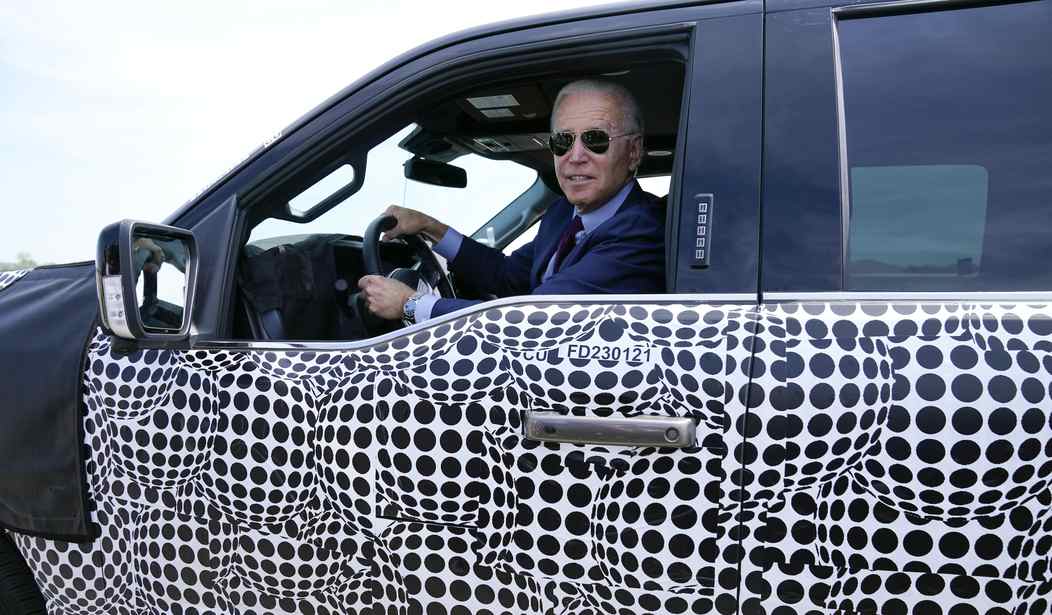
The company, addicted to federal subsidies, kept producing the F-150 Lighting, a supposed EV work truck that couldn’t tow well and requires to be close to a charger.
Ford isn’t alone. General Motors reported a $7 billion loss on electric vehicles. The company blamed the cutoff of government subsidies on the loss, it told regulators and investors.
“With the termination of certain consumer tax incentives and the reduction in the stringency of emissions regulations, industry-wide consumer demand for EVs in North America began to slow in 2025,” according to GM’s SEC filing.
During the entire Biden presidency, GM CEO Mary Barra doubled down on electric vehicles, which she claimed were the future of transportation.
Excited for what this partnership means for our customers and the industry. https://t.co/3qlkVvW7kR
— Mary Barra (@mtbarra) June 8, 2023
After the Trump administration cut a $7,500 subsidy for electric vehicles, demand has plummeted.
EVs have been around since 1980, but consumers have chosen to drive vehicles with internal combustion engines ever since because EVs are generally more expensive, they have a limited charging network, and the vehicles' range drastically changes in cold weather.
States nationwide have set arbitrary goals to transition to EVs, but President Trump terminated the Biden-era stringent vehicle standards that would have forced consumers to switch.
Michigan Gov. Gretchen Whitmer decreed that 2 million EVs should be driving on Michigan roads by 2030. The Wolverine state is 5 percent toward that goal.
Ford and GM will now dump the losses of a failed EV bet into the ever-increasing price paid by consumers. Meanwhile, the new vehicle average transaction price was $50,080 in September 2025, marking the first time it ever exceeded the $50,000 mark, according to Kelley Blue Book.
Even many used vehicles cost $25,000 to $30,000.
Automakers should get back to basics: making affordable, reliable cars instead of chasing windmills and building cars that few people want.