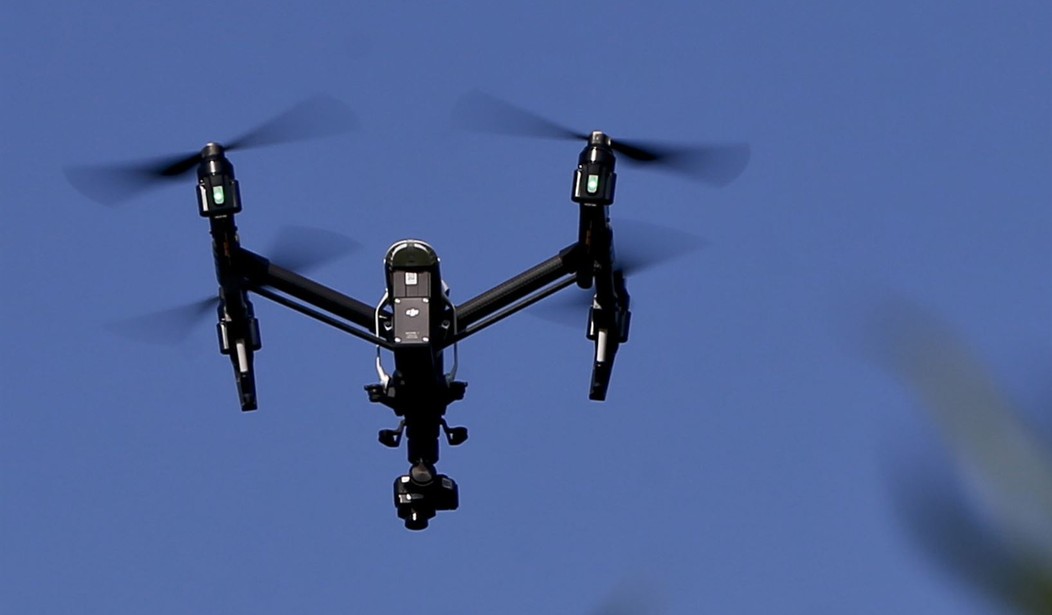

The current leadership of the United States has once again made the country look like a fool on the global stage after allowing drones to circle parts of states without honing any explanation for it. China's recent actions and rhetoric have underscored a repeated trend of openly mocking the U.S., highlighting perceived weaknesses in its leadership and international influence. From state-run media portraying U.S. democracy as dysfunctional to diplomatic statements dumbing down the nation’s authority in global affairs, the Chinese government appears increasingly emboldened in framing itself as a more stable and effective alternative to Washington, D.C. China has used the opportunity to take advantage of America’s weaknesses to gain dominance across the global stage.
In China’s state-run Global Times article, the communist country mocked the United States as it struggles to determine where the recent drone sightings over New Jersey and other East Coast states are coming from. The article described the U.S. as a “breeding ground for delusion.” House Foreign Affairs Committee chair Michael McCaul claimed the unknown aircraft were “Chinese spy drones.” However, the outlet dismissed such allegations, saying the drones were, more or less, “Chinese spies.” Instead, the article criticized America’s paranoia, distortion, and narrow-mindedness.
Some American politicians seem to have a special preference for sensationalizing the "China threat." Much like the "spy balloon" incident that unfolded in early 2023, the latest accusations against Chinese drones follow an old script, repackaged with new rhetoric aimed at smearing China. What [American politicians] care about is demonizing everything related to China — from balloons to garlic to drones — in order to score political points and serve their own interests.
The exaggerated "threat" posed by Chinese drones and the absurd legislation targeting them are nothing more than reflections of unwarranted fears about China. The current wave of drone hysteria only deepens the paranoia, making the US a breeding ground for delusion, irrationality, and instability.
The Global Times accused the U.S. of exaggerating the Chinese "spy drones" and security threats the communist country poses on American soil. The article said that the U.S. has become so “vulnerable in terms of security” that it looks like a “laughingstock” on the world stage. It claimed the U.S. made up accusations, such as the “spy balloon” incident in early 2023, to paint China badly. However, it was later confirmed that the Chinese spy balloon of 2023 was real and that China was actually spying on the U.S. through it.
This week, the Senate voted 83-12 to advance the National Defense Authorization Act (NDAA), introduced by Sens. Elise Stefanik (R-NY) and Rick Scott (R-FL), to a full vote. This expansive bill includes provisions that ban the use of Chinese drones, mandate an investigation into two major Chinese drone manufacturers, and urge the U.S. and its allies to reduce reliance on China for unmanned aerial vehicles (UAVs).