





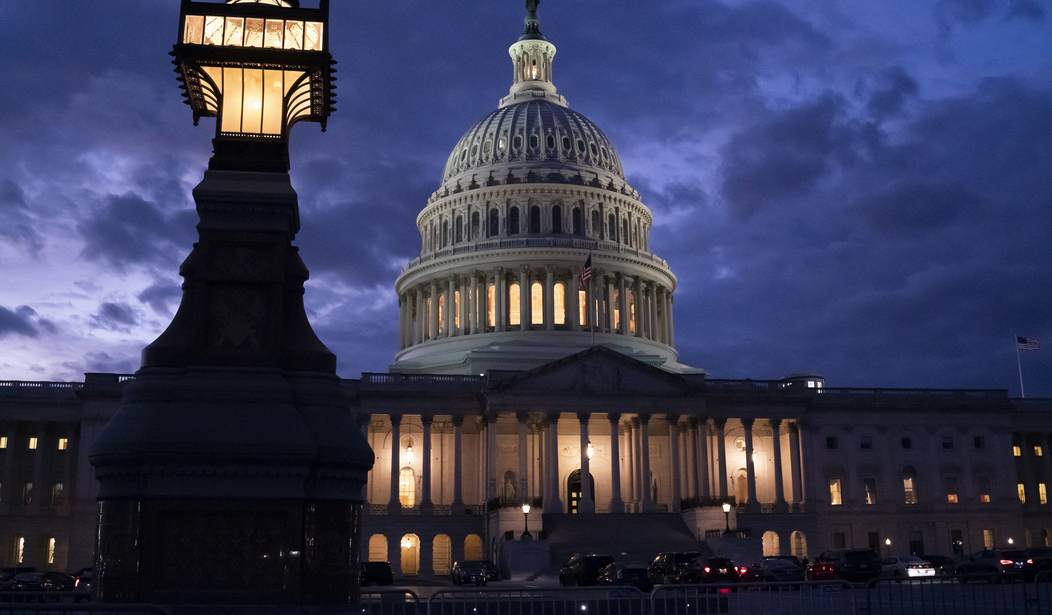
On Thursday, the U.S. House of Representatives voted 232-193 to pass H.R. 6833 – Affordable Insulin Now Act, which would cap the price of insulin at $35. While the bill passed with bipartisan support and may seem like a compassionate idea, in reality, it's a favor to Big Pharma, as it will lead to higher premiums, when Americans are already suffering due to record-high inflation.
As Adriel Bettelheim pointed out for Axios on Thursday, ahead of the vote, it "wouldn't address the core problem of rising prices for insulin. It would instead shift more of the cost onto health insurers and employers and result in higher premiums, according to experts."
Then there's the cost. Bettleheim also wrote that "it could wind up costing the government billions in lost revenue and swelling the deficit." The Congressional Budget Office (CBO) had only just released its score on Wednesday night, estimating that the bill would increase costs by about $11 billion.
While House Republican leadership whipped against the bill, 12 Republicans, most of them considered moderate, joined all of the Democrats in voting for it.
12 House Republicans voted Yes for $35 insulin cap bill:
— Craig Caplan (@CraigCaplan) March 31, 2022
Bacon (NE)
Fitzpatrick (PA)
Harris (MD)
Herrera Beutler (WA)
Hudson (NC)
Katko (NY)
Malliotakis (NY)
Meuser (PA)
Miller-Meeks (IA)
Posey (FL)
Smith (NJ)
Upton (MI)https://t.co/pXosOb4ri3
A recommendation of a "NO vote" sent out on Tuesday from House leadership that was made available to Townhall, framed the bill as one where "Democrats are reviving their price control agenda by mandating Part D plans and private insurers cover selected insulin products at a government-imposed price cap of the lesser of $35/month or 25 percent of the negotiated price." Similar to H.R. 3 and provisions included in the failed Build Back Better Act, this "is another attempt to expand government control over patients’ health care."
The cost has to be made up somehow.
Not only would there be increased costs due to higher premiums and higher cost-sharing on insulin products that are not price controlled, but, because the legislation fails to reform the rebate system, other drugs will be more expensive.
Rep. Cathy McMorris Rodgers (R-WA) introduced alternative legislation last April, H.R. 19-the Lower Costs, More Cures Act of 2021, which leadership touts as a bill that "would lower all prescription drug costs, including insulin, and cap all seniors’ out-of-pocket spending on drugs while ensuring America continues to lead the world in innovation and access to cures and treatments."
Rep. McMorris Rodgers warned from the House floor that this could lead to rising costs elsewhere. She is the ranking member of the House Energy & Commerce Committee, which also released a piece against the bill, ominously titled "Socialist Price Controls for Insulin & the Dangers of What Comes Next."
The Democrats' bill does nothing to address the real reasons the cost of insulin is going up. It gives health care middlemen such as PBMs a pass to keep hiding savings from patients. pic.twitter.com/hpLuyvf0RG
— CathyMcMorrisRodgers (@cathymcmorris) March 31, 2022
There's also other concerning long-term effects, particularly about where the Democratic Party is going, which is towards socialized medicine. "This provision was included in the Democrats’ failed BBB and represents the largest expansion of federal command and control in Americans’ private health insurance design since Obamacare," House leadership also warned.
FreedomWorks, which also opposes the bill, further laid out concerns in a letter from its president, Adam Brandon, similarly warining about how the "legislation would impose socialist price controls."
As his letter further laid out in part:
While progressives are all too eager to blame high prices on “corporate greed,” the reality is that this is an issue created by the federal government. Heavy-handed price controls are a deeply flawed solution that misses the mark when identifying the problem.
Pharmacy benefit managers (PBMs) play a significant role in the dramatic rise in the cost of prescription drugs. PBMs are third-party administrators determining which drugs go on formularies (a list of approved prescription drugs that hospitals can prescribe and are covered under an insurance policy). Ostensibly, PBMs negotiate to obtain the best price. However, these “savings” are often pocketed by PBMs themselves and aren’t passed onto patients. Since they are reimbursed based on the markdown from the original list price, PBMs are incentivized to prioritize drugs with higher list prices, so they can receive a larger markdown.
FreedomWorks, one of the many groups against the bill, will count the vote on its 2022 Congressional Scorecard, which Brandon's letter also pointed out " is used to determine eligibility for the FreedomFighter Award, which recognizes Members of the House and Senate who consistently vote to support economic freedom and individual liberty."
The House bill was introduced by Rep. Angie Craig (D-MN), though it's really a pet project of Sen. Raphael Warnock (D-GA).
While Rep. McMorris Rodgers is among the top members who is a recipient of health and pharmaceutical companies, according to Open Secrets, the top spot is filled by a Democrat, Senate Majority Leader Chuck Schumer (D-NY). Sen. Warnock is the fourth most amount of money from pharmaceuticals. In the Senate, pharmaceuticals give a particularly high amount to Democrats, by a 2:1 ratio.


Join the Conversation
VIP members get the ability to comment on articles.