





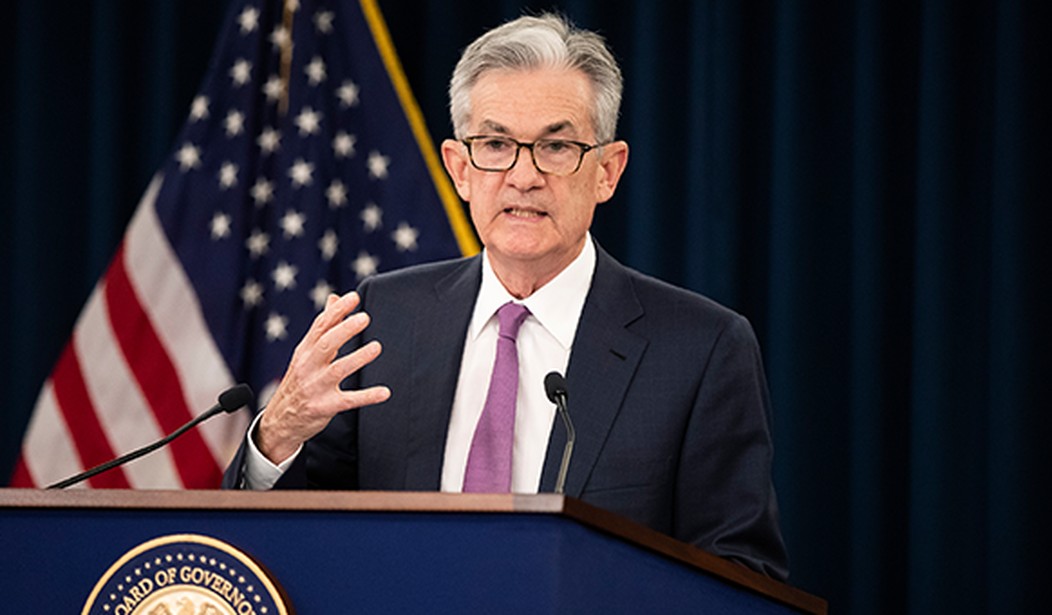
Federal Reserve Chairman Jerome Powell provided an update on Wednesday regarding inflation and the supply chain crisis. One major takeaway came in response to record high inflation. Potentially, the fed will be raising interest rates.
While taking questions from reporters, Powell shared that inflation has gotten "probably slightly worse" since the Federal Reserve's meeting in December. During the questions, Powell indicated there is expected relief on supply chain issues, something that will "eventually" happen.
At one point, Powell was answering a question from a reporter who inquired about December projections on inflation, with the chairman and others hopeful that inflation could get back down to target. Powell acknowledged that since their December meeting, inflation is "about the same, but probably slightly worse."
"It hasn't gotten better, it's probably gotten just a bit worse, and that's been the pattern," Powell answered.
If it continues to get worse, "our policy will have to address that," Powell acknowledged, which is "how we're thinking about it" when it comes to what the fed is doing.
"Inflation risks are still to the upside in the views of most [Federal Open Market Committee] participants, and certainly in my view as well. There’s a risk that the high inflation we are seeing will be prolonged. There’s a risk that it will move even higher. So, we don’t think that’s the base case, but, you asked what the risks are, and we have to be in a position with our monetary policy to address all of the plausible outcomes," Powell added.
Another major concern, the supply chain, is related to record-high inflation. When it comes to getting relief, Powell spoke of it as something that "we will, eventually."
"What we're learning is that it's just taking much longer, longer than expected, and that does raise the risk that high inflation will be more persistent," Powell stated.
Powell emphasized "quite uncertain" outcomes and a need to "be adaptable and move as appropriate."
Last December, reports and comments from experts indicated that the supply chain issues may let up in the second half of this year. It's still only January. In a December 22, 2021 piece by Brendan Murray for Bloomberg, those who indicate "smooth sailing by the summer," as Steve Saxon does, are considered to be "[o]n the optimistic side."
In the foreseeable future, the supply chain may become more strained due to a Canadian vaccine mandate that requires truck drivers entering from the United States to be vaccinated, as Leah reported last week.
When it comes to President Joe Biden's handling of inflation, the president has received low marks due to this issue and plenty of blame. Worse for both the administration and the president's key agenda item of Build Back Better is that a takeaway from a POLITICO-Harvard poll shows a plurality of respondents (46 percent). believe it will increase inflation. While a majority of Democratic respondents (51 percent) think it will make no difference, more of them think it will increase rather than decrease inflation, by a measure of 18 to 16 percent, respectively.
The poll acknowledges that we are at "a time when inflation is a top concern of the public."
During Powell's remarks, stocks rose, but then such gains were lost and stocks actually fell when he took questions.

Join the Conversation
VIP members get the ability to comment on articles.