





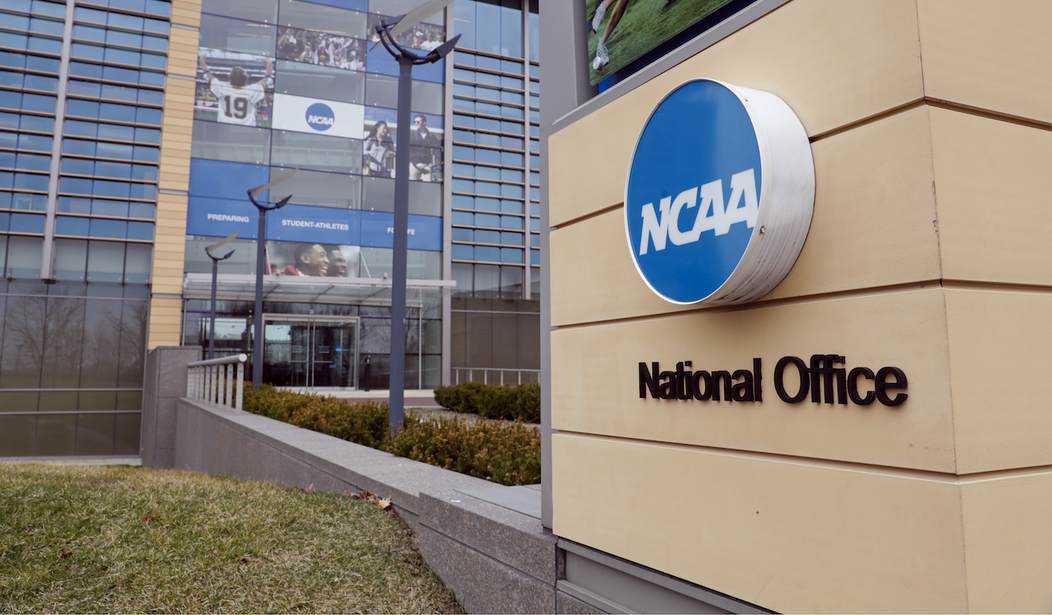
Earlier this week, the NCAA proved it wasn't going to punish states that passed laws to protect young women from competing in sports against biological men after all. Three of the states to be regional hosts for the postseason softball tournament include Alabama, Arkansas, and Tennessee. These states recently passed such legislation banning transgender athletes from competing with young women.
While many states have passed these laws, some have not, including those with Republican governors.
The NCAA had signaled it might take action against states where such bills did become law. Last month, the "NCAA Board of Governors Statement on Transgender Participation" was released, as Leah reported. The statement read:
The NCAA Board of Governors firmly and unequivocally supports the opportunity for transgender student-athletes to compete in college sports. This commitment is grounded in our values of inclusion and fair competition.
The NCAA has a long-standing policy that provides a more inclusive path for transgender participation in college sports. Our approach — which requires testosterone suppression treatment for transgender women to compete in women’s sports — embraces the evolving science on this issue and is anchored in participation policies of both the International Olympic Committee and the U.S. Olympic and Paralympic Committee. Inclusion and fairness can coexist for all student-athletes, including transgender athletes, at all levels of sport. Our clear expectation as the Association’s top governing body is that all student-athletes will be treated with dignity and respect. We are committed to ensuring that NCAA championships are open for all who earn the right to compete in them.
When determining where championships are held, NCAA policy directs that only locations where hosts can commit to providing an environment that is safe, healthy and free of discrimination should be selected. We will continue to closely monitor these situations to determine whether NCAA championships can be conducted in ways that are welcoming and respectful of all participants.
In reporting on such a statement, many in the media jumped at the opportunity to tie the statement in with specific states. "As Texas Legislature considers anti-trans bills, NCAA announces it will not hold events in states that discriminate against trans students," Kate McGee wrote for the Texas Tribune. "If Florida transgender sports bill passes, NCAA says it could pull championships," wrote Kirby Wilson for the Tampa Bay Times.
Writing for USA Today, Paul Myerberg spoke to public opinion about such laws:
The announcement comes at a time when the participation of transgender athletes has become the latest front in the ongoing political debate over inclusivity and discrimination on the basis of gender identity or sexual orientation, which has unfolded along highly partisan lines.
Polling from Spry Strategies, however, shows that voters overwhelmingly support protecting young women's sports in this way.
The softball world series will be played in Oklahoma, where the State House passed such legislation and the State Senate is considering.
Join the Conversation
VIP members get the ability to comment on articles.