

Sam Altman, CEO of OpenAI, is reportedly in talks to hand the Trump administration a five percent stake in the company, an idea that not long ago, would have sounded like it came from the Democratic Party.
SCOOP: US officials have had talks about having government acquire shares in AI giants, sources say
— Jeff Stein (@jstein_star) June 4, 2026
Altman has discussed w/ senior officials, including Trump. Did again recently
May be *ceding* shares to USG - not a purchase
Shares could go 2 dividendhttps://t.co/ks2Yzgr2W0
According to the Financial Times, OpenAI is in discussions to cede, not sell, 5 percent of its stock to the United States government, in an effort to share the financial success of the company with both the government and the country. Or at least, that's the story they're selling. The arrangement would include attempting to get other AI companies to hand over a similar stake.
🇺🇸 OpenAI is offering the Trump administration a 5% stake in the company, worth roughly $42.6 billion.
— Mario Nawfal (@MarioNawfal) July 2, 2026
The move is part of early talks where major U.S. AI firms would hand similar stakes to the government.
Sam Altman argues the deal would let the public share in AI’s massive… pic.twitter.com/9MC6KXPkZc
Despite the story Altman pitched, the move looks far more like an effort to get ahead of the kind of political pressure the administration has already put on other AI companies. Just months ago, the administration escalated a war against Anthropic after the company refused to let the Department of War use its models for lethal autonomous weapons and mass domestic surveillance, a dispute serious enough to trigger a federal lawsuit.
The Trump administration has leaned on the former reasoning to justify taking stakes in AI companies, with top officials openly conceding that the government may need to dabble in command-style economics, the very system conservatives spent decades warning would threaten individual freedom. Vice President JD Vance hasn't exactly gone out of his way to hide it either, saying for months now that individual economic freedom is a negotiable part of American conservatism, one that can be set aside whenever the moment calls for something more useful.
BREAKING: JD Vance just admitted the White House plan is to take ownership of every major AI company in America.
— Surmount (@SurmountInvest) June 20, 2026
This is the largest reshaping of American capitalism since the New Deal.
And almost no one in finance is talking about it yet.
Here's why this is a much bigger… pic.twitter.com/6E6yjI4mvi
VP @JDVance tells @michaeljknowles that the economic position of the Republican party has moved from Milton Friedman to Alexander Hamilton.
— H.A. Hazony (@HAHazony) June 30, 2026
Less laissez-faire and more American developmentalism.
The economy is a tool to provide a good life for citizens. pic.twitter.com/fduCMQK6TV
The development marks a striking and disappointing overlap between the administration and socialist Senator Bernie Sanders, who just last month introduced legislation that would allow the government to seize a 50 percent ownership stake in the country's largest artificial intelligence companies.

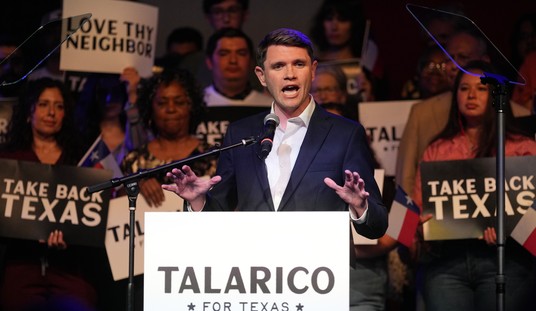
The underlying reasoning is the same: that government can guide the AI industry better than the innovation and instinct of the private market ever could. That should leave Americans asking an uncomfortable question, what, exactly, separates the socialists rising to power inside the Democratic Party from the economic drift now underway inside the conservative movement, beyond a difference in accent on culture and foreign policy?
Conservatives claim to be alarmed by the rise of socialism. But embracing its core premise, that the state, not the market, should decide who wins, is a hell of a way to fight it. And if Republicans end up comfortable with command-style, protectionist economics the moment their own party is holding the reins, then the uncomfortable truth is this: the only economic principle you ever actually cared about was who was in charge.