

Now that the Supreme Court has ruled against President Donald Trump’s executive order limiting birthright citizenship, members of the chattering class wonder if he will continue pursuing this objective.
In a post on Truth Social, Trump acknowledged the ruling but said, “we can easily make it up in Congress through Legislation, with the support of the President, that has now been determined during this process.”
He further noted that “No long and unwieldy Constitutional Amendment is necessary! Congress should start TODAY to work on ending expensive and unfair to our Country, Birthright Citizenship.”
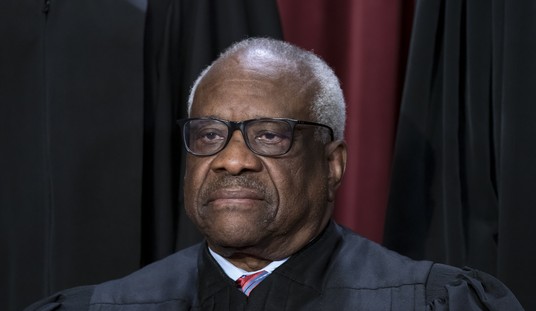
The Supreme Court ruled on Tuesday that Trump’s order was not constitutional and that the 14th Amendment grants citizenship to those who were born on American soil regardless of the immigration status of the parents. It also held that ending birthright citizenship falls under the purview of Congress and cannot be ended with a presidential executive order.

This means that any hope of ending birthright citizenship lies with Congress. Lawmakers have already introduced legislation that would accomplish the Trump administration’s goals while avoiding legal challenges.
On January 21, the day after president Trump was inaugurated, Representative Brian Babin of Texas introduced the "Birthright Citizenship Act" that would effectively end "anchor baby" crisis. This bill hasn't been voted on.
— Steve Ferguson (@lsferguson) June 22, 2026
Have you noticed that any bill that is introduced that…
The Birthright Citizenship Act of 2025, introduced by Sens. Lindsey Graham (R-SC), Ted Cruz (R-TX) and Katie Britt (R-AL), would redefine who counts as “subject to the jurisdiction” of the United States, as outlined in the 14th Amendment.
Under the bill, a child born on American soil would receive citizenship only if at least one parent is a U.S. citizen or national, or lawful permanent resident, or a noncitizen on active duty in the armed forces. It would only apply to births that occur after the proposed legislation takes effect.
Graham said it is “long overdue for the United States to change its policy on birthright citizenship because it is being abused in so many ways,” referring to birth tourism among immigrants from China and other countries.
Britt explained the measure “would codify President Trump’s commonsense stance and end the abuse of birthright citizenship that I do not believe is consistent with the original meaning of the 14th Amendment’s Citizenship Clause.”
Birthright citizenship is a constitutional right. Period.
— Rep. Adelita Grijalva (@Rep_Grijalva) June 30, 2026
Hate to break it to Trump, but the Constitution couldn't be more clear: If you’re born here, you’re American.
Maybe try reading it?
There are similar measures that have been introduced, but they have remained trapped in Judiciary Committees and have not yet made it to the Senate floor.
Even though Republicans currently dominate both chambers of Congress, passing this type of legislation would face some serious obstacles. The Senate filibuster typically requires at least 60 votes to advance certain bills. There is no way any Democrat will vote in favor of the measure, meaning that Senate Republicans would have to nuke the filibuster, a proposition that even some Republicans oppose.
In fact, President Trump has been leaning on Senate Republicans to do away with the filibuster to pass the SAVE America Act, but Senate Majority Leader John Thune (R-SD) continually pointed out that there are not enough Republican lawmakers who would vote for this. Indeed, four Republican senators, including Sens. Thom Tillis (R-NC), Susan Collins (R-ME), Lisa Murkowski (R-AK), and Mitch McConnell (R-KY) have all indicated they oppose ending the filibuster.
Even if the bill passes and the president signs it, the lawsuits would flow like the Mississippi River.
None of this is impossible. But at this point, it is improbable that Republicans will have enough support in the House and Senate to take on an issue as fraught with controversy as birthright citizenship at a time when it is not even certain they can maintain control of either chamber of Congress in the upcoming midterm elections.