

Artificial intelligence is the next frontier, and there’s a glaring national security matter that must be addressed. We also can’t kick this can down the road, which is a hallmark characteristic of Congress. Our enemies are engaged in what could become the 21st-century arms race.
This issue sometimes leans into science fiction, but the entertainment has been excellent. The Terminator franchise and The Matrix both depict humanity's destruction by artificial intelligence. For our purposes, Skynet nuking us is probably the closest to what could become reality, but right now, it’s about protecting this technology from our enemies. How do we do it when everyone here has the same foundation in this area? We cannot rely on the policy of détente here because of that.
Sen. Tim Sheehy (R-MT) told Townhall, “From the race for nuclear capability to the space race, the United States has consistently led the world by incentivizing innovation and investing in key infrastructure to achieve dominance. At a time when peer adversaries like China or non-state actors can leverage AI for their own ends, it’s critical we apply that same approach to not just lead but win the AI race in the 21st century.”
No doubt, but Sen. Steve Daines (R-MT) said that legislative guardrails should be codified to ensure advancements are protected, and that we've got a long way to go.
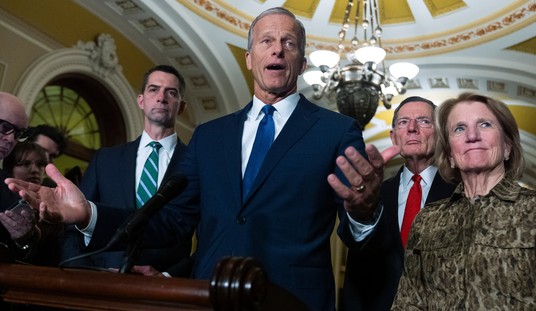
"While the U.S. has made critical advances in AI, we still have a long way to go. I will continue to urge my colleagues to think years ahead as we work to remain the global leader in AI research and development, and that starts with ensuring a strong American AI tech stack,” Sen. Daines said.

An industry source expounded further:
The United States should rely on AI infrastructure built by American companies, not those of our adversaries.
Policymakers should establish guardrails on how advanced AI tech can be licensed through joint ventures with state-linked investors, demand transparency in governance, and coordinate closely with allies.
The stakes are high when national security is at stake. It’s not just about apps or convenience - it’s about who can build, deploy, and control powerful capabilities at scale.
AI increasingly underpins military and intelligence capabilities.
Systems built on advanced AI stacks can improve surveillance, cyber defense, logistics, and even autonomous systems. The same infrastructure that powers a recommendation engine can also power drone targeting or signals analysis.
For the United States to remain a global superpower, we must be investing in American AI stacks.
Control of the AI tech stack is no longer just a competitive advantage, it is a foundation of national power. If we outsource that foundation, we don’t just lose market share; we risk ceding strategic autonomy, economic leadership, and our national security.
The countries that own and control the stack will shape the future - militarily, economically, and politically. The United States cannot afford to be dependent in a space that will define the next century.
And the good news is we are leading the charge here. Last December, the Trump White House echoed some of those points, noting that the AI race is one we must win and that this technology won’t be essential to our military but will be the future driver of economic growth. Trump signed an executive order that streamlined the regulatory framework for AI, notably allowing companies to make tweaks without government interference. There were some 1,000 separate state laws in this matter, which stifled development.
Making sure we can win the AI race, protect our product, and ensure only the right people can use and develop it is a huge policy debate, and one we must have, and one the media is likely to ignore or dismiss because of their antipathy toward the president.