

Vice President J.D. Vance announced that the federal government is halting about $259 million worth of Medicaid funds to the state of Minnesota until it cracks down on healthcare fraud.
Vance, Secretary of Health and Human Services, Robert F. Kennedy, Jr., and Administrator of the Centers for Medicare & Medicaid Services, Dr. Mehmet Oz, announced the crackdown on fraud in Medicare and Medicaid.
The administration has deferred $259 million in federal matching funds for Minnesota’s Medicaid spending for the fourth quarter in FY 2025. Vance said that the state has already paid these funds to providers.
This includes state spending of $243.8 million for unsupported or potentially fraudulent Medicaid claims and $15.4 million related to claims involving possible illegal immigrants.
The United States of America is a generous country and we take care of our own. It's disgraceful that fraudsters out there are taking advantage of programs like Medicaid. That stops today. @DrOzCMS pic.twitter.com/pBhSPXiG85
— JD Vance (@JDVance) February 25, 2026
The federal government probed unusually high spending and rapid growth in certain service areas, including personal care services, home and community-based services, and other practitioner services.
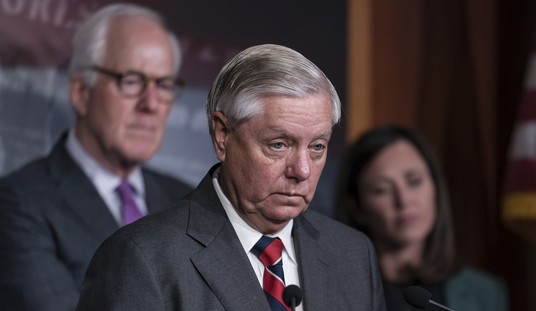
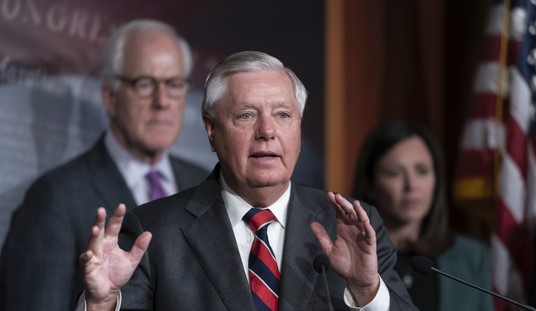
The government also announced a nationwide six-month moratorium on Medicare enrollment for certain Durable Medical Equipment, Prosthetics, Orthotics, and Supplies suppliers.
Vice President Vance and Administrator Oz Announce Actions to Address Fraud, Waste, and Abuse https://t.co/CCUDvYXbQN
— Vice President JD Vance (@VP) February 25, 2026
“For decades, Medicare fraud has drained billions from American taxpayers—that ends now,” Kennedy said in a statement. “We are replacing the old ‘pay and chase’ model with a real-time ‘detect and deploy’ strategy, using advanced AI tools to identify fraud instantly and stop improper payments before they go out the door.”
CMS aims to prevent fraudulent Medicare billing by durable medical equipment, prosthetics, orthotics, and supplies (DMEPOS) companies. A six-month moratorium on new Medicare enrollment for certain DMEPOS suppliers follows CMS’s stopping more than $1.5 billion in suspected fraudulent billing in this area last year.
.@VP: "What we want to see from the Governor of Minnesota, from the entire administration there in Minnesota, is some affirmative steps to make sure that the people who are billing us for Medicaid services, are actually providing those Medicaid services." pic.twitter.com/sId7NY8H0e
— Rapid Response 47 (@RapidResponse47) February 25, 2026
The supplier enrollment moratorium will allow CMS to explore additional safeguards to further mitigate longstanding instances of fraud, waste, and abuse perpetrated by certain DMEPOS companies. It applies to all applications for initial enrollment and changes in majority ownership for medical supply companies.
“CMS is done trying to catch fraudsters with their hands in the cookie jar—instead, we’re padlocking the jar and letting them starve,” Oz said in a statement. “This proactive approach will help us crush fraud, protect taxpayer dollars, and make sure the vulnerable Americans who depend on our programs get the care they need.”
Medicaid is funded jointly by states and the federal government. CMS must ensure that Medicaid funds are spent lawfully and that states maintain effective systems to detect, prevent, and recover improper payments.
In January 2026, CMS notified Minnesota of its intent to withhold federal funds until it was satisfied with the state’s corrective action plan to address its program integrity shortcomings. CMS also notified Minnesota of its intent to conduct a review of program integrity to ensure federal funds were not going toward questionable claims.
Oz said that CMS is deferring those federal funds to protect taxpayer dollars while ensuring the state can provide information and documents. However, if the state doesn’t fix its integrity problems, then CMS might defer over $1 billion in federal funds over the next year.
💥 Dr. Oz: "If Minnesota fails to clean up the systems, the state will rack up $1 billion of deferred payments this year. Governor Walz has 60 days to respond... We have more announcements of other states coming soon."
— Breaking911 (@Breaking911) February 25, 2026
pic.twitter.com/X3gSCw2kjI