

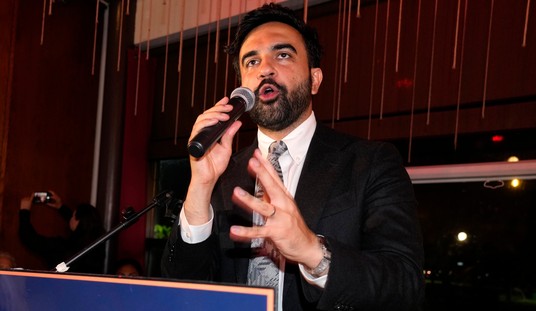
Anthony Devore is a homegrown conservative outsider running to represent Oklahoma House District 19 in the state legislature.
District 19 is a rural district that includes parts of Atoka, Bryan, Choctaw, and Pushmataha counties. Like many areas of the country, residents in this district are facing economic strain, high poverty rates, and constant pressures on land and agricultural industries. In some counties, poverty rates have hovered at about 17 to 20 percent — well above the state average.
Devore wants to change that.
Born and raised in the district, he told Townhall he is running as “somebody with backbone and grit that will stand up for [his constituents].”
Devore comes to the race with decades of experience in education and business. He has owned a residential solar energy company for over a decade. “To get the totality of why I liked getting into the residential solar, we have to understand my previous 10 years of experience in education, working with student funding and grants,” he said.

He noted that “the federal incentives that were associated with residential solar” made it easier for homeowners to invest in solar power. His experience in the industry taught him how regulations and incentive structures can either help or “jack up” people’s electricity bills — an issue millions of families are experiencing.
At the heart of Devore’s campaign are policy priorities centered on property rights, support for rural communities, and education reform. Of particular interest is the state’s use of eminent domain to seize people’s property to make room for wind farms, solar farms, AI data centers, and state-backed energy and infrastructure projects that threaten the “veil of private property ownership” in rural Oklahoma.
“There’s a movement here now about eminent domain as far as windmills and solar farms and AI data centers,” he said. “At what point does eminent domain stop? Where do you draw the line on that?” DeVore argued that seizing land in these cases “is not constitutional,” insisting “there has to be a limit on a higher purpose to declare eminent domain,” particularly when the projects in question will be “government subsidized in some form or fashion.”
Devore said voters in the district “don’t want somebody else telling us what we can and can’t do with our property or what property we can own and what property we can’t own.”
The candidate criticized state leaders who give “lip service” to farmers and rural entrepreneurs while trying “to limit that and actually control it,” a concern echoed by other small producers who point out how government programs typically favor larger, more connected enterprises.
Education is also a top priority for Devore. He slammed a current measure being debated in Oklahoma’s Capitol that would “take away the minimum base salary for teachers” and cautioned that this would be “horrible for especially our rural schools” that are struggling to retain “highly qualified teachers” and are forced to file exemptions “for two and three years in a row for unqualified teachers just so they can babysit classrooms.”
He further notes that Oklahoma only provides students with “an opportunity to an education” instead of “an absolute right to an education.” He contrasted his state’s approach with Texas, which recently passed a school choice law mandating “alternative education programs” and creating a voucher system to give parents more educational options for their children rather than relying solely on government-run schools.
Devore told Townhall he would like to bring vocational trade classes back into government-run schools so that students who are “not going to go to a four-year university” are not “left behind.”
In a country where special interests dominate Devore seeks to return more power to everyday Americans. “I don’t have a special interest that I’m supporting, and I’m not a career politician,” he said.