





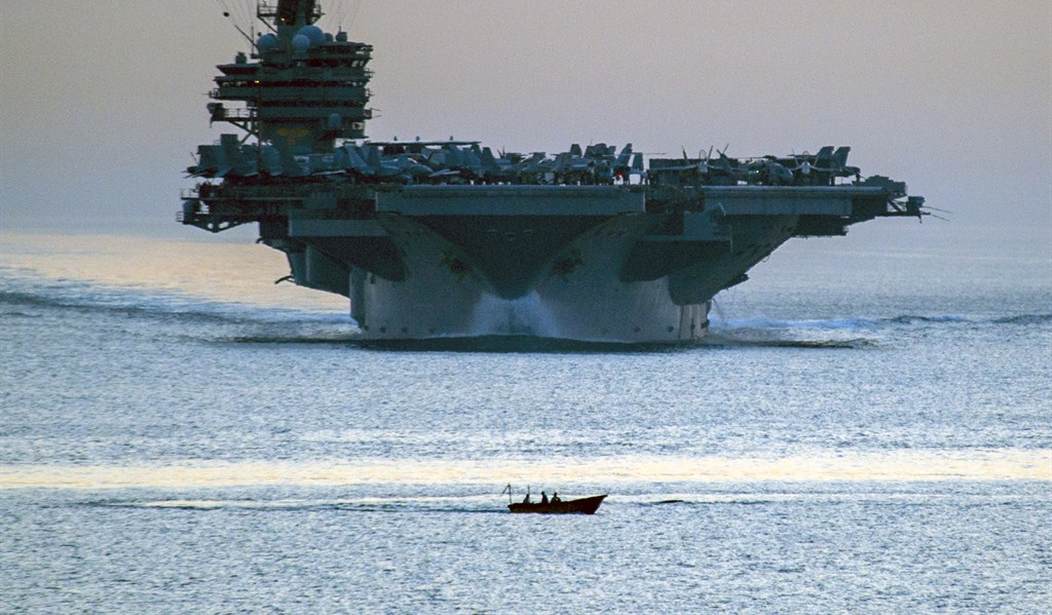
Dude, was this guy serious? Before we got into the thick of Operation Epic Fury, ex-CIA agent John Kiriakou, who went to jail for sharing sensitive materials with journalists about our enhanced interrogation program, said that Iran could take out our aircraft carriers, which could lead to World War III.
In fact, we have eliminated the core of the Iranian Revolutionary Guard Corps, including its political leadership, the Supreme Leader Ayatollah Ali Khamenei, and their navy. Their ballistic missile infrastructure is currently being dismantled, and their proxies lack the capacity to retaliate effectively. We are prevailing in this conflict.
John Kiriakou two days ago:
— Eyal Yakoby (@EYakoby) March 2, 2026
“If Iran sinks an aircraft carrier, it would trigger World War III. There’s no defense against hypersonic missiles, and Iran possesses them.”
Never before have people been so wrong so often.
pic.twitter.com/a4sYE6l8RR
Has there ever been a more laughably incorrect analysis?
Even Al Jazeera acknowledged that we are winning the war. Are there still lingering issues and questions? Sure, but the strategy is weakening Iran’s ability to defend itself and causing chaos across the region—that’s a positive development:
Iranian ballistic missile launches have fallen by more than 90 percent from 350 on February 28 to roughly 25 by March 14, according to publicly available data. Drone launches tell the same story: from more than 800 on Day 1 to about 75 on Day 15.
The figures drawn from US and Iranian military statements differ in detail but converge on the trajectory. Hundreds of Iranian missile launchers have been rendered inoperable. According to some reports, 80 percent of Iran’s capacity to strike Israel has been eliminated.
[…]
The campaign has moved through two distinct phases. The first suppressed Iran’s air defences, decapitated its command and control, and degraded its missile and drone launch infrastructure. By March 2, US Central Command announced local air superiority over western Iran and Tehran, achieved without the confirmed loss of a single American or Israeli combat aircraft.
The second phase, now under way, targets Iran’s defence industrial base: missile production facilities, dual-use research centres and the underground complexes where remaining stockpiles are stored. This is not aimless bombing. It is a methodical campaign to ensure that what has been destroyed cannot be rebuilt.
Iran now faces a strategic dilemma that tightens every day. If it fires its remaining missiles, it exposes launchers that are promptly destroyed. If it conserves them, it forfeits the ability to impose costs of the war. Missile and drone launch data suggest Iran is rationing its remaining capacity for politically timed salvoes rather than sustaining operational tempo.
[…]
The closure of the Strait of Hormuz is dominating the critical commentary. US Senator Chris Murphy has called it evidence that President Donald Trump misjudged Iran’s capacity to retaliate. CNN has described it as proof that the administration has lost control of the war’s escalation.
The economic pain is real: Oil prices have surged, a record 400 million barrels of oil will be released from global reserves, and Gulf states are facing drone and missile strikes on their energy infrastructure.
But this framing inverts the strategic logic. Closing the strait was always Iran’s most visible retaliatory card, and always a wasting asset. About 90 percent of Iran’s own oil exports pass through Kharg Island and then the strait.
China, Tehran’s largest remaining economic partner, cannot receive Iranian crude while the strait is shut. Every day the blockade continues, Iran severs its own economic lifeline and alienates the one major power that has consistently shielded it at the United Nations. The closure does not just hurt the global economy; it accelerates Iran’s isolation.
[…]
When proxies launch retaliatory attacks across the region, this is not evidence of an expanding network; it is evidence of predelegated response authority, which is what a centralised command system activates when it anticipates its own destruction.
Predelegation is a sign of desperation, not strength. It means the centre can no longer coordinate. The attacks will continue, but they will become increasingly uncoordinated, strategically incoherent and politically costly for the host states where these groups operate.
Qatar and Bahrain are arresting IRGC operatives. Kuwait and Saudi Arabia are intercepting Iranian drones over their own territory. The regional environment that sustained Iran’s proxy architecture, including the grudging tolerance by Gulf states fearful of Iranian retaliation, is being replaced by active hostility.
Hezbollah is weaker than at any point since 2006, degraded by more than a year of Israeli operations before this campaign began. Iraqi militias retain the ability to launch attacks, but they are doing so into a region where they face increasing isolation.
The Houthis in Yemen possess independent capability but lack the command integration with Tehran that transforms militia activity into strategic effect. What the critics described as an expanding regional war is better understood as the death spasm of a proxy architecture whose authorising centre has been shattered.
[…]
Seventeen days in, Iran’s supreme leader is dead, his successor is reportedly wounded and every principal instrument of Iranian power projection – missiles, nuclear infrastructure, air defences, the navy, proxy command networks – has been degraded beyond near-term recovery. The campaign’s execution has been imperfect, its public communication poor and its post-conflict planning incomplete. War is never clean. But the strategy – the actual strategy, measured in degraded capabilities rather than cable news cycles – is working.
And the Strait of Hormuz will reopen. It’s a matter of if not when—Iran has no navy that can match ours. It’s simply laughable to suggest that. In less than a month, we’ve ended Iran’s nuclear ambitions, severed the head of its terroristic government, and finally laid the groundwork to end the war they started in 1979.
Editor's Note: For decades, former presidents have been all talk and no action. Now, Donald Trump is eliminating the threat from Iran once and for all.
Help us report the truth about the Trump administration’s decisive actions to keep Americans safe and bring peace to the world. Join Townhall VIP and use promo code FIGHT to get 60% off your VIP membership.

Join the Conversation
VIP members get the ability to comment on articles.