





A new study published by the American Medical Association’s JAMA Network Open claims that abortion pill usage in Texas spiked after the state’s law banning abortion after fetal heartbeat detection went into effect.
The law, Senate Bill 8, known as S.B. 8, went into effect on Sept. 1. Fetal heartbeat is detected at roughly six weeks gestational age. Data released earlier this month by the Texas Health and Human Services Commission showed that one month after the law went into effect, abortions in the state fell by 60 percent, as Townhall covered.
According to the JAMA study, the international nonprofit medication abortion service Aid Access recieved 1,180 percent more requests in the first week after S.B. 8 went into effect, from about 11 requests per today to almost 138 requests per day. During the following three weeks, requests remained 245 percent higher than before the law went into effect. Overall, Aid Access saw 1,831 requests from Texas for “self-managed abortion.” Over the next three months, requests were 174 percent higher than the “pre-SB 8 baseline.”
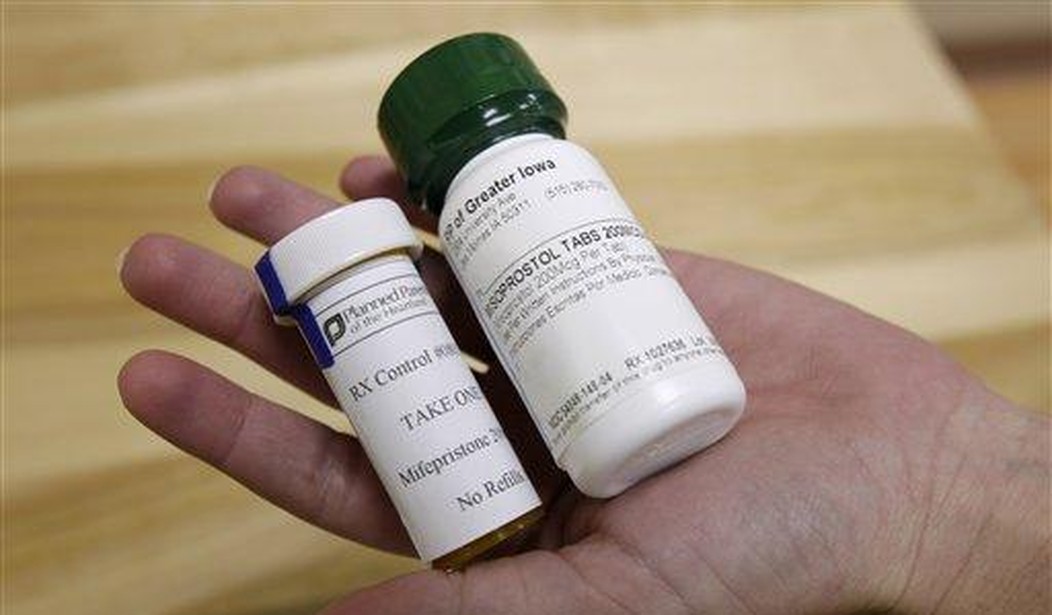
A medication abortion consists of two pills, mifepristone and misoprostol. The former blocks the woman’s hormones from allowing the pregnancy to grow. The latter, taken one or two days later, expels the pregnancy from the woman’s body. A study published this month by the pro-abortion Guttmacher Institute claims that the majority of abortion in the US anymore are medication abortions.
“During the same periods, mean daily requests from the other 49 US states showed much smaller increases, perhaps because of increased awareness of the service and other restrictive legislation,” the JAMA study write-up claimed.
“After SB 8 went into effect, demand for self-managed abortion through Aid Access increased substantially in Texas. An initial high increase then levels off to a more moderate but sustained increase over pre-SB 8 levels. Although we cannot pinpoint the exact reason for this distinctive pattern, uncertainty about eligibility and clinic appoitnment cancellations may have been associated with the peak increase, whereas grassroots abortion funds and clinics connecting Texans with care out of state likely were associated with the subsequent decrease,” it continued.
The study, which was approved by the University of Texas at Austin’s institutional review board, said that abortion clinics in states that do and do not border Texas have seen an “increased volume” in patients from Texas. However, in a report by The Texas Tribune in January, reporters visited an abortion clinic in Kansas that claimed to be “inundated” with Texan patients. On the day of the Tribune’s visit, none of the Texan patients showed up for their appointments.
The study concluded by claiming that “self-managed abortion may, therefore, provide an imporant back-up option, as well as a pathway to care for those ultimately unable to access a clinic.”
As Rebecca noted in December, medication abortion comes with many risks, more so than surgical abortions.
“This method [medication abortion] carries with it four times the complications of surgical abortions. Side effects and risks associated with this method include abdominal pain, nausea, vomiting, diarrhea, weakness, fever/chills, and headaches. The bleeding may last for weeks after the abortion.
Some studies have found 10 percent of women face incomplete abortions at 9 weeks gestation. This can lead to death from infection if the remaining fetal parts or tissue are not properly removed.
Last month, as I covered, the Charlotte Lozier Institute (CLI) authored a study that showed emergency room visits following this method went up by 507 percent from 2002 to 2015. Most of these ER visits, over 60 percent, were miscoded as spontaneous miscarriages.”
Some states, such as South Dakota, have created legislation to ban medication abortion.



Join the Conversation
VIP members get the ability to comment on articles.