Former Japanese Prime Minister Shinzo Abe's assassination has sent shockwaves throughout the world. Tributes immediately poured in from around the world for the leader, with many who knew him personally attesting to his character. From former Vice President Mike Pence to New Zealand Prime Minister Jacinda Ardern to Indian Prime Minister Narendra Modi and many more, all said Abe was a “remarkable leader,” “truly good man,” “generous,” and “kind.”
Not only was he a good man, he was a true patriot and a great friend to America.
The tributes from the U.S., India and Australia were noteworthy because it was under Mr. Abe’s leadership that those three countries joined Japan in what is known as the Quad group, which seeks to contain China’s rise in the region. It was Mr. Abe who originated the phrase now widely used to describe the Quad’s goal: a “free and open Indo-Pacific.” […]
This year, he urged the U.S. to make clear that it would militarily support Taiwan, a democratically self-ruled island, if China carried through on threats to invade. Soon after, Mr. Biden did precisely that on a trip to Tokyo.
Mr. Abe also sought, with mixed success, to revive Japan’s long-struggling economy with his “Abenomics” policies including radical monetary easing and changes to encourage companies to listen more to their shareholders.
“Mr. Abe made significant achievements in getting Japan out of longstanding deflation and realizing sustainable economic growth,” said the Bank of Japan’s governor, Haruhiko Kuroda, who was picked by Mr. Abe in 2013. (WSJ)
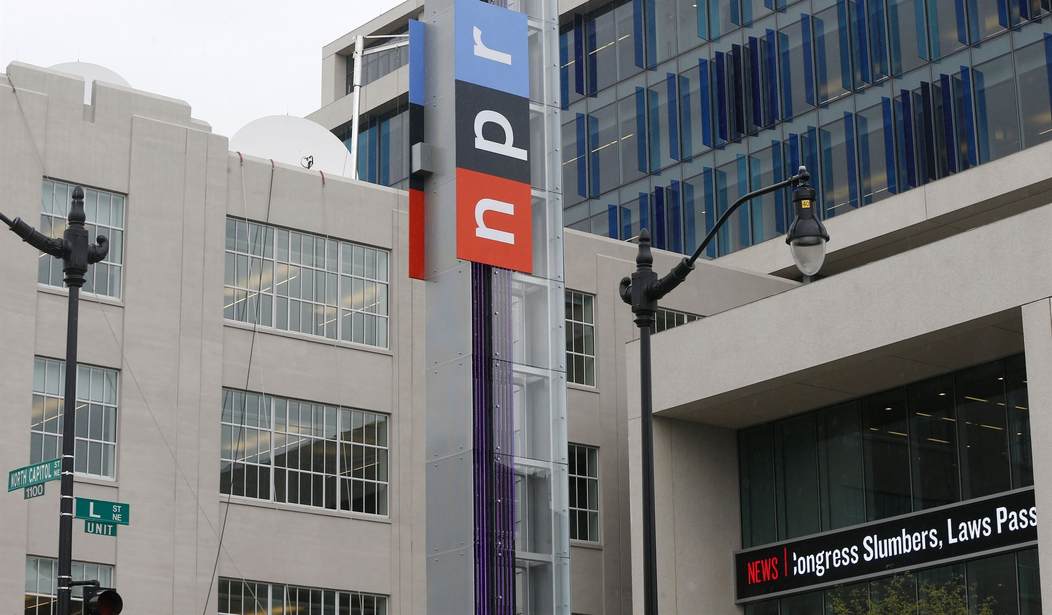
But liberal media outlets in the U.S., especially NPR, had no interest in celebrating the conservative leader’s achievements. Instead, the outlet labeled him a “divisive arch-conservative" in a now-deleted tweet.
It wasn't just the tweet that was smearing Shinzo Abe that NPR put out.
— Curtis Houck (@CurtisHouck) July 8, 2022
The lede paragraph of the article about his assassination is nearly identical, suggesting he had it coming. pic.twitter.com/hq8ETA8hCx
NPR referring to Japan’s most popular PM, who won his elections by large margins, as “divisive” indicates the inability of media outlets to genuinely report any longer. Everything is a mural for their projection. So pathetic and so sad.
— Erielle Davidson (@politicalelle) July 8, 2022
NPR wasn't alone.
The media are truly evil.
— Benny Johnson (@bennyjohnson) July 8, 2022
Never forget that outlets like The Washington Post eulogized the leader of ISIS and described him as a “religious scholar”
Now Shinzo Abe is being labeled “divisive” hours after he was assassinated. Shameful. pic.twitter.com/mvkM0emwif
As some pointed out, NPR had a much more glowing report after Fidel Castro's death, which was reminiscent of the way The Washington Post remembered ISIS leader Abu Bakr al Baghdadi.
NPR describing Fidel Castro vs. NPR describing Shinzo Abe posthumously. pic.twitter.com/lP1SatxgkI
— Natalie Johnson (@nataliejohnsonn) July 8, 2022
Remember when The Washington Post eulogized the leader of ISIS as an "austere religious scholar"? https://t.co/VbIERI2fb7
— Robby Soave (@robbysoave) July 8, 2022
The description led many to call for NPR to be defunded.
DEFUND NPR https://t.co/rJZToSnhwL
— Kurt Schlichter (@KurtSchlichter) July 8, 2022
While NPR did delete their initial tweet, the follow-up wasn't any better.
NPR deleted its first tweet calling Shinzo Abe a "divisive arch conservative" and then posted this tweet calling him an "ultranationalist." As if he were Tojo or Itagaki and not the four time elected leader of a modern democracy. May he rest in peace. https://t.co/TtxukySoAr
— David Shafer (@DavidShafer) July 8, 2022