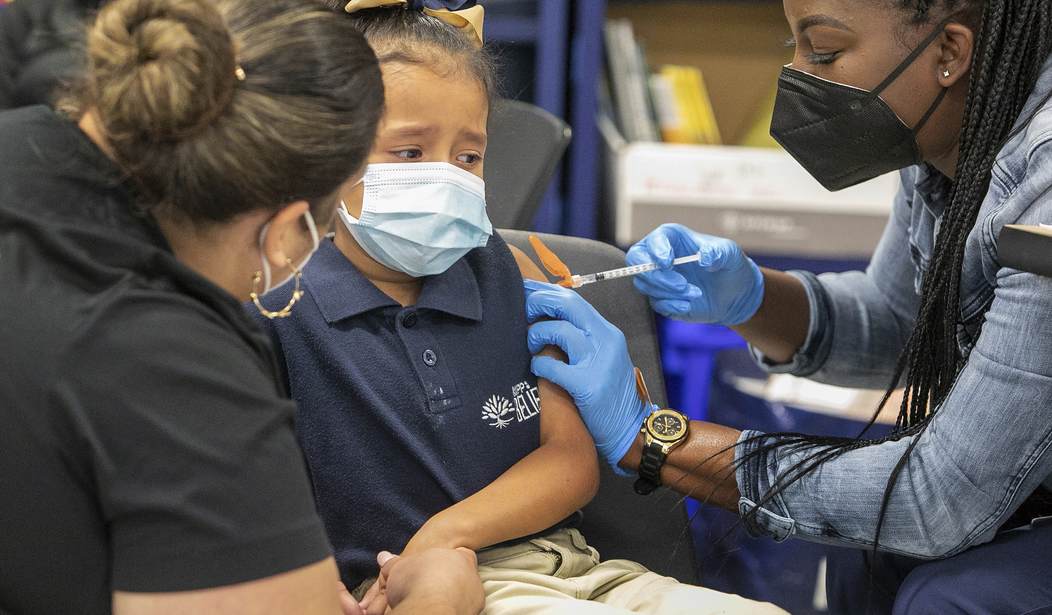

New research looking at Covid-19 antibodies in blood samples of young children calls into question the push to vaccinate this age group.
The data comes after an intense campaign to vaccinate kids, reaching out to some of the youngest eligible children on places like "Sesame Street," Nickelodeon, and more.
Children under 5 are not yet eligible, but Pfizer and Moderna hope to submit data for this age group by early next month. According to a new analysis, however, nearly two in three kids between the ages of 1 and 4 have already been infected, with much of it attributed to the recent Omicron wave.
Researchers looked for COVID-19 antibodies in blood samples from more than 86,000 children under 18 years old — including some 6,100 children aged between one and four. In the youngest children, the number of infections more than doubled, from 33% to 68% between December 2021 and February 2022.
Although the analysis involved a small number of very young children, the results are consistent with the rapid rise in documented infections in that age-group, says Pamela Davis, a physician and medical researcher at Case Western Reserve University in Cleveland, Ohio.
Overall, the researchers found that most children aged 1–17 had probably been infected by February this year. Infections in children aged 5 to 11 reached the highest level, 77%. Infection rates in children exceed those observed in adults (see ‘Omicron surge’). (Nature)
Shabir Mahdi, a South African vaccinologist, says these numbers actually may have "underestimated the force of infection."
"The antibody test used in the study captured only about 80% of infections that could be detected using a different antibody test, says Madhi," according to Nature.com.
Moreover, hospitalizations among children have been considerably lower than for other demographics, particularly during the Omicron wave.
"Children have been spared," Madhi told Nature. "We should be thankful for that."