





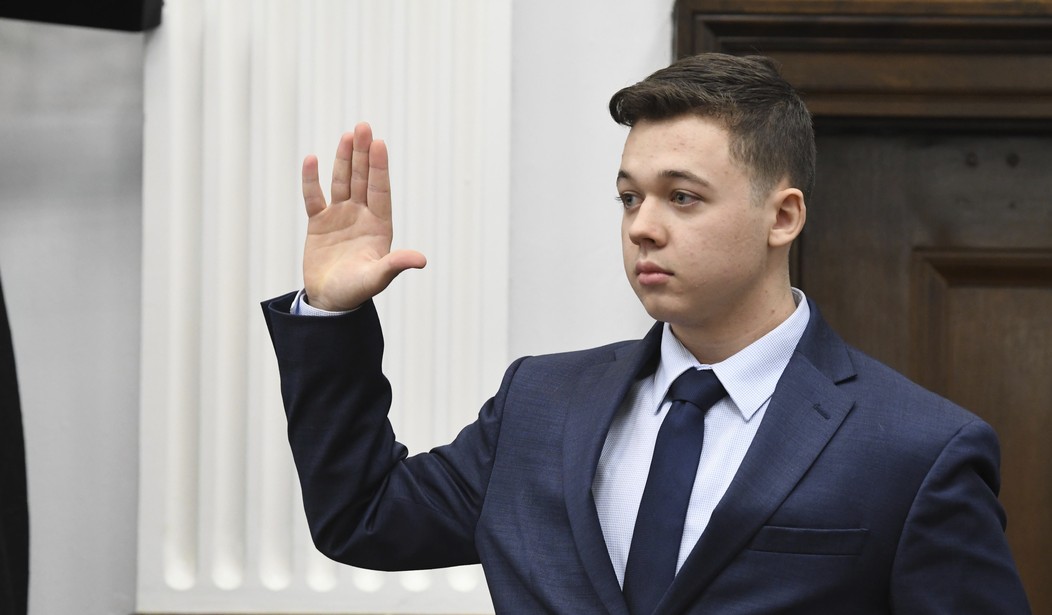
A UCLA professor and best-selling author got a key detail about the Kyle Rittenhouse case wrong in her new book that draws parallels about absolute power in the ancient Egyptian and modern world.
The book, “Good Kings,” published by National Geographic, falsely claims Rittenhouse shot and killed two black men, though Anthony Huber and Joseph Rosenbaum were both white. The teenager also shot and injured a third white man, Gaige Grosskreutz. Rittenhouse was found not guilty on all charges in November.
"Consider Kyle Rittenhouse, who used his semiautomatic weapon to kill two Black men in Kenosha, Wisconsin while waging a glorious war on behalf of his inherited White power," the book states.
While the author admitted her error and said the mistake was caught too late to fix for printing, she said she stood by “the sentiment of white supremacy.”
If one mistake in a little known book about ancient Egypt elicits this much howling, it is to avoid discussing our larger problem, to avoid seeing our deep-seeded obsession with patriarchal power.
— Kara Cooney (@KaraCooney) January 5, 2022
So yeah, tiny detail of the book with a big mistake about a massive American issue. And that’s on me. But the white supremacy is still a problem. And the misogyny is still a problem.
— Kara Cooney (@KaraCooney) January 5, 2022
Others wondered how the publisher could've possibly missed the error.
The process of fact-checking books is pretty rigorous. Small things get by in every book, but this is glaring. That it slipped through evinces not only the author's ignorant bias, but also the deliberate impression the media tried to leave about this case https://t.co/PjmDMxcuMW
— David Freddoso (@freddoso) January 6, 2022

Join the Conversation
VIP members get the ability to comment on articles.