







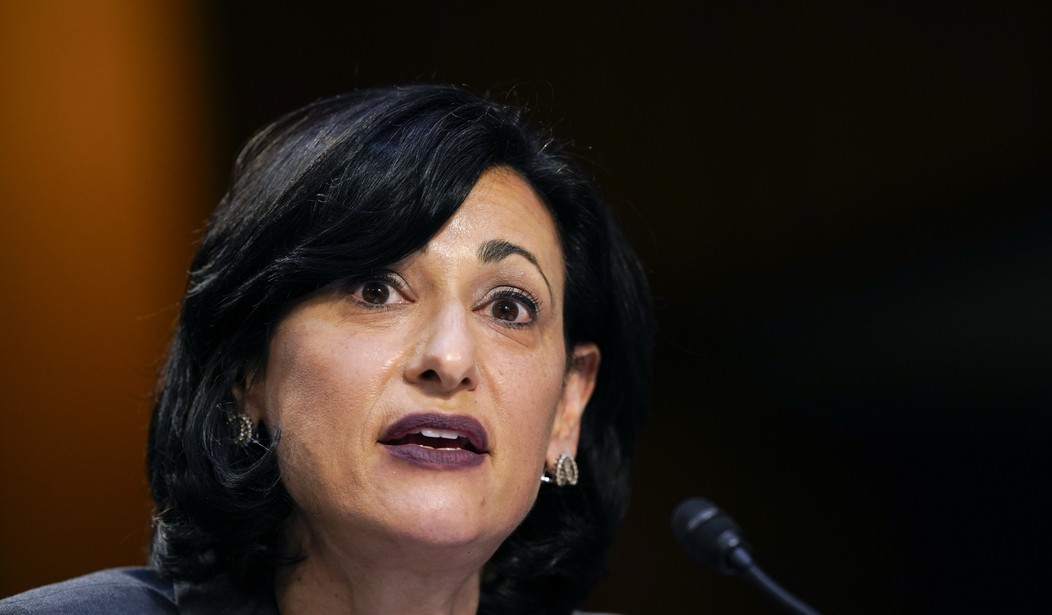
U.S. Centers for Disease Control and Prevention Director Dr. Rochelle Walensky endorsed the Pfizer vaccine booster for younger at-risk workers, defying the agency’s Advisory Committee on Immunization Practices panel, which voted 9-6 against the recommendation in what many are calling a “highly unusual decision.”
This group of younger at-risk workers includes teachers, healthcare workers, grocery store employees, and those who work in institutional settings.
"As CDC Director, it is my job to recognize where our actions can have the greatest impact," Walensky said in a statement. "At CDC, we are tasked with analyzing complex, often imperfect data to make concrete recommendations that optimize health. In a pandemic, even with uncertainty, we must take actions that we anticipate will do the greatest good."
She said her decision aligns with the FDA’s booster recommendation, which authorized the third jab for at-risk populations including those aged 65 and older, high-risk individuals between the ages of 18-64, and those in this same age group whose “frequent institutional or occupational exposure” to Covid-19 puts them at greater risk.
“I believe we can best serve the nation’s public health needs by providing booster doses for the elderly, those in long-term care facilities, people with underlying medical conditions, and for adults at high risk of disease from occupational and institutional exposures to COVID-19,” Walensky said.
Though the advisory panel’s recommendations are not binding, it’s unusual for the director to go against the committee.
Dr. Walensky’s decision to go against her own agency’s advisers came as a surprise to at least some of her staff members: The C.D.C. director’s endorsement of the advisory committee’s recommendations is typically just a formality. Hours before her statement, agency insiders predicted she would stick with the usual protocol because doing otherwise would undermine the process and upset the advisers as well as her own staff.
But experts outside the C.D.C. said Dr. Walensky may have had no choice but to align herself with the F.D.A.’s decision. “There’s a complexity here, because Dr. Walensky was part of the White House announcement” on boosters, noted Dr. Ashish Jha, dean of the Brown University School of Public Health. […]
Dr. Walensky’s decision revealed the continuing divisions and confusion among federal regulators and outside advisers about how to contain the virus nearly two years into the pandemic.
On Wednesday, the Food and Drug Administration authorized booster shots for certain frontline workers. But the C.D.C.’s advisers disagreed that the doses were needed by so many healthy people. (NYT)
The decision only applies to individuals who got the Pfizer vaccine, which has received FDA approval. The panel did not consider boosters for Moderna and Johnson & Johnson shots, which nearly half of vaccinated Americans have received.
"I just don't understand how later this afternoon we can say to people 65 and older, 'You're at risk for severe illness and death, but only half of you can protect yourselves right now,'" said Dr. Sarah Long of Drexel University.


Join the Conversation
VIP members get the ability to comment on articles.