





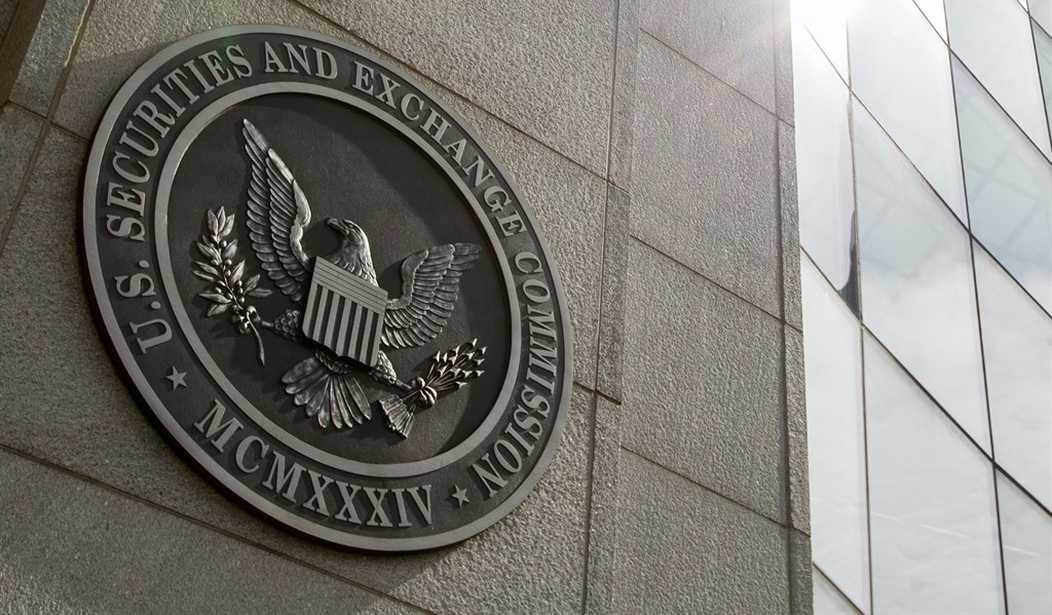
The Securities and Exchange Commission (SEC) has made headlines over the last several years, on account of the controversial ways in which it has modified policies and procedures. Under Chair Gary Gensler, the SEC has increased its power and authority by “pursuing the biggest overhaul” of the stock market in decades. Many of these changes open the doors for shareholder activism to take hold over a corporation’s daily affairs, and the prevailing activism is proving to be cloaked in progressive political agendas.
Environmental Social Governance (ESG) has been at the forefront, forcing companies to incorporate climate change and diversity standards into their business models. The SEC is pushing to fill race and gender quotas as well as meeting net-zero emissions targets, regardless of the additional costs attached.
These actions have been carried out through the annual shareholder meeting and proposal submission process, facilitated by changes and reinterpretations of various SEC rules and regulations.
And now it seems a new tactic is being employed, thanks to a new universal proxy rule that went into effect last year. Utilizing it could essentially replace a portion of a company’s board members during the annual meeting. A current and notable case involves Starbucks.
The Wall Street Journal reported last fall that the Strategic Organizing Center (SOC), a coalition of three prominent labor unions, filed a proxy contest in efforts to place three specific individuals on Starbucks’s board of directors. The SOC claims the trio would be adept at “facilitating constructive outcomes for labor issues” and “successfully engaging with policymakers and regulators.”
All three candidates have extensive public service records, yet very little experience in the private sector; as such, they are likely to be shills for Big Labor and not especially skilled at how to successfully run a business. This would be a far cry from those currently serving on the board who actually possess “experience as CEOs or managing partners at major firms.”
Some consider this scheme an avenue for the Biden administration to unionize workplaces and further SOC’s broader goal to impose Big Labor’s agenda on every publicly traded American company. After all, the SOC is being advised by Schulte Roth & Zabel, a self-described “dominant global law firm for shareholder activism.”
Because of minimal requirements, it is not very difficult to submit proposed changes to company policies or board members. For example, the SOC only owns 161 shares of Starbucks stock, which is worth a measly $16,000 of the $105 billion total net worth. For the math nerds, that equates to a paltry 0.000015% and is hardly a stake in the organization. Such low thresholds only provide opportunities for activists to hijack publicly traded companies.
Fixing Starbucks’ issues will not likely be served by placing bureaucratic accessories on their board. Even the two most prominent proxy advisory firms Institutional Shareholder Services (ISS) and Glass Lewis (GL), who have been accused of ignoring their fiduciary duties in favor of ESG policies, have recommended re-electing all current 11 Starbucks directors. GL affirmed that Starbucks "has been reasonably responsive" to complaints regarding pay, work conditions, and labor matters.
The new universal proxy rule could open the floodgates for more shareholder activism infiltrating board of director elections, with groups like the SOC nominating handpicked candidates that will drive a certain agenda. Other changes, like ESG-friendly guidelines, have already proven to be problematic.
Financial and business groups are pushing back against “one of Joe Biden’s most aggressive regulators” by filing lawsuits against the SEC’s aggressive measures. They argue that Gensler’s proposals go beyond the agency’s powers. Eugene Scalia, son of the late Supreme Court Justice Antonin Scalia stated, “Regulated entities are being pressed very hard by costly, onerous rules being proposed by the SEC and other agencies.” Companies are feeling compelled to act.
Upon introducing a resolution to counter the SEC’s burdensome rules, Republican Representative Dave Joyce (OH-14) declared, “These new rules are a blatant attempt to weaponize the SEC in order to advance the Biden Administration’s political agenda.”
The SEC has overreached its authority by placing needless burdens on companies, inhibiting their ability to conduct business. This only hurts these establishments, numerous employees, the economy, and consumers. The agency needs to be shackled.
Kristen Walker is a policy analyst for the American Consumer Institute, a nonprofit education and research organization. For more information about the Institute, visit www.theamericanconsumer.org or follow us on Twitter @ConsumerPal.



Join the Conversation
VIP members get the ability to comment on articles.