






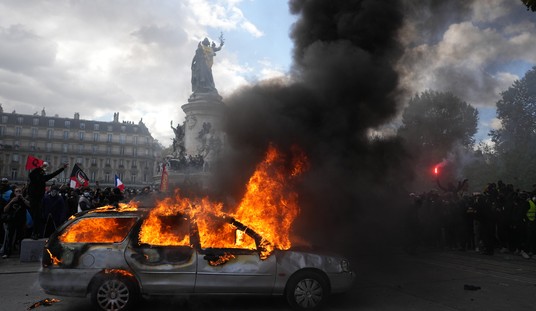
For months Democrat "leaders" in cities around the country have refused to squash violent Black Lives Matter rioting in their cities. The damage to communities has been significant and devastating.
MUST WATCH TV: If you’re still unclear what impact the rioting and violence is having on the most vulnerable among us, please listen to Stephanie, a disabled Minneapolis woman who offers her heart-wrenching experience after last night’s violence. Great work by ?@BenryNews? pic.twitter.com/k73Q65Psvs
— Tom Hauser (@thauserkstp) May 30, 2020
Now, a new assessment first reported by Axios shows the financial cost of the rioting is on its way to at least $2 billion, making it the most expensive in history.
The vandalism and looting following the death of George Floyd at the hands of the Minneapolis police will cost the insurance industry more than any other violent demonstrations in recent history, Axios has learned.
That number could be as much as $2 billion and possibly more, according to the Insurance Information Institute (or Triple-I), which compiles information from PCS as well as other firms that report such statistics.
The protests related to George Floyd's death are also different because they are so widespread. "It's not just happening in one city or state — it's all over the country," Loretta L. Worters of the Triple-I tells Axios.
"And this is still happening, so the losses could be significantly more."
Worse, the communities hit the hardest may never recover. South Los Angeles still lives with the consequences of the 1992 riots. From the LA Times:
[Diamond] Jones said she felt like South L.A. had “never recovered from those riots because, if you look at our community, there’s still abandoned buildings, there’s still not a lot of jobs.”
Look around, she said, and there’s still a shortage of grocery stores or restaurants that offer healthful food.
“It bothers me that certain [affluent] communities, no matter how damaged they are, will be OK,” but it’s not the same for minority neighborhoods, said Jones, a marketing coordinator for Forever 21 and owner of the clothing brand Nior.
The Department of Justice has been working overtime to prosecute rioters. According to Attorney General Bill Barr, federal investigators are finding out who is behind the organization of the violence and where funding for rioting is streaming from.


Join the Conversation
VIP members get the ability to comment on articles.