





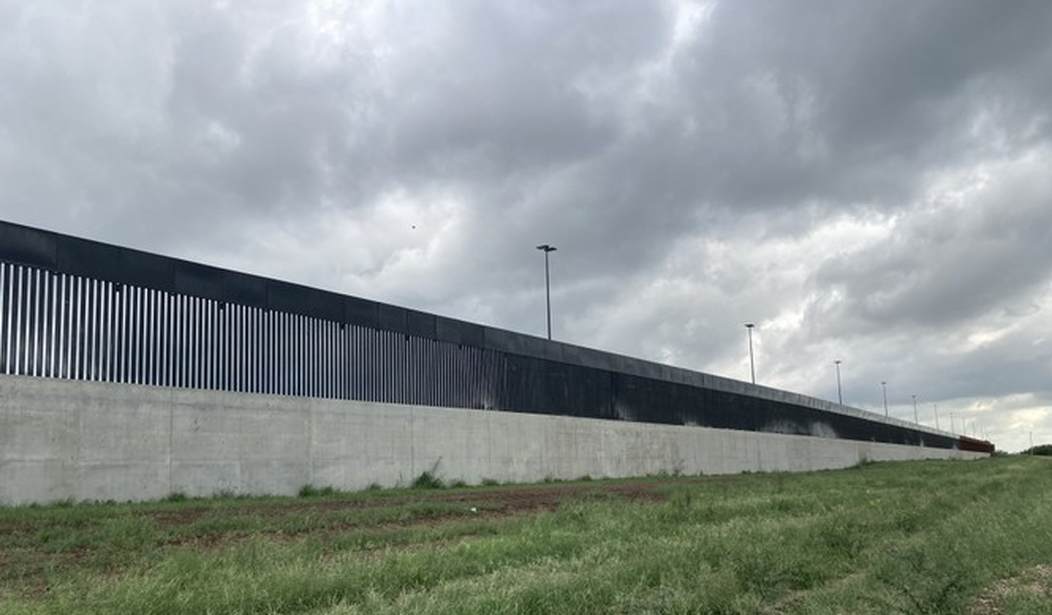
President Joe Biden stated on Thursday once again he does not believes a wall along the U.S.-Mexico border would work to help secure the nation. His comments came after his administration waived several federal laws to fast track build a few miles of border wall in the Rio Grande Valley Sector.
In the notice, Homeland Security Secretary Alejandro Mayorkas said, "There is presently an acute and immediate need to construct physical barriers and roads in the vicinity of the border of the United States in order to prevent unlawful entries into the United States."
As part of the ongoing House investigation into Mayorkas' disastrous handling of the border crisis, the Homeland Security and Oversight and Reform Committees interviewed Border Patrol sector chiefs and asked them if having barriers, such as walls, helps them in their mission to secure the border. Each of those asked said having barriers is extremely helpful.
"So any kind of infrastructure, and we'll talk about the barrier right now as an example, used in the right way in the right location is a force multiplier. There are other areas where I would prefer other types of force multipliers. But a physical barrier generally for us is most helpful in areas where we have what we call short vanishing points. And that is where an individual can approach, cross the border, and disappear quickly. That physical barrier extends the amount of time that I and my team have to respond to and interdict, and it increases the certainty of arrest," then-Del Rio Sector Chief Jason Owens explained.
Owens has since gone on to become the chief for the entire Border Patrol.
Then-Chief Patrol Agent Aaron Heitke of the San Diego Sector told House interviewers a border barrier system "slows down the people as they come across, and so we have more time to respond and actually make an apprehension. It also moves people it's more difficult to cross through the barriers, and so they move to other areas where the barrier isn't where we can focus resources. Part of the barriers as well is all weather roads, so we have better and faster access to those areas."
The San Diego Sector, which borders Tijuana, had one of the first barriers installed along the southern border, which Heitke said was critical in stopping mass illegal crossings that were happening in the 1990's.
El Centro Sector Chief Gregory Bovino said his area of responsibility only has around 60 miles of border wall and there are places that do not but would benefit having such a system in place.
"When I started in the El Centro Sector in 1996, there was no border wall. In many of those areas now, where there is border wall, we see very little vehicular incursions across the desert between the ports of entry, and a decrease in pedestrian crossings at the border, especially where the 33 foot wall exists," Bovino explained. "So because of my experience in seeing both that area in El Centro without and now with the border wall, I believe that the border wall gives the agents a tool and an advantage when working with the border in El Centro Sector."
Yuma Sector Deputy Chief Dustin Caudle revealed there are 14 areas where gaps in their wall system are "exploited almost daily, you know, as a vulnerability in our infrastructure."
"[A]ny time you have if all of the gaps were completely filled, we would be able to, again, be able to move manpower and resources and assets much more easily than just having a known vulnerability. If the door is open, it's typically utilized," Caudle added.

Join the Conversation
VIP members get the ability to comment on articles.