





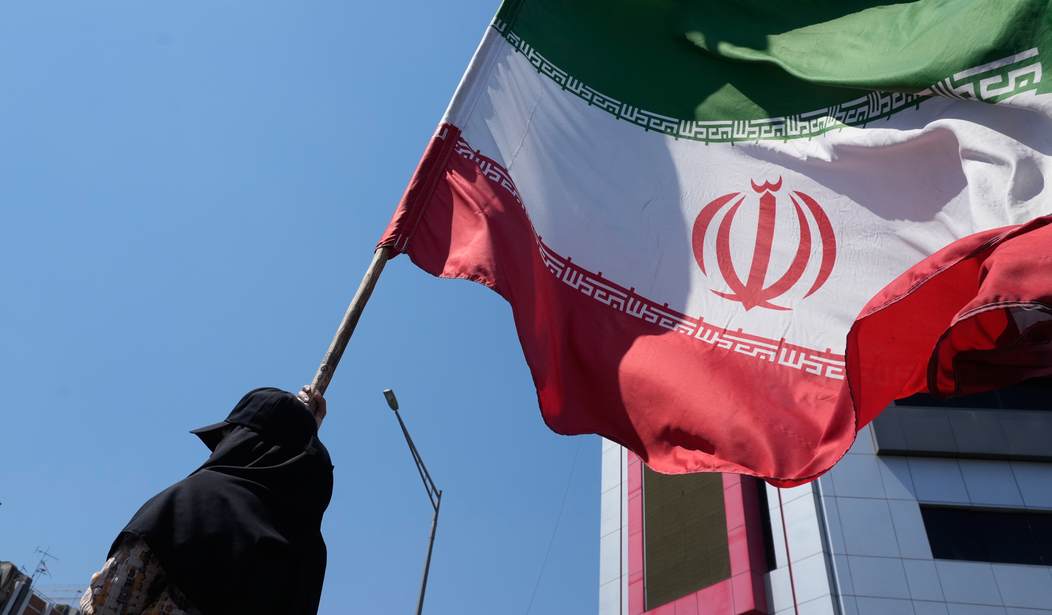
With the U.S. launching renewed airstrikes against the Iranian regime, some have wondered whether declining gas prices will begin to fall again if there is another blockade in the Strait of Hormuz.
But there are indications that Iran’s ability to use the strait to hold the world hostage might be weakening, according to Fox News.
Iran's latest attacks on commercial shipping in the Strait of Hormuz sent oil prices sharply higher in recent days — a reminder that Tehran can still rattle global energy markets.
But the latest spike also highlights a bigger question facing the Trump administration: Has Iran begun losing its ability to use the strategic waterway as economic leverage over Washington?
Growing oil production, alternative export routes and new shipping patterns suggest Iran's ability to weaponize the Strait of Hormuz may be steadily weakening — even if it can still trigger short-term price shocks.
Vice President JD Vance in late June linked global oil supplies directly to negotiations with Iran.
"I think what the president has told us to do is use this MoU (memorandum of understanding) to sort of refill the world's oil economy, to refill some stocks, and then to see where the hand is," Vance said during an interview with "The Michael Knowles Show" podcast June 30.
That outlook faced its first major test in recent days after Iran renewed attacks on commercial shipping. President Donald Trump declared the U.S.–Iran memorandum of understanding and ceasefire "over" and warned his administration could again impose a naval blockade on Iran if attacks on commercial shipping continue.
The U.S. Energy Information Administration in recent days forecast worldwide crude production and trade flows will rebound to near pre-conflict levels by the end of the year, with most previously shut-in production returning during the first quarter of 2027. The agency expects increased global production to lower crude oil and gasoline prices in the months ahead despite continued instability in the Gulf.
I see many people claiming that the Memorandum of Understanding between the United States and Iran is still intact, and that the flare-ups we are seeing is just "skirmishing".
— Brett Erickson (@BrettErickson28) July 10, 2026
I disagree.
The reason for this is because neither side now has significant accomplishments to show…
This doesn’t make it impossible for Tehran to impact markets, but it could diminish its ability to use the issue to coerce the U.S. to grant more concessions.
It’s also worth noting that producers in the Gulf are increasingly relying on other methods of moving oil through the region without depending on the Strait of Hormuz. To put it simply, other nations are adapting to Iran’s willingness to use the waterway as a negotiating tool. Retired Navy Rear Adm. Mark Montgomery noted that “The southern route creates a route they can’t toll or control.”
Over the past few days, U.S. and Iranian forces traded fresh airstrikes after the regime attacked commercial vessels traveling through the area. President Donald Trump indicated that the ceasefire agreement Washington and Tehran signed last month is no longer in effect.
The U.S. military hit about 90 targets in Iran, killing at least 14 people and wounding 78. The regime struck back by firing missiles at U.S. positions in Bahrain, Kuwait, Qatar, and Jordan.
Editor's Note: For decades, former presidents have been all talk and no action. Now, Donald Trump is eliminating the threat from Iran once and for all.
Help us report the truth about the Trump administration's decisive actions to keep Americans safe and bring peace to the world. Join Townhall VIP and use promo code FIGHT to get 60% off your VIP membership.






Join the conversation as a VIP Member