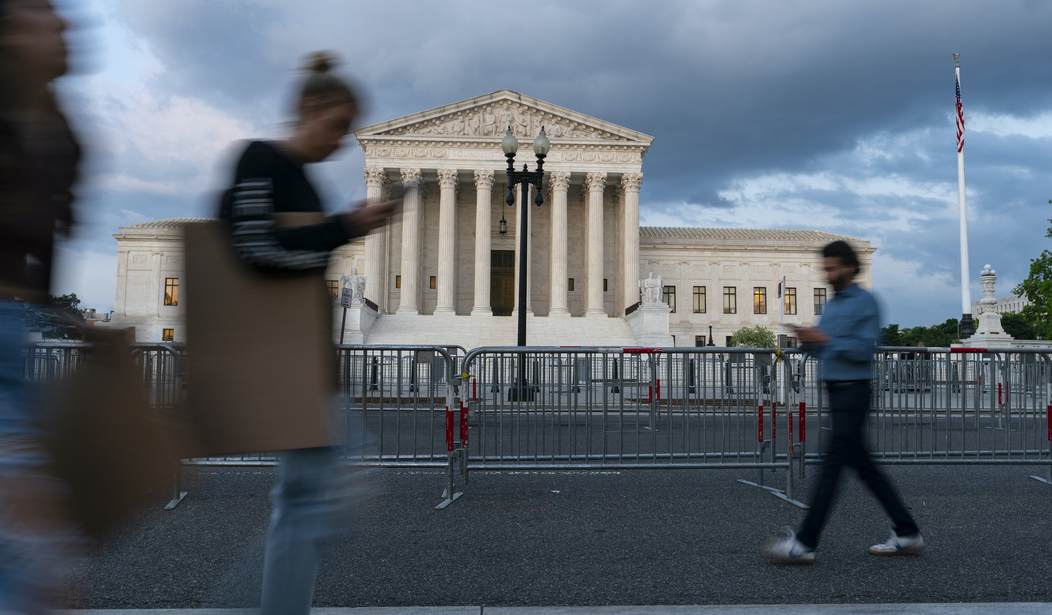

A Louisiana man is asking the U.S. Supreme Court to greenlight his lawsuit against police and security officers who threatened to arrest him for handing out religious leaflets on a public sidewalk.
This case centers on claims of viewpoint discrimination, the First Amendment, and qualified immunity.
Richard Hershey, a senior citizens, said he was peacefully distributing free literature from the Christian Vegetarian Association outside the Brookshire Grocery Arena in Bossier City on February 28, 2020.
The arena is located in a public park. Court records show that another person was also passing how literature — commercial ads for a radio station. Yet, none of the officers threatened him with arrest.
Officers approached Hershey while brandishing handcuffs. They told him to stop handing out the leaflets or face arrest. They claimed the area where he handed out the leaflets was private property and that he needed prior approval to pass out religious information.
Hershey left the premises to avoid arrest. But he later sued the city, the two officers, and three security guards. He accuses them of violating his First Amendment rights to free speech and free exercise of religion.
Hershey left but later sued the city, two officers, and three security guards. He claimed the actions violated his First Amendment rights to free speech and free exercise of religion. The officers treated his religious message differently from commercial speech, he said.
A federal judge dismissed the case, prompting Hershey to appeal. In October 2025, a divided Fifth Circuit Court of Appeals panel issued a ruling. Two judges reversed the lower court’s dismissal but upheld qualified immunity for the officers and dismissed claims against the private security guards.
Now, Hershey hopes the Supreme Court will agree to hear his case. His petition, filed with help from the First Liberty Institute and former Solicitor General Paul Clement, insists that the violation of his rights was obvious and that qualified immunity should not shield the officers from accountability.
The petition says the officers “needlessly committed an obvious constitutional violation, threatening to arrest petitioner, compelling him to leave, and banishing him indefinitely from a public park on pain of arrest, all while leaving the commercial leafleteer alone.”
Hershey’s petition further argues, “The right to evangelize in public, free of viewpoint-based government suppression, is as clearly established as any right in the firmament. It is squarely protected by two separate but overlapping clauses of the First Amendment—the Free Speech and Free Exercise Clauses—and by decisions of this Court underscoring that viewpoint discrimination is verboten and that discrimination against religious speech is viewpoint discrimination (im)pure and simple. No government official should need an on-point circuit precedent to illustrate what the Constitution itself and this Court’s cases make clear beyond cavil.”
Hiram Sasser, executive general counsel for First Liberty Institute said in a statement that “If people cannot realistically sue when their First Amendment rights are violated, those rights lose meaning.”
He added, “Some violations of the First Amendment are so obviously egregious that government officials should know better and be held accountable.”
Those supporting Hershey contend that the Fifth Circuit’s ruling creates a double standard making it difficult for citizens to hold officials accountable when they engage in obvious constitutional violations.
Louisiana cops threatened to arrest a Christian vegetarian for handing out religious leaflets. He is asking SCOTUS to overrule the 5th Circuit's conclusion that qualified immunity shielded them from liability for that obvious constitutional violation. https://t.co/55ibOMinMQ
— Jacob Sullum (@jacobsullum) June 17, 2026
If the Supreme Court takes up Hershey’s cause, it could establish a precedent altering how far officers can go when dealing with speech and religious expression
It appears to be a straightforward case. If the officers shut down Hershey’s speech on public property while ignoring that of another, it seems difficult to argue that they did not violate his First Amendment rights.
However, qualified immunity is a difficult hurdle to clear. It often shields officers and other government officials from accountability when they cross the constitutional line, which means this case might not go in Hershey’s favor even if the Court takes it up.