





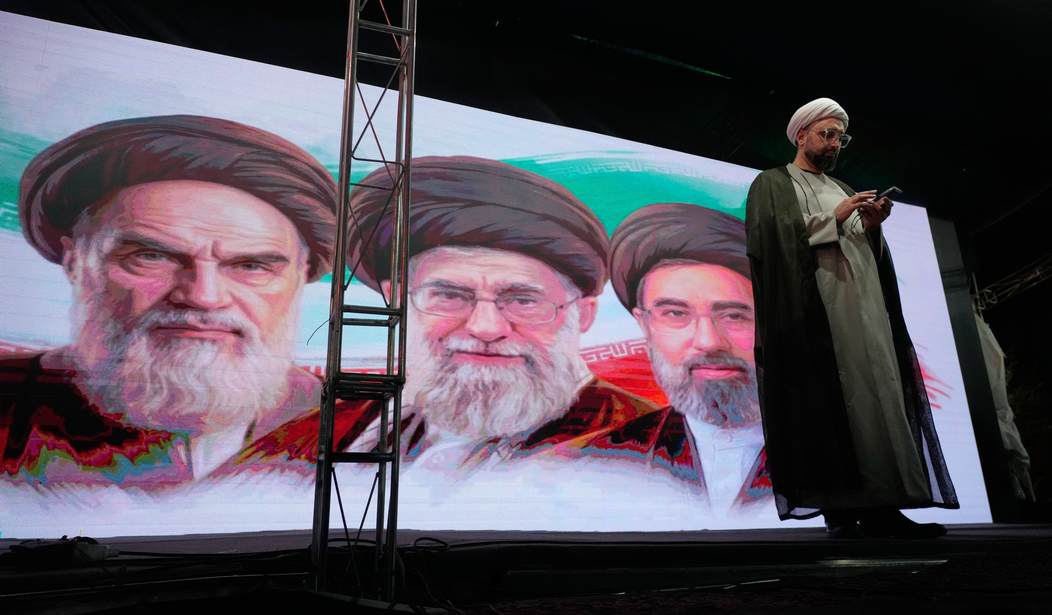
Iranian dissidents who came legally to the United States have found themselves in a precarious situation — especially those in higher education.
After years of study and contributions to universities and their communities, many cannot legally work or move forward with the immigration process after the Trump administration was forced to take action to protect national security.
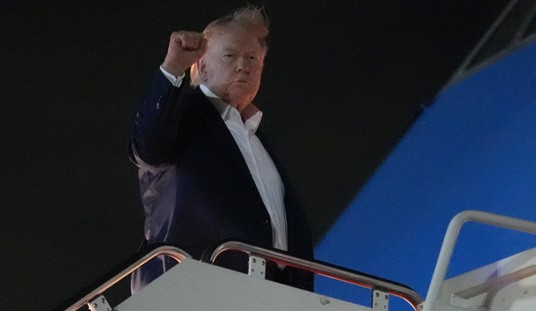
Earlier in President Donald Trump’s second term, he expanded restrictions on immigration from Iran and other countries known for being hotbeds for terrorism. These include presidential proclamations that suspend or limit entry from these countries.
U.S. Citizenship and Immigration Services (USCIS) has placed holds on final decisions for many pending applications filed by nationals coming from countries designated as high risk. These include work authorization requests such as Optional Practical Training (OPT) and the process for becoming a permanent resident.
The Trump administration took this step to strengthen the screening process while protecting public safety.
Lisa, an Iranian graduate student who asked to remain anonymous for safety reasons, told Townhall about how she tried to stay out of Iranian politics. But the regime still targeted her.
“I was eventually detained—what authorities would describe as a ‘respectful arrest’—but in reality, I was subjected to intense interrogations and psychological pressure,” she said. “I was threatened with death, travel bans, and sexual violence. Those experiences made me realize that even remaining quiet could not guarantee my safety, and that staying in Iran was no longer possible for me.”
Lisa worked as an English instructor in Iran. “Most of my professional work focused on helping young learners develop English skills through engaging, interactive methods rather than traditional memorization,” she said. “I used games, music, and a flipped learning approach to make language learning practical and meaningful for children. ... However, this kind of educational work eventually became part of a serious political case against me.”
She explained that “modern and student-centered teaching” ended up becoming “something that drew negative attention and scrutiny,” which led to her facing “the possibility of years of imprisonment through the court system.”
Lisa later traveled to the United States “fully legally and through the proper process.” She had planned to make the trip even before her situation in Iran escalated. But now, she and other Iranian students are facing “serious uncertainty regarding their ability to work and build stable futures here.”
She further noted that Iranians who run afoul of the regime “are facing consequences connected to circumstances beyond our control” and that many of her fellow students “fear the actions and repression of the Islamic regime.”
Lisa has applied for asylum, but with the process halted, she is struggling to make ends meet because she cannot legally work in the country. It has forced her to rely on an American citizen to sponsor her.
Sana Ebrahimi Ledene, another Iranian student pursuing her Ph.D, also chimed in on the issue. She moved to the United States in 2019 to continue her studies, earned advanced degrees, and married a U.S. citizen last year. She currently has a pending marriage-based green card case that has also been put on hold.
Before coming to the U.S., she was an active voice against the Iranian regime. Back then, she remained anonymous while blogging her anti-regime views. But she decided to go public after the 2023 killing of Mahsa Amini, who died in police custody after the authorities arrested her for refusing to wear a hijab. Her death sparked the “Woman, Life, Freedom” protests in Iran.
Since residing in the U.S., Ledene has been an active force pushing back against the regime and its propaganda efforts in the United States. She went viral after exposing a regime-friendly speaker who was set to speak at the University of Chicago.
“I feel like, I mean, if we are so far and we cannot speak out with our own identity, then how can we expect like people in Iran do anything and rise and speak out, you know?” she told Townhall. “So yeah, I am using that opportunity, the safety that I have here to bring attention to what is happening in Iran.”
1.This is me calling The University of Chicago Police Department to fact check the alleged bomb threat news. Called twice. The result:
— Sana Ebrahimi Ledene (@__Injaneb96) October 20, 2022
False, no there's no record of such event. Is this enough for you to believe Negar Mortazavi is a liar? #MahsaAmini pic.twitter.com/nZg4UroF4i
1. After many opposition to having Negar Mortazavi as a speaker at UChicago, on October 19th she claimed that a bomb threat was the reason for switching the event to virtual by referring to a student magazine. I fact check that by calling UCPD:https://t.co/IUIPLzM3Me
— Sana Ebrahimi Ledene (@__Injaneb96) October 31, 2022
Ledene discussed how the November fatal shooting of a National Guard member in Washington D.C. led to the White House’s crackdown on immigration from certain countries. She explained how many Iranians who are waiting for work permits are afraid that they might be deported after having spoken out against the regime.
Ledene also understands how the regime’s oppression works. Her father was arrested in the late 1980s. “He was arrested, basically kidnapped. No one knew where he was until the family received a call,” she said. “He was being tortured physically…they were trying to get a forced confession out of him, trying to make a case, make a fake case for him that would have severe consequences, one of them being execution.”
Iran’s government maintains systematic monitoring of dissidents all over the globe. The operate a dedicated team for social media surveillance. They also employ a “cyber army” of accounts who go on social media to spread disinformation and regime propaganda.
The regime not only compiles lists of dissidents, they also monitor their travels when possible. If they return to Iran, they can be quickly arrested and punished. In one instance, a German-American of Iranian descent named Jamshid Sharmahd who regularly spoke out against the regime, was kidnapped in Dubai and sent to Iran, where he was later executed.
This is the fate that people like Sana and Lisa fear. Both understand the importance of national security and support the president’s efforts to protect the public. Still, they are pushing for a solution to shield Americans from danger while also allowing them to avoid consequences in their home country.
“So take the security measures very seriously,” Ledene said. “Get help from the Iranian community to identify those people that are security risks.’
Editor's Note: Do you enjoy Townhall's conservative reporting that takes on the radical left and woke media? Support our work so that we can continue to bring you the truth.
Join Townhall VIP and use promo code FIGHT to receive 60% off your membership.









Join the conversation as a VIP Member