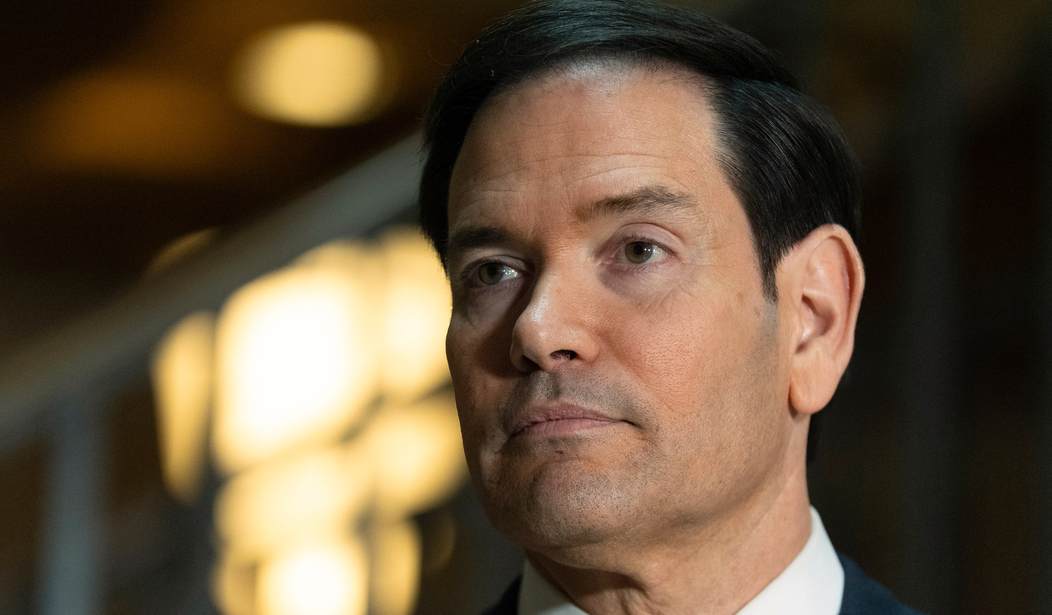

Secretary of State Marco Rubio said there has been “slight progress” in Washington’s peace talks with the Iranian regime.
However, he did indicate that all is not lost when it comes to establishing a peace agreement that would end the war and prevent the regime from obtaining a nuclear weapon.
During a NATO foreign ministers meeting in Sweden on Friday, Rubio noted that there has been “a little bit of movement” in the talks. However, he also suggested that the risk of renewed airstrikes remains if the Iranian regime does not agree to Washington’s demands, according to The Hill.
During the conference, Rubio pressed European allies to do more to support the U.S.’ efforts to contain Iran. He told reporters that President Donald Trump is “very disappointed” in NATO members that refused to allow the U.S. to use their bases for military operations against the regime. "You have countries like Spain denying us the use of these bases - well then, why are you in NATO? That's a very fair question," he told reporters.
Secretary of State Marco Rubio said Friday that talks with Iran had shown "some progress" but that more work was needed, adding that Iran's plans for a tolling system in the Strait of Hormuz were "unacceptable" and "completely illegal."
— Verity (@improvethenews) May 22, 2026
Iran published a map claiming regulatory…
At the center of the current standoff is Iran’s efforts to establish a new “toll-and-control” policy in the Strait of Hormuz. Under this plan, Iran would charge commercial ships to pass through one of the world’s most important waterways for transporting oil and other important resources. Tehran has maintained a blockade of the waterway since shortly before the war started, which has affected gas prices on a global scale.
⭕️ Rubio: Blackmail by the Islamic Republic in the Strait of Hormuz is unacceptable
— Alex kennedy (@Alexkennedy213) May 22, 2026
Marco Rubio, the U.S. Secretary of State, warned on Friday that the implementation of any toll system by the Islamic Republic in the Strait of Hormuz is unacceptable.
Rubio said before the NATO…
The Trump administration portrayed Iran’s efforts as illegitimate and publicly threatened consequences if Iran moves ahead with the toll scheme.
Some ships have still been allowed to pass through the Strait of Hormuz, but Iran has still heavily restricted traffic. The Trump administration imposed its own blockade in the region, targeting vessels traveling to and from Iranian ports. U.S. forces have stopped and boarded sanctioned tankers to prevent them from reaching Iran, which has choked off a critical revenue stream for the Islamic regime.