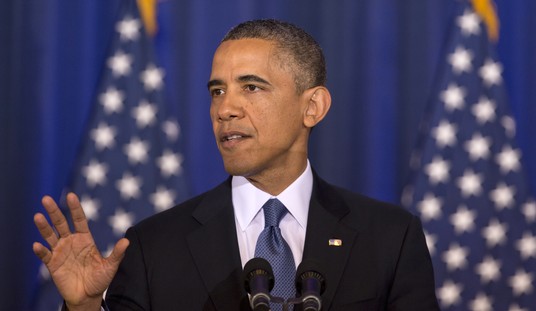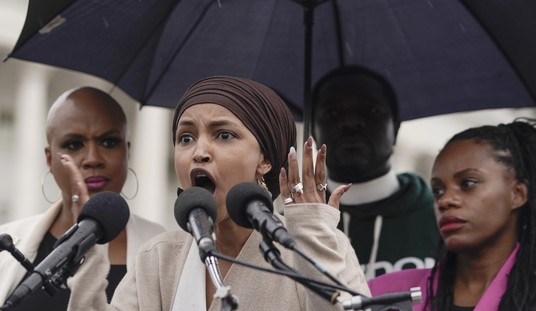

As artificial intelligence technology becomes more prevalent in everyday life, Washington is at the center of a major political fight over how to regulate it.
The advent of AI has provided many different benefits to users. But in other cases, it has had a deleterious impact — especially on minors. There are several news reports of minors viewing or creating sexually inappropriate material using AI chatbots even as companies work to prevent this from happening.
State governments and tech companies are also wrestling with how to regulate the technology. With AI playing a larger role in jobs, free speech, privacy, national security, and children’s safety, it is only a matter of time before the government steps in.
Republican and Democratic lawmakers agree that the government needs to regulate artificial intelligence. Where they disagree is the “how.”
On the Democrat side, Sen. Bernie Sanders (I-VT) and Rep. Alexandria Ocasio-Cortez (NY-14) gave the most aggressive proposal in the form of the Artificial Intelligence Data Center Moratorium Act.
The bill would pause construction of new AI data centers nationwide until the government and companies implement stronger national safeguards. Sanders argued that “AI and robotics are creating the most sweeping technological revolution in the history of humanity” and that “Congress is way behind where it should be in understanding the nature of this revolution and its impacts.”
“Bottom line: We cannot sit back and allow a handful of billionaire Big Tech oligarchs to make decisions that will reshape our economy, our democracy and the future of humanity,” he added.
70% think AI will lead to fewer jobs.
— Sen. Bernie Sanders (@SenSanders) April 3, 2026
They are right.
We can’t allow a handful of billionaires, eager to increase their wealth and power, to rush forward with a technology that will fundamentally transform humanity without democratic input or accountability. pic.twitter.com/Jn4hgvEieh
AOC said that the legislature “has a moral obligation to stand with the American people and stop the expansion of these data centers until we have a framework to adequately address the existential harm AI poses to our society.”
Politicians - especially Dems - should pledge not to take AI money.
— Alexandria Ocasio-Cortez (@AOC) March 26, 2026
They are buying up influence ahead of the midterms, and Dems who take AI $ will lose authority and trust as the public bears the cost.
Their money will end up being toxic anyway. People are catching on.
The bill would stop the construction of data centers until the technology “is safe and effective — preventing executives in the AI industry from releasing harmful products into the world that threaten the health and well-being of working families, our privacy and civil rights and the future of humanity.”
The other goalposts would require that “economic gains of AI and robotics will benefit workers, not just the wealthy owners of Big Tech” and ensure that data centers do “not increase electricity or utility prices, harm communities or destroy the environment.”
Republicans are pushing for one set of standards imposed at the federal level instead of allowing states to enact their own regulations on AI. The White House unveiled a national AI legislative framework that it sent to lawmakers.
The Trump administration’s framework includes protections for children while shielding communities “from higher electric bills, protect our First Amendment rights from AI censorship, and ensure that all Americans benefit from this transformative technology,” according to crypto czar David Sacks.
Senate Commerce Committee Chairman Ted Cruz (R-TX) is the leading architect of this strategy. He is championing the SANDBOX Act, which would allow AI companies to test new technologies without being boxed in by onerous federal regulations.
.@SenTedCruz's SANDBOX Act, which would carefully enable waiving outdated regulations to enable AI innovation, "is a reflection of sort of the sandbox perspective that Utah’s brought to the AI conversation,” explains our CEO @ckoopman @BrighamTomco @Deseret pic.twitter.com/San1CaunNL
— Abundance Institute (@abundanceinst) April 9, 2026
Some Republicans want more government involvement in regulating AI. Sen. Josh Hawley (R-MO) has opposed blocking state-level protections, an idea President Donald Trump is advocating.
While speaking at Axios’ AI+DC Summit in March, he said, “The first thing we need to do is we need to pass legislation that would prevent AI chatbots from targeting minor children,” he told Axios.
Great to join Axios for a discussion on AI policy
— Josh Hawley (@HawleyMO) March 27, 2026
Congress needs to decide whether it’s going to protect kids or protect Big Tech. No profit justifies destroying children’s lives pic.twitter.com/EDxhWqftFR
Protecting children is one of the most pressing issues when it comes to regulating AI technology. Since chatbots became easier to access, many children have relied on it in unhealthy ways. In some cases, the technology has motivated kids to commit suicide.
AI companies say they are working to prevent these outcomes, but they are struggling to find solutions that will make the technology safe for children.