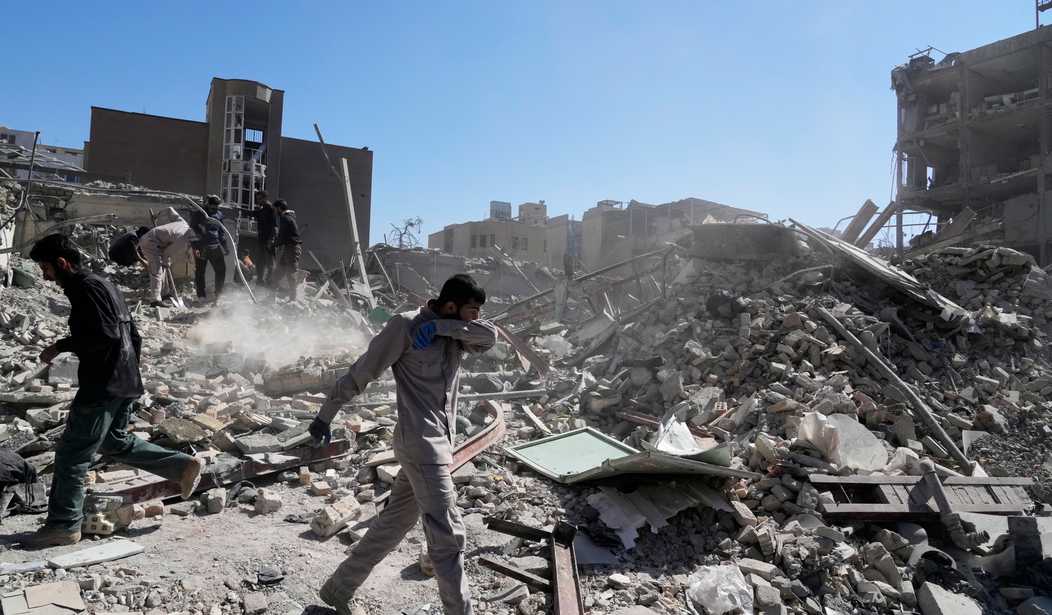
This comes as Iran’s government struggles to maintain control while unsuccessfully fending off airstrikes from the U.S. and Israel in the first week of a rapidly moving military conflict.
Controlling Iranian airspace would make it easier for the U.S. and Israel to strike targets inside Iran. Defense Secretary Pete Hegseth said U.S. forces are gaining enough control of the airspace that the military has switched from using advanced weapons at the beginning of the campaign to gravity bombs, according to PBS NewsHour.
Hegseth cautioned that this does not guarantee that none of Iran’s drones or missiles could get through to strike at targets in Arab nations, but it does give the U.S. a distinct military advantage. The defense secretary further stated that the timeline of the war could stretch beyond the timeframe the White House initially suggested. He said it could reach up to eight weeks.
With the U.S. dominating the airspace, Iran will have a much harder time using aircraft and air defenses. Coordinating battlefield coordination will also be more difficult for the Iranian military.
U.S. and Israeli air forces can operate with less risk while striking harder and gathering more intelligence from the air.

This development comes amid intensified operations against Iran. The U.S. recently used a submarine torpedo to sink an Iranian warship in the Indian Ocean near Sri Lanka, CBS News reported. NATO forces recently destroyed an Iranian missile headed for Turkey, which has raised concerns about widening the scope of the war.
Iran has responded to the offensive by launching missile and drone attacks against its Arab neighbors. It has struck targets in the United Arab Emirates, Qatar, Kuwait, Bahrain, Saudi Arabia, and Jordan. Iran’s response has damaged energy facilities, data centers, and infrastructure while disrupting air travel and shipping through the Strait of Hormuz.
Footage captured by the Associated Press shows a commercial plane taking off amid explosions after Israeli airstrikes hit the Lebanese capital city of Beirut on Tuesday.
— ABC News (@ABC) March 4, 2026
Follow live updates: https://t.co/NGJZPGa700 pic.twitter.com/tR1jaIwbba
Several people, including migrant workers and civilians in Abu Dhabi and Kuwait, have been killed in Iran’s airstrikes. The regime’s objective appears to be pressuring these nations to urge the Trump administration to halt the airstrikes against regime targets.
Bahrain produces 200,000 barrels of oil per day. That is less than 0.2 percent of global supply. In isolation, hitting BAPCO does nothing to the world oil price. Iran knows this. That is precisely why hitting it is the most sophisticated signal Iran has sent in six days of war.… https://t.co/BpDoJV0Z9W pic.twitter.com/MJjL86Moq3
— Shanaka Anslem Perera ⚡ (@shanaka86) March 5, 2026
However, this plan appears to have backfired. One analyst told Reuters, “The option of neutrality receded when Iranian missiles started landing and ‘forced us to be their enemies,’ pushing states that once hedged their position into open alignment with Washington and a readiness to defend their territory and interests.”
The Arab Gulf states are banding together in opposition against Tehran through the Gulf Cooperation Council (GCC) which held an emergency meeting about the issue. It warned Iran that its airstrikes would risk turning the region into an “active theatre of response.”