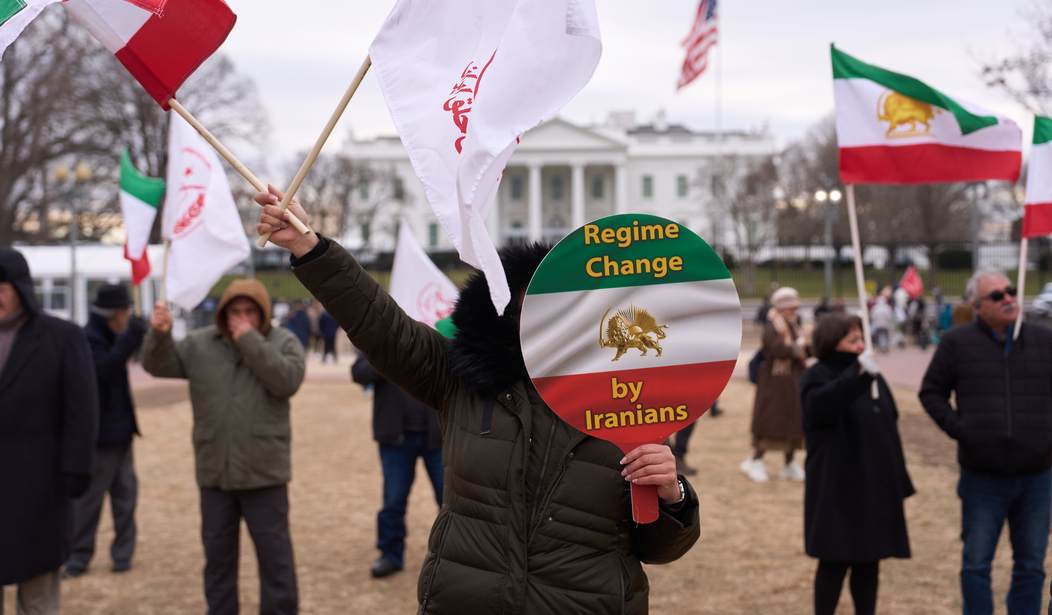
The situation on the ground in Iran is intensifying as tens of thousands of civilians occupy the streets to protest against the Islamic regime.
Experts point out that this is the largest-scale protest movement against the regime in recent memory. Many have speculated that this could be the nation’s tipping point; the point where the government finally falls.
The unrest was sparked by the economic crash the country experienced, along with soaring inflation. It started with strikes among Tehran’s bazaar merchants. But it swiftly spread to all 31 provinces and over 111 cities.
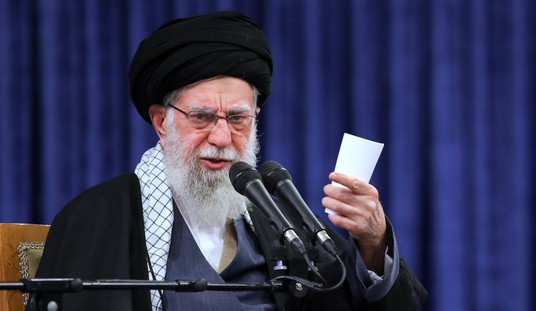
Protesters are marching in the streets, calling for the downfall of Supreme Leader Ayatollah Ali Khamenei, who has ruled the nation for over four decades. Chants of “Death to Khamenei” and “Death to the dictator” can be heard on video footage circulating on social media.
For decades Iranians were told to chant “Death to America.” Now they chant “Death to Khamenei.”
— David Patrikarakos (@dpatrikarakos) January 9, 2026
The language of the regime has been turned against it.
This is how revolutions sound.
pic.twitter.com/TW6eTCs2iX
Many protesters are calling for the return of Crown Prince Reza Pahlavi, the son of the Shah of Iran, who was deposed in 1979. The protests became even more aggressive after Pahlavi called for a coordinated demonstration nationwide.

In response, the regime has used violence, killing at least 36 civilians and detaining thousands more.
Since coming to power in 1979, Iran’s government has built one of the most oppressive machines in the world. The regime has a long and storied history of brutal human rights abuses, killing and imprisoning political dissenters while enforcing a harsh form of Islamic law on the populace.
The regime has used torture as a routine tool, with survivors describing systematic beatings, electric shocks, rape, mock executions, prolonged solitary confinement, and even forced injections of psychiatric drugs. Iran leads the world in per-capita executions, carrying out at least 834 in 2023, 901 in 2024, and over 1,000 in just the first nine months of 2025—with execution rates surging 40 percent after the Israel-Iran conflict began in June 2025.
Forget performative Western feminism.
— 33 (@thirtythree) January 9, 2026
In Iran right now, women are risking death by burning hijabs and using Khamenei’s portrait to light their cigarettes.
This is what actual feminism looks like. pic.twitter.com/U6focvAoei
Many of these executions come after sham trials where defendants are denied lawyers, given only minutes to defend themselves, and convicted based on confessions extracted through brutal torture.
The government imposed a mandatory hijab law requiring women and girls to cover their hair. Those who violate the law can face up to 12 to 15 years in prison — or even execution. The law provoked widespread unrest after 22-year-old Mahsa Amini died in police custody after being arrested for an “improper hijab.”
Security forces slaughtered over 500 protesters.
The reason Iran’s government has gotten away with so much tyranny is that the populace is not armed. In fact, the nation has imposed gun control laws the likes of which the anti-gunner left in America could only dream of.
Iran’s laws are aimed at keeping firearms out of the hands of civilians and ensuring that only government and security forces can arm themselves. Iranian citizens do not have the right to own guns for self-defense. However, they can obtain licenses for hunting rifles or sport shooting — and even those require background checks and membership in certain elite classes.
Watch Ali Khamenei's top advisor with his daughter. This same pro-hijab leader backs women beaten to death for not wearing a burqa.
— BALA (@erbmjha) October 21, 2025
Rich Islamists preach burqa for poor while they live western lifestyle 🤲🏻 pic.twitter.com/o8dHIEeUpo
It is nearly impossible for regular people to obtain semi-automatic rifles and handguns. The licensing process is deeply political. The authorities screen people not only for criminal records, but also for their loyalty to the regime. In fact, civilians are barred from even discussing guns on social media.
Still, many Iranians obtain weapons from the black market, buying them through encrypted apps like Telegram and paying in cryptocurrency.
And this, ladies and gentlemen, is precisely why we as Americans must ensure that the Second Amendment stands. If Iran had a comparable percentage of armed civilians, it would be much harder for the regime to oppress them.
The regime is having trouble squashing the current resistance — even with an unarmed citizenry. What if more of these folks were able to exercise their right to keep and bear arms? What if the government had to fear getting shot instead of just screamed at?
That’s why the authoritarians who run Iran’s government didn’t want the people they planned to oppress to be armed. It’s also why Americans must ensure the anti-gunners aren’t able to get their way. Otherwise, we might find ourselves in the same position as Iranian citizens.