





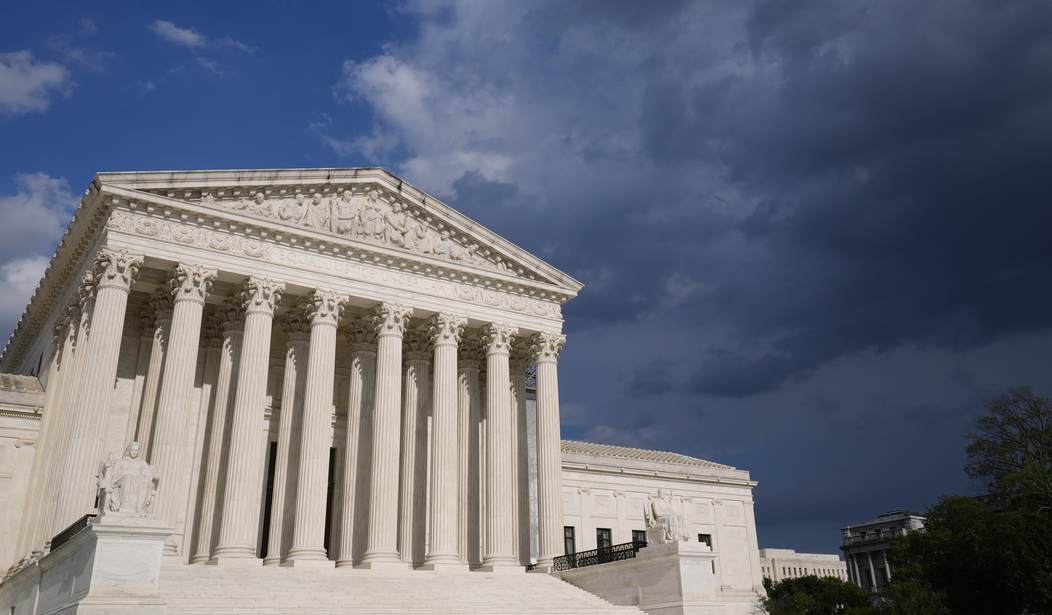
The Supreme Court on Wednesday heard arguments in what could be a landmark discrimination case. The court is reportedly poised to rule in favor of Marlean Ames, who sued the Ohio Department of Youth Services, alleging that she faced discrimination because she is a straight woman.
Ames had applied for a promotion in 2019 after having been supervised by a gay woman. However, she was passed over for the position in favor of a gay woman who had not even applied for the promotion.
The employee was later demoted to a lower position and took a significant pay cut while management filled her position with a gay male worker who had less seniority. Ames filed a lawsuit under Title VII of the Civil Rights Act of 1964, which prohibits discrimination based on sex and sexual orientation.
She told CBS News, “They put a 25-year-old man with less than three years of service in our agency to do my job that I had successfully done for over five years.”
Lower courts dismissed Ames’ lawsuit, referring to a standard that requires additional evidence of discrimination when it affects a member of a majority group, such as heterosexual individuals. Ames’ lawyers argued that this increased burden of proof violates the principle of equal treatment under the law.
From The Guardian:
Her petition to the supreme court challenges the way that such “reverse discrimination” cases have been handled in lower courts. Previous rulings have determined that people from majority groups – such as men, white and straight people – have to meet a higher legal bar than those from minority groups in proving workplace bias.
The Supreme Court heard arguments in Marlean Ames’ "reverse discrimination" lawsuit, which could lead to more such claims as diversity, equity, and inclusion initiatives face growing scrutiny. pic.twitter.com/0KkW1l7OIh
— USA TODAY Politics (@usatodayDC) February 26, 2025
The court appears to favor Ames’ side of the case, according to multiple reports. Justice Brett Kavanaugh said he expected “a really short opinion that says discrimination on the basis of sexual orientation, whether it’s because you’re gay or because you’re straight, is prohibited, and the rules are the same,” The New York Times noted.
Justice Amy Coney Barrett argued that regardless of Ames’ sexuality, “she would have the exact same burden” to prove her case under Title VII, according to CBS News.
Even the Biden administration supported Ames’ case. It filed an amicus brief with the court, arguing that the enhanced requirements for members of majority groups are inconsistent with Title VII’s text and purpose.
The fact that this heightened standard existed in the first place is ludicrous. The notion that a member of a “majority group” should have to go above and beyond to prove that their employer is illegally discriminating against them clearly violates the equal application principle.
If someone is being discriminated against, it should not matter which group they belong to. If we are going to have laws against these practices, they should be applied fairly and equally. Otherwise, the laws are discriminatory in and of themselves. Hopefully, the Supreme Court will correct this nonsense.
Join the Conversation
VIP members get the ability to comment on articles.