





The Senate Judiciary Committee kicked off the fourth day of hearings to discuss the confirmation of Judge Amy Coney Barrett to the Supreme Court on Thursday, and Democrats proved they would continue with their narrative that the process was a "sham."
Sens. Klobuchar, Feinstein, and Blumenthal all made certain to make their objections well known, saying there was no precedent in American history for going forward with the nomination, adding that "millions of people are already voting," and that their choice for president come November should choose the next justice.
The argument has been made throughout the confirmation process that the American people, in fact, made their choice for president back in 2016. Democrats, of course, then point back to the failed Obama nomination of Merrick Garland during the final year of his presidency, a time in which Republicans controlled the Senate.
The arguments about hypocrisy and legitimacy have gone on and on but during the vice presidential debate last week, Sen. Kamala Harris dug back in history to make what she thought was a red hot point about an honorable president, Abraham Lincoln, yielding his duty to nominate a justice during an election year.
Harris's Democratic colleagues lapped this story up like a warm glass of milk and have been dutifully retelling it in recent days in order to fortify their own position that Barrett's nomination is a "sham."
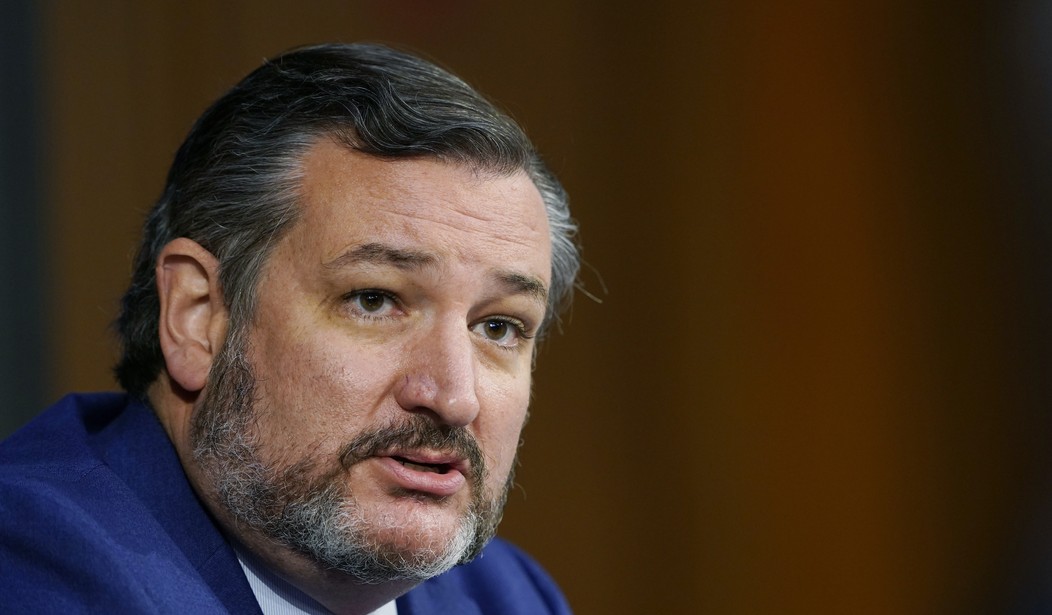
On Thursday, after days of contentious hearings, politically charged rounds of questions, and multiple failed attempts by Democrats to trap Barrett in a "gotcha" moment, Sen. Ted Cruz dismantled their precious story about President Lincoln and crushed the notion that Barrett's nomination was unprecedented during a presidential election. He forecasted that the attacks of illegitimacy would continue, noting the many charts positioned by Democrats in the hearing room.
"I think it is important for the record to reflect that moving forward on this nomination is consistent with two centuries of precedent and tradition in the Senate," Cruz said. "Numerous Democratic members of this committee have given speeches. I see they have charts prepared to give more speeches, all attacking the legitimacy of these proceedings and as John Adams observed, facts are stubborn things."
First, Cruz pointed out the basic, numeric record of the number of times a Supreme Court vacancy came up during an election year: 29.
"The precedent is unequivocal and uniform: when a vacancy occurs in a presidential election year, the president makes a nomination, that includes Democrats, it includes Republicans," Cruz said. "Of those 29, 19 of those occurred when the president and the Senate were of the same party. Of those 19, the Senate confirmed 17 of them." But when the office of the president and the Senate were controlled by different parties, he noted, the odds were much worse.
"How about when the Senate and the president are of different parties?" he asked. "That’s happened 10 times. In that circumstance, the Senate has confirmed the nominee only twice."
Cruz said he understood why his Democratic colleagues were frustrated at the failed nomination of Merrick Garland in 2016, but the party division at that time made the failure historically precedented. But another example that was just brought up by Sen. Klobuchar, parroting Sen. Harris, also needed to be corrected.
"One example that has been pointed to, Senator Klobuchar just pointed to it, Senator Harris at the vice presidential debate pointed to it, was Abraham Lincoln," Cruz said. "We are told that Honest Abe, the founder of the Republican Party, showed the example for why we should not be proceeding on this."
"I think it’s worth noting that that example misses a lot of the story," Cruz said. "So, Abraham Lincoln in 1864, 27 days before the election, Chief justice Roger Taney passed away...so suddenly there was a vacancy, 27 days before the election. Senator Klobuchar and Senator Harris both pointed out the fact that Abraham Lincoln did not make a nomination in those 27 days."
Watch Sen. @tedcruz shred the Democrats' revisionist history that President Abraham Lincoln voluntarily waited until after the 1864 presidential election to fill a Supreme Court vacancy. pic.twitter.com/8cEWQD1ePc
— Townhall.com (@townhallcom) October 15, 2020
But, as Cruz pointed out, things in 1864 were markedly different than in 2020 in terms of the Senate's ability to work on a moment's notice.
"What both of them omitted was the Senate wasn’t here," Cruz said. "The Senate had left. They had gone home. This was not the age of jet travel. This was not the age of commuting every weekend, jumping on a United flight. They were gone and the Senate would not return until December."
Cruz went on to tell the story of how when the Senate was able to reconvene in December of that year, a nomination – of one of Lincoln's harshest intraparty critics, Salmon Chase – was made. Chase was confirmed the next day.
"To suggest that that is somehow a precedent and that requires us not to fill this vacancy now is, well, I actually can’t put it better than the Washington Post who fact-checked Senator Harris on this claim...The Washington Post conclusion was that senator Harris’s argument, quote, 'wasn’t exactly true.'"
"I recognize that our Democratic friends wish a different president had been elected in 2016," Cruz said. "I’m sympathetic to those arguments. I recognize that our Democratic friends wish there was a Democratic majority in the Senate. But the voters decided otherwise and so this committee moving forward is consistent with over 200 years of history and precedent."


Join the Conversation
VIP members get the ability to comment on articles.