
Does the future of American conservative economic thought lie in the ideas of Alexander Hamilton, or Milton Friedman?
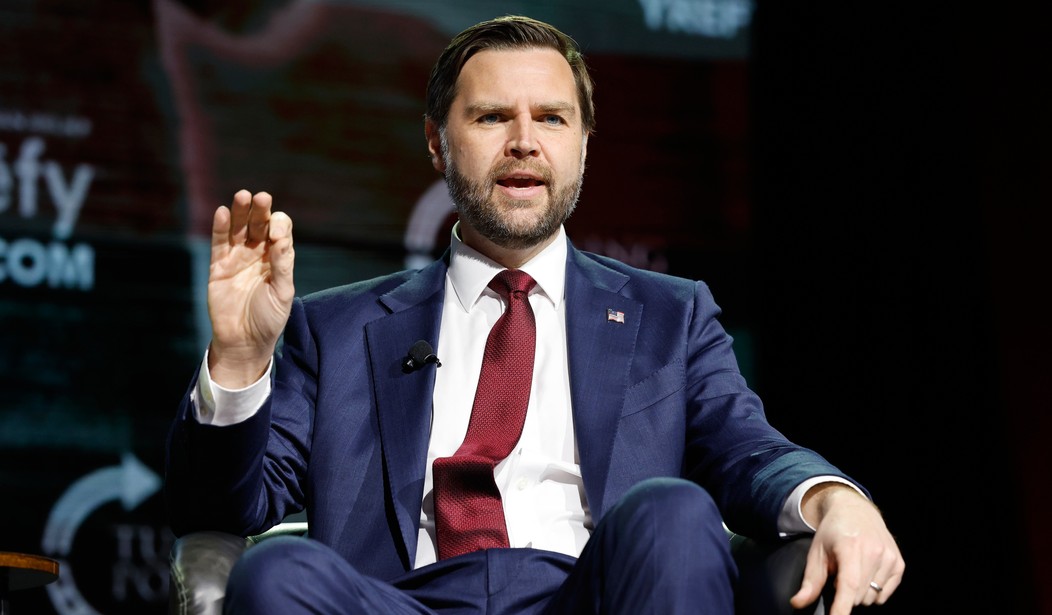
Vice President JD Vance recently outlined where he sees the future of conservative economics heading: away from the ideas of Milton Friedman, and toward those of Alexander Hamilton, the architect of the American financial system and the nation's first Secretary of the Treasury.
Vance declared that conservatives should embrace "American developmentalism," a vision in which the federal government actively shapes the economy to serve national strength, social cohesion, and the material well-being of working families, all rooted in Christian morality. Michael Knowles, who was interviewing Vance, agreed, going so far as to argue that Hamilton, by virtue of being a Founding Father, is in fact more "conservative" than Friedman.
VP @JDVance tells @michaeljknowles that the economic position of the Republican party has moved from Milton Friedman to Alexander Hamilton.
— H.A. Hazony (@HAHazony) June 30, 2026
Less laissez-faire and more American developmentalism.
The economy is a tool to provide a good life for citizens. pic.twitter.com/fduCMQK6TV
Unfortunately, it is apparent that neither man understands what Hamiltonian economics actually entailed. The policies of Hamilton's that the Trump administration now invokes had different reasoning, different goals, and, most importantly, a completely different starting point. The only thing that remains constant amongst these ideas is the desire for state-guided industry.
On tariffs, Hamilton, like the Trump administration, was a supporter, but not for the same reasons. His protectionism was designed to end, a temporary boost meant to help young American manufacturing compete against an industrialized Britain with a century's head start. Hamilton's America had no manufacturing base and no capital markets to speak of. Protection wasn't ideology. It was considered a necessary evil, deployed to give a young country a head start it otherwise lacked.
The goal of those tariffs matters too. Today's America is the wealthiest economy on Earth, and tariffs deployed from that position mostly mitigate national security concerns. Hamilton's endpoint was simpler: a world with no trade barriers at all. Even his own tariffs averaged just eight to fifteen percent, compared to roughly 2.5 percent by 2024. And where tariffs once funded the federal government outright, that role now falls on the income tax, making the case for tariff revenue today far weaker than it was in Hamilton's time.
On the trade deficit, Hamilton's own words undercut Vance's case entirely. He viewed the inflow of foreign goods, the very thing modern protectionists treat as a crisis, as a benefit, calling it "a precious acquisition...a most valuable auxiliary, conducing to put in Motion a greater Quantity of productive labour, and a greater portion of useful enterprise than could exist without it."
The only real constant between Vance and Hamilton is the instinct toward state-guided economics. Hamilton was no free market acolyte. He sought to guide industry, not liberate it. Is that, at its core, more conservative, as Michael Knowles claimed and Vance agreed? I don't think so.
Conservative economics stands on the pillar that economic freedom directly fuels political freedom, and that the erosion of economic freedom directly contributes to the erosion of political freedom. Milton Friedman stands as one of the foremost defenders of economic freedom in American history, which makes him, whether Vance realizes it or not, a defender of the same political freedom conservatism exists to protect.
None of this is to say Hamilton was wrong for his time, or that his instincts were somehow un-American. He built a financial system out of nothing, and he did it because nothing else was available to build with. But building a nation from scratch and managing the wealthiest economy in human history are not the same task, and they do not call for the same government.
Vance and Knowles want Hamilton's willingness to guide the economy without his goal of eventually letting it go. That is not Hamiltonian economics; it's a permanent version of what Hamilton always intended to be temporary. We can dress economics up in a Founding Father's name to make it sound like tradition, but that doesn't change what it actually is: a rejection of the free market conservatism that has spent 250 years defining itself with.